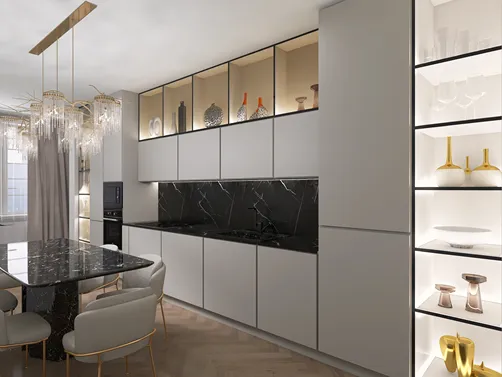
In the realm of kitchen design, the carcass stands out as a vital component. This term denotes the structural framework of your cabinets, crucial for support and form. By recognizing the significance of kitchen carcasses, you can make well-informed choices for your culinary space, ensuring longevity and efficiency while utilizing tools like Homestyler for design inspiration.
Typically, kitchen carcasses are constructed from materials like plywood, particle board, or MDF (Medium-Density Fibreboard). Each of these materials comes with unique pros and cons; for instance, plywood is often lauded for its robustness and moisture resistance, making it an excellent choice for Indian kitchens where humidity is a factor.
Advantages of a Sturdy Kitchen Carcass
1. **Longevity**: A well-manufactured carcass guarantees that your cabinets remain intact amid the daily hustle and bustle of kitchen activities, from cooking sessions to cleaning routines.
2. **Optimized Storage**: The design of the carcass can maximize storage options. By selecting the appropriate carcass dimensions, you can create custom cabinets that meet your requirements, facilitating clever storage solutions through applications like Homestyler.
3. **Visual Appeal**: A strong carcass supports various finishes and styles, allowing you to achieve the kitchen aesthetic you desire, whether it’s contemporary or classic.
Selecting the Ideal Material for Your Kitchen Carcass
When you're choosing materials for your kitchen carcass, keep the following aspects in mind:
• **Strengths**: Highly durable, moisture-resistant, and built to last.
• **Weaknesses**: May have a higher price point compared to alternatives.
• **Strengths**: Affordable and lightweight.
• **Weaknesses**: Less durable and susceptible to water damage unless properly sealed.
• **Strengths**: Smooth finish perfect for painting, cost-effective.
• **Weaknesses**: Not as strong as plywood and can swell upon moisture exposure.
Helpful Tips for DIY Kitchen Carcass Installation
1. **Measure Twice, Cut Once**: Ensure that you take precise measurements to minimize waste and guarantee a flawless fit.
2. **Level it Properly**: Employ a spirit level to confirm that your carcasses are perfectly horizontal and vertical to avert issues when attaching doors and drawers later on.
3. **Stabilize Securely**: Use screws and brackets to anchor the carcass to the walls for enhanced stability.
Common Questions
Q: Which material is best suited for kitchen carcasses?
A: Plywood is usually recommended due to its strength and moisture resistance; however, the final choice should align with your budget and design priorities.
Q: What strategies can I use to maximize storage with my kitchen carcass?
A: Consider incorporating tall cabinets, pull-out shelves, and corner units to fully exploit the available space within your carcass design.
Welcome to a world of over 10,000 free home design ideas, where you can explore innovative concepts using tools like Homestyler.



















![Design [4]](https://hs-designs.homestyler.com/production/design/images/07c2de3a-88ec-4be8-8910-ff255b795bc2/1731419398293/7841697.jpg?x-oss-process=image/resize,w_502,m_mfit/format,webp)