


| Feature | Blackout curtains | Regular curtains |
|---|---|---|
| Light control | Blocks most light through the fabric; edge gaps still matter | Ranges from light-filtering to moderately darkening |
| Privacy | Strong when closed, including at night | Depends on opacity and whether lights are on indoors |
| Daytime feel | Can make a room very dim | Keeps a softer connection to daylight |
| Best fit | Bedrooms, nurseries, media rooms, shift-work sleep | Living rooms, kitchens, dining areas, layered window treatments |
| Style and texture | Often heavier, though options vary | Broad range of sheers, linen-look, cotton, and lined styles |
The right curtains can make a bedroom feel restful, keep a living room bright, or stop a street-facing window from feeling like a display case. But when you’re choosing between blackout curtains and regular curtains, the decision isn’t simply “dark room or light room.” Fabric, lining, window direction, and how you use the space all matter.
Blackout curtains are designed to block most incoming light when properly fitted. Regular curtains, by contrast, can mean anything from sheer panels to lined drapes that soften daylight without making a room completely dark. I’d choose based on the job each window needs to do, not on a blanket rule for the whole home. Here’s how to compare them, where each works best, and what to check before you buy.
What’s the real difference?
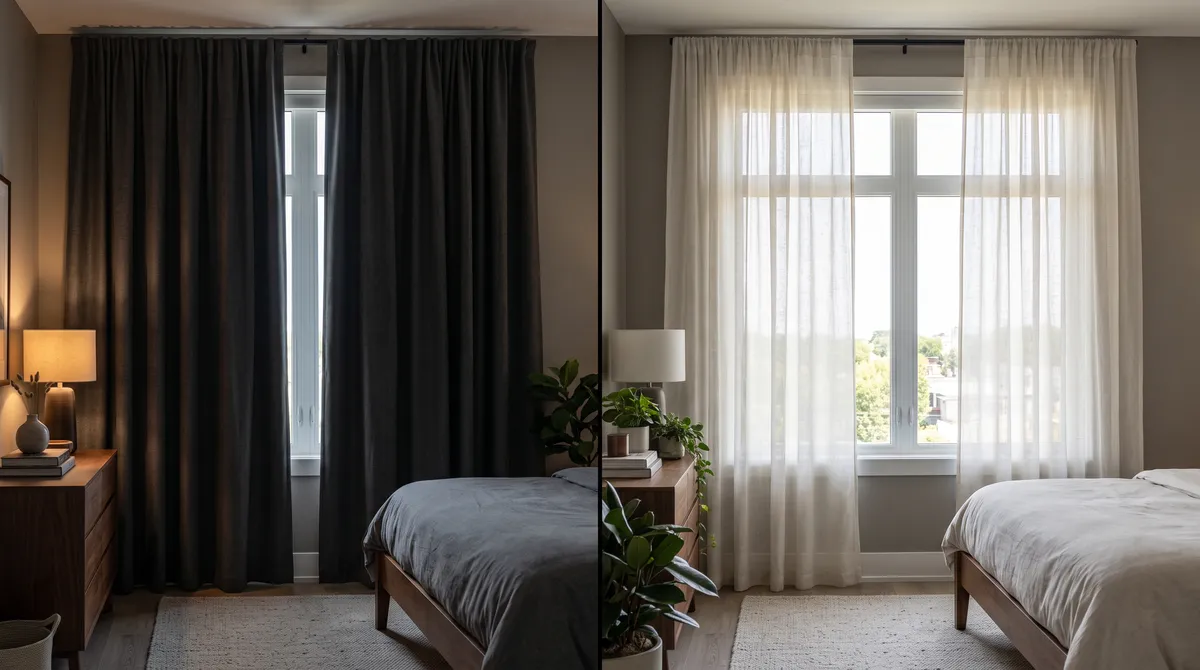
A regular curtain is a broad category, not one specific level of light control. A sheer panel filters sunlight and offers a little daytime privacy; a medium-weight cotton or linen curtain softens glare; a lined drape can darken a room noticeably. Blackout curtains use tightly woven fabric, a special backing, or multiple layers to block most light through the curtain itself.
That last phrase matters: the fabric can block light, but light may still sneak around the edges. A curtain that stops short of the sill or leaves a wide gap at the sides won’t create a fully dark room. For stronger coverage, choose a wider panel, mount the rod above and beyond the window frame, and consider a wraparound rod or side returns.
One common mix-up: “room darkening” and “blackout” aren’t always interchangeable labels. Product descriptions and construction vary, so check the stated light-blocking level and look at customer photos if available. If you want a dark bedroom, the curtain’s width and installation can matter as much as the fabric name.
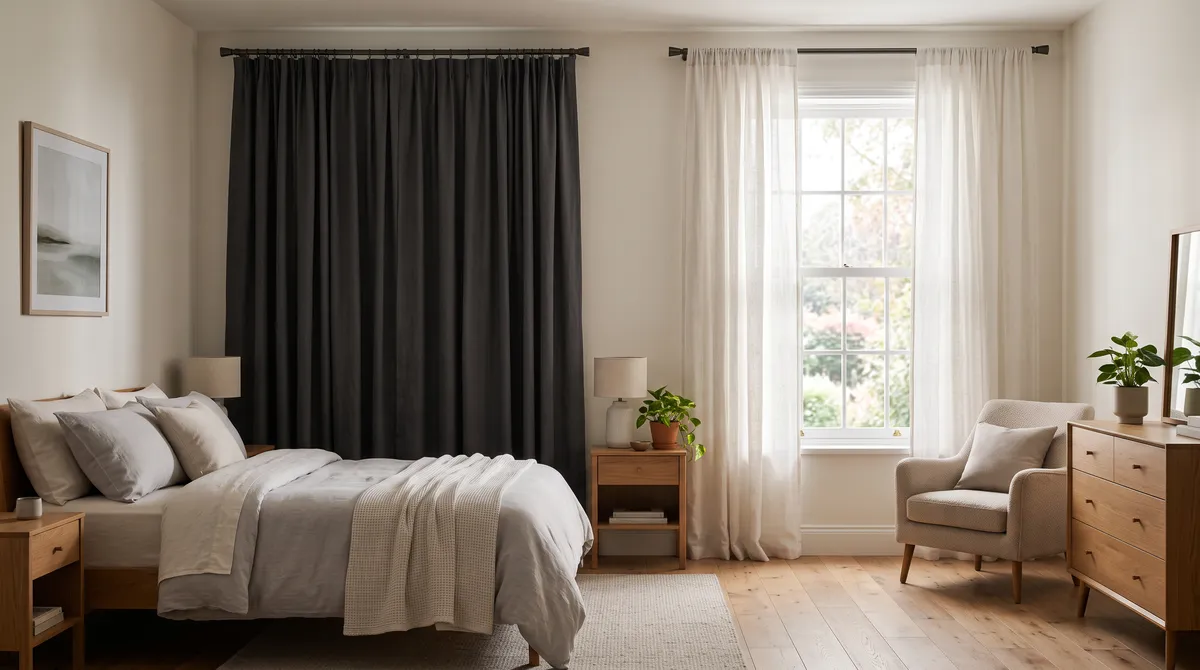
When do blackout curtains make sense?
Blackout curtains are most useful when controlling light is a daily need rather than an occasional preference. A bedroom facing a bright streetlight, a nursery where naps happen during the day, or a room used for shift-work sleep can all benefit. They can also help in a media room where reflections on a screen are distracting.
They don’t automatically improve sleep for everyone, and they won’t fix every source of light. A bright hallway under the door, a glowing device, or a gap between panels can still brighten the room. Think of them as one part of a sleep-friendly setup, not a magic switch.
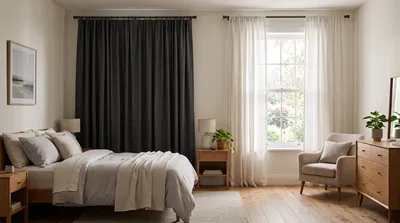
I’m especially fond of blackout panels in bedrooms that get strong morning sun. You can close them when you need darkness, then open them fully to let the room wake up with daylight. If the room feels too heavy with thick fabric, use a double rod: a sheer or light-filtering layer for daytime, with blackout panels behind it for night.
Before ordering, measure the window and decide how much coverage you want. For a fuller look, the combined panel width is often around 1.5 to 2 times the rod width, though the exact fullness depends on the fabric and style. Check the care label too. Heavy lined curtains can be awkward to wash at home, and some require professional cleaning.
Blackout curtains may also reduce some outside noise and help limit heat transfer, but results depend on fabric, fit, and the window itself. Don’t buy them expecting them to replace proper insulation or soundproofing. For a rental, a tension rod or existing curtain hardware can make installation easier to reverse; just confirm the rod can safely support the panels.
Where regular curtains are the better call
Regular curtains are a better fit when you want daylight to remain part of the room. In a living room, kitchen, or dining area, a sheer or light-filtering panel can soften harsh sun without turning the space gloomy. That’s particularly useful if the window faces a garden or a pleasant view you don’t want to hide behind a heavy layer.
They’re also a flexible choice for rooms where light needs change throughout the day. A medium-weight curtain can reduce glare during the afternoon while still letting in a gentle glow. For privacy, remember that a thin sheer may look opaque from inside during the day but become see-through at night when the room is lit. If the window faces neighbors, close a more opaque layer after dark.
Regular curtains can be easier to move, wash, and swap seasonally, depending on the fabric. Linen and cotton blends bring texture without the visual weight of a thick backing. If you like the look of blackout curtains but don’t need full darkness, a lined regular drape may be a comfortable middle ground.
| Room or situation | A practical starting point |
|---|---|
| Bright bedroom or daytime sleeper | Blackout panels, fitted wide and high |
| Living room with a view | Light-filtering curtains or sheers |
| Street-facing window | Opaque regular curtains, or blackout if light control matters |
| Home office with screen glare | Light-filtering curtains; blackout if glare is severe |
| Rental where drilling is restricted | Lightweight panels on approved tension hardware |
| Room needing both daylight and darkness | Sheer layer plus blackout panels on a double rod |


How to choose without regretting the purchase
Start with the window’s main problem. Is it early sunlight, a neighbor’s view, screen glare, or a room that feels flat and dark? Pick the curtain that addresses that issue first. Then consider how you want the room to look when the panels are open; curtains take up visual space even when they’re not doing their main job.
A few practical checks can save a return:
- Measure the rod, not just the glass. Note the rod width and the distance from the rod to the floor or sill. Decide whether you want the panels to skim the floor, stop at the sill, or fall below it.
- Check the fabric in daylight. A product photo can make a curtain look more opaque than it is. If possible, order a swatch or inspect it against a bright window.
- Look for lining details. “Blackout” may refer to a backing or layered construction. Confirm the product description explains what is included.
- Plan for the edges. Wider panels and a rod that extends beyond the frame help reduce side gaps. For a very bright room, consider a wraparound rod.
- Think about daily use. If you’ll open and close the curtains every morning and night, choose a track or rod that moves smoothly and panels that aren’t too cumbersome.
- Match care to your routine. Check whether the fabric is machine washable, dry-clean only, or best spot-cleaned.
For a balanced setup, I usually prefer two layers in a bedroom: a simple sheer for daytime and blackout panels for sleep. In a living room, I’d start with regular curtains and add a shade only if glare or privacy becomes a real problem. There’s no prize for making every window equally dark.
If you’re unsure about color or fullness, sketch the window and furniture arrangement before buying. Homestyler can help you preview how a curtain color and overall room palette might work together, so you can compare a light, airy look with a darker, more cocooning one before committing.

Quick answers before you decide
Do blackout curtains make a room completely dark?
Not necessarily. They block most light through the fabric, but light can enter around the sides, top, or bottom. For a darker result, use panels wide enough to overlap, mount the rod higher and wider than the frame, and consider a wraparound design.
Are blackout curtains good for every bedroom?
They’re a strong option if you sleep during the day, have bright outdoor lighting, or prefer a dark room. If you enjoy waking with natural light, regular curtains or a layered setup may suit you better. Personal preference counts; the “right” bedroom is the one that supports your routine.
Can regular curtains provide privacy at night?
Opaque regular curtains can provide privacy when closed, but sheers alone usually aren’t enough after dark. Turn on the room lights and check the window from outside if you’re unsure how transparent the fabric becomes.
Should I use blackout curtains in a living room?
You can, especially if the room gets intense sun or doubles as a media space. But if you want a bright, open feel, regular curtains are often easier to live with. A double layer gives you options without forcing one choice all day.
Start with the window you use most
You don’t have to choose one curtain type for the entire home. Use blackout curtains where darkness is genuinely useful, and regular curtains where daylight, softness, or a view matters more. A bedroom may need a darkening layer; the kitchen window may be happier with a washable, light-filtering panel.
Built on technology originally developed at Autodesk, Homestyler empowers anyone to design beautiful, realistic spaces in minutes. Join over 20+ million registered users (platform data, 2026) who have already discovered a smarter way to plan, visualize, and bring their dream homes to life — all from the comfort of a browser.
If you’re still torn, begin with the room that causes the most annoyance. Measure carefully, check the fabric and lining, and think about how the window should feel at different times of day. A small sample or a quick room mockup can prevent a costly mismatch. Homestyler is one way to test the look before you order; then choose the curtain that fits your actual routine, not just the product photo.
Дизайн сейчас бесплатно