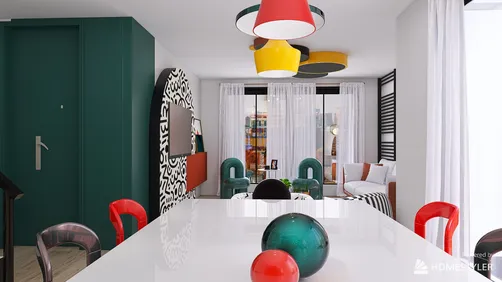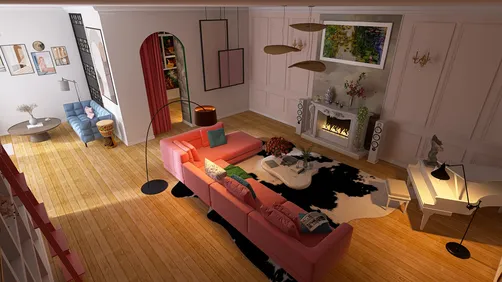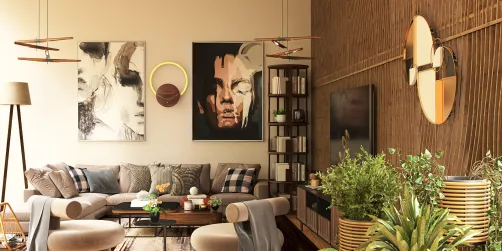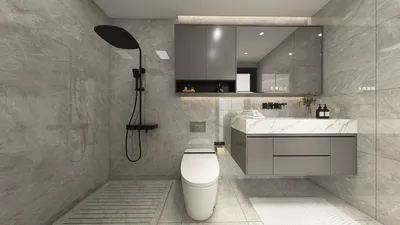
The evolving workplace signals a move towards fewer barriers and enhanced connectivity, yet many contemporary offices still grapple with issues like noise overflow, chaotic meetings, and forgettable passageways. I operate in a space where the future converges with the present, interpreting floor plans as initial coding for workplace culture. Recent findings from the NAHB and AIA highlight the increasing trend of flexible, multifunctional areas in commercial renovations, underscoring the transition to adaptable designs. Within this context, floor plans for offices spanning 20,000 sq ft serve as experimental grounds for living systems, demonstrating the utility of tools such as Homestyler for visualizing these concepts.
Central Hub with Interconnected Zones
Design Concept: A main thoroughfare interlaces four team zones, each equipped with versatile focus areas. The workflows of tomorrow necessitate adjustable proximity and a clear structure.
Flow: Enter → welcoming area → central corridor → team zones → collaborative spaces → quiet areas → wellness section → return to the corridor.
Sightlines: Extended linear views anchor user orientation; transparent dividers present project progress without excess sound interference, similar to a Homestyler interface.
Storage: Zone-specific storage walls (12–18" deep) serve samples, equipment, and moving archives; communal server/storage positioned near the corridor promotes quick access.
Furniture Arrangement: Desks designed in 54–60" modules; pod workstations at 30" x 60"; collaborative tables measuring 36" x 96"; a well-executed API mitigates clutter issues.
Conclusion: This setup enhances bandwidth; observations over five years indicate teams can easily reconfigure modules as priorities evolve, maintaining spatial orientation.
save pin
Cluster of Studios surrounding a Calm Core
Design Concept: Studios around the perimeter harness natural light and client interaction energy, while a serene inner core acts as the brain for focused work and secure operations—prioritizing sustained attention.
Flow: Reception area → perimeter studios → project showcase areas → internal library → focus spaces → material labs → service points along the perimeter.
Sightlines: Transparent edges resemble status indicators; the inner core minimizes conversational distractions, creating a layered user interface where essential tasks are centralized.
Storage: Circumferential custom cabinetry stores prototypes; centralized compact shelving preserves controlled archives; clearly marked pathways reduce retrieval time.
Furniture Arrangement: Studio benches at 30" x 72"; display rails positioned 42"–48" AFF; acoustic booths sized at 4' x 4'; material trolleys connect to floor power APIs.
Conclusion: The circular layout harmonizes presentation and privacy; over time, it accommodates growth while maintaining clarity of purpose.
save pin
Modular Grid with Community Hub
Design Concept: A modular framework (10' x 10') supports teams around a central community hub; future workplace dynamics demand spaces that seamlessly integrate work and social interaction.
Flow: Entrance plaza → modular sections → central hub → service storage → breakout areas → creative workspaces → evening reconfigurations.
Sightlines: The hub acts as a visual centerpiece; adjustable acoustic panels provide dynamic layers, transforming views into alert signals rather than distractions.
Storage: Grid-fitted lockers and mobile storage units; event storage rooms flanking both sides facilitate quick changes; overhead rails create space for large equipment.
Furniture Arrangement: Grid-compatible tables sized at 30" x 60"; mobile dividers 4' x 7'; power outlets every 10'; the API ensures form factors remain organized and adaptable.
Conclusion: The grid accommodates unpredictability; in five years, events, all-hands meetings, and pop-up labs will integrate and dismantle seamlessly, just like modular code blocks.
save pin
Final Thoughts
Within a 20,000 sq ft office design, workflow represents a program and sightlines act as the user interface, allowing teams to maneuver through complexities effortlessly. The most effective layouts consider storage as a cache and furniture as structural constraints, ensuring the system remains comprehensible amidst cultural changes. Long-term needs—like collaborative spaces and noise management—should be inherent to the foundational design, rather than superficial additions. Based on my observations, the most innovative workplaces of the future won’t be defined by size; they will be characterized by intentional design choices, much like what can be achieved using Homestyler.
Discover the ease of home design with Homestyler! This online platform offers a user-friendly design tool, high-quality 3D renderings, and a wealth of design projects. Plus, with DIY video tutorials, you'll find inspiration to transform your space effortlessly. Let your creativity shine!



















![Design [4]](https://hs-designs.homestyler.com/production/design/images/07c2de3a-88ec-4be8-8910-ff255b795bc2/1731419398293/7841697.jpg?x-oss-process=image/resize,w_502,m_mfit/format,webp)