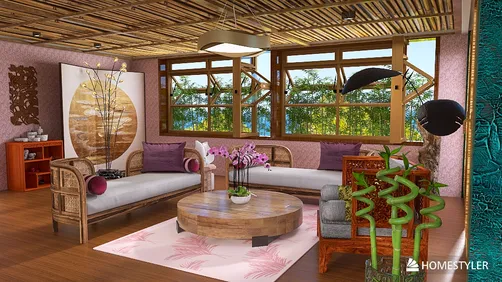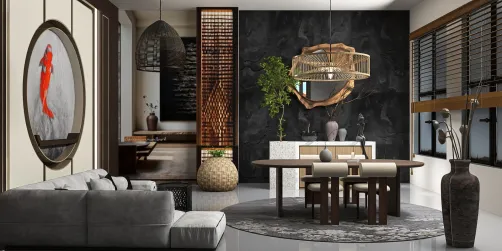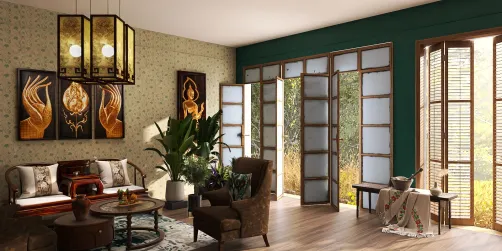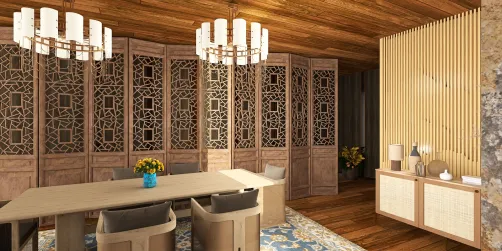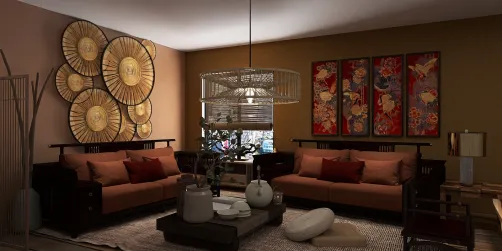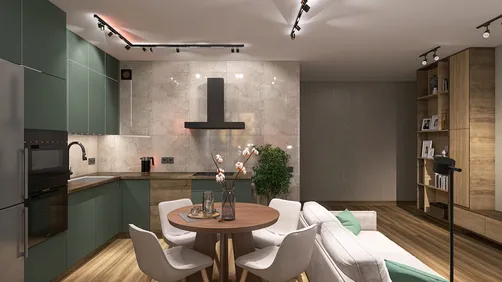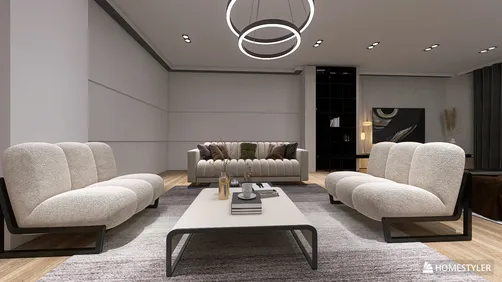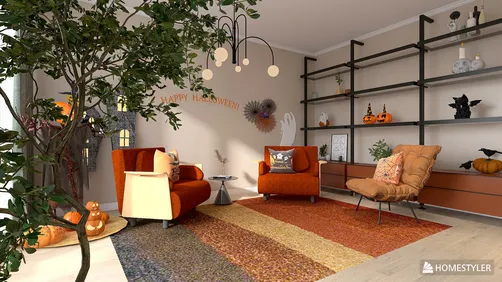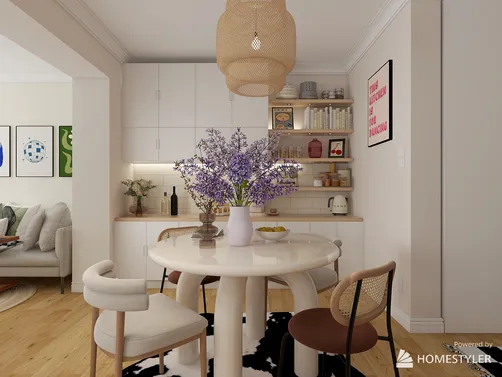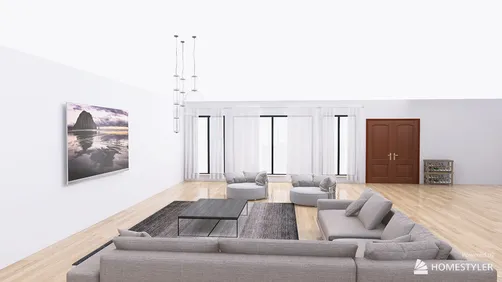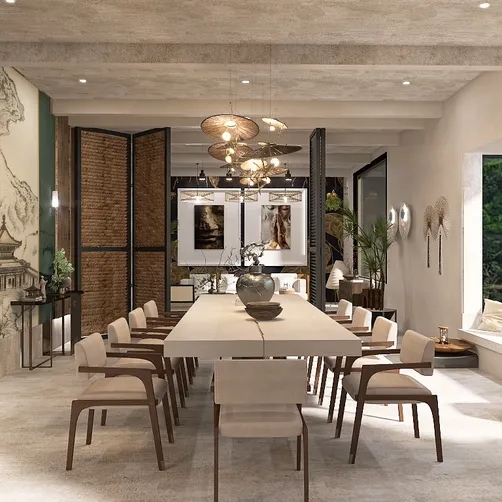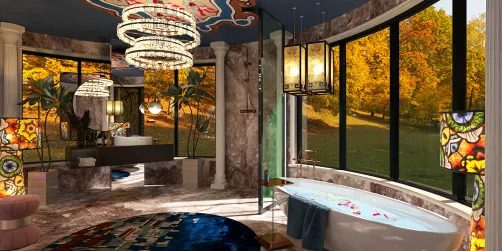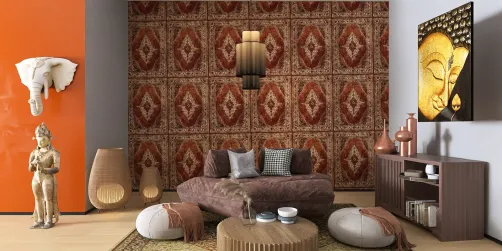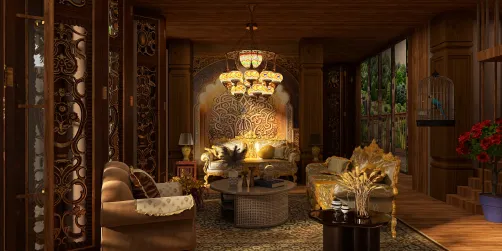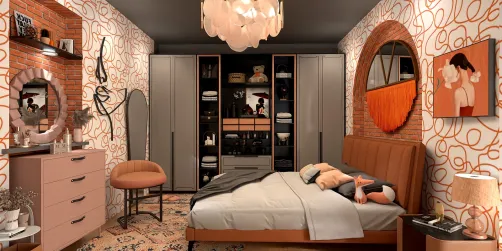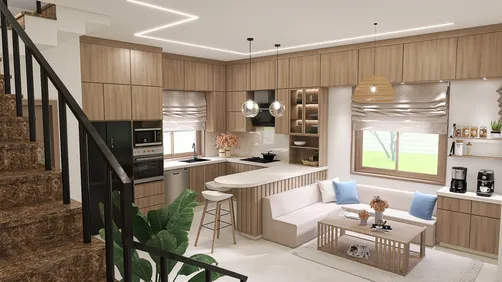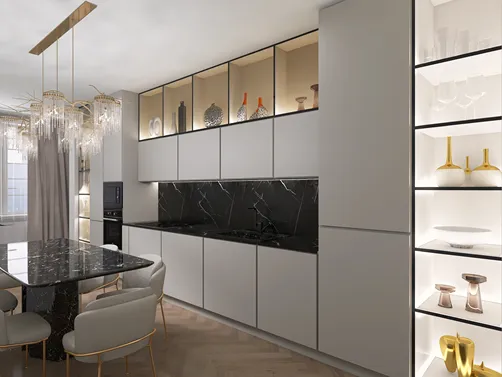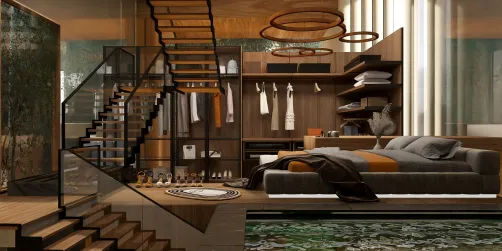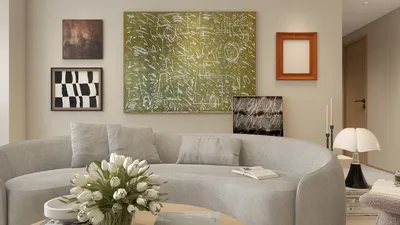
As we look toward the future, it is evident that daily challenges—like aging parents navigating stairs, chaotic schedules, and energy inefficiencies—call for more efficient home solutions. Reports from AIA indicate an upward trend in resilient and accessible designs, while Zillow's insights highlight a growing preference for adaptable and health-oriented spaces. This perspective transforms traditional 4-bedroom Indian-style single-floor home plans into practical blueprints for contemporary living. Utilizing tools like Homestyler for spatial planning serves as the engine driving this evolution.
Courtyard Spine with Peripheral Rooms
Design Logic: The concept features a central outdoor court that serves as both a thermal buffer and a social hub, promoting natural lighting and passive cooling techniques. The surrounding rooms benefit from a balance of privacy and cross-ventilation, catering to both wellness and multi-generational living needs.
Flow: The layout transitions from entry to semi-open living space, leading to the courtyard hub, and branching out to bedrooms, while the kitchen and dining areas connect seamlessly to the court for efficient service and shared rituals.
Sightlines: The design incorporates layered perspectives; the foyer offers glimpses of greenery, the living area frames the sky, and the bedrooms allow for indirect views to create a tranquil atmosphere.
Storage: Innovative storage solutions include perimeter wall units for efficient caching, bench storage beside the courtyard for everyday items, and lofts above passageways for seasonal storage.
Furniture Fit: The layout accommodates queen or king beds against wall-backed headboards, maintains circulation with 900–1000 mm spacing, and incorporates a dining area specifically sized for 6-8 seats under a shaded light fixture.
Verdict: This design showcases a resilient core with adaptable edges, proving itself over the years as a flexible system for family dynamics.
save pin
Dual-Anchor Living: Parents’ Suite + Kids’ Cluster
Design Logic: With two focal points—a front parents’ suite for minimal walking and a rear kids’ cluster for play and study—this configuration supports family routines as work and caregiving needs evolve.
Flow: The entry flows from the porch into the living space leading to the parents’ suite, while the kitchen, dining, and kids’ rooms are interconnected to form a supervised corridor.
Sightlines: The parents' suite provides a shield from street noise; from the kitchen, a controlled visual corridor allows monitoring of kids without overwhelming visibility.
Storage: The design features a linen tower adjacent to the parents’ suite, modular wardrobes with under-bed storage in the children's cluster, and the kitchen pantry as a vital storage buffer.
Furniture Fit: Built-in study ledges serve as access points for devices; the design includes clear heights for bunk beds and scalable wardrobes to maintain clean circulation.
Verdict: This layout promotes balance and independence, enhancing the coordination of daily life and responsibilities.
save pin
Veranda Ring with Wet–Dry Service Grid
Design Logic: A wraparound veranda not only shades walls but also organizes a wet-dry grid—aligning kitchens, utilities, and bathrooms—to reduce plumbing and energy costs, thereby lowering future bills and maintenance requirements.
Flow: The sequence starts from the street to the veranda, leading into the living area, dining/kitchen core, utility spaces, and service yard, with bedrooms connected to the dry side of the grid.
Sightlines: The veranda softens glare into gentle light, while internal views emphasize depth over breadth, akin to an interface that selectively reveals information.
Storage: High pantry towers, a broom niche near the utility area, and bench-chests on the veranda offer low-latency access to essential items.
Furniture Fit: The design allows sofas to float 900 mm from walls for airflow; platform beds include built-in side storage; and a compact puja niche fits into a 300 mm recess.
Verdict: The veranda serves as a climate and noise buffer, with the service grid simplifying household tasks—providing a streamlined approach to domestic life.
save pin
Final Takeaway
The single-floor, four-bedroom Indian home designs represent more than nostalgia; they offer future-ready interfaces that balance climate, caregiving, and cultural nuances. By utilizing strategic elements like verandas, courtyards, or service grids, these layouts redefine everyday routines into smoother protocols. In my view, the smartest homes to emerge will not necessarily be larger, but rather more thoughtfully designed—using tools like Homestyler to enhance planning and functionality.


Homestyler is your go-to online home design platform! With its user-friendly design tool, stunning 3D renderings, and inspiring DIY video tutorials, you can effortlessly create and visualize your dream space. Perfect for both beginners and seasoned designers alike! Dive into your creativity today!