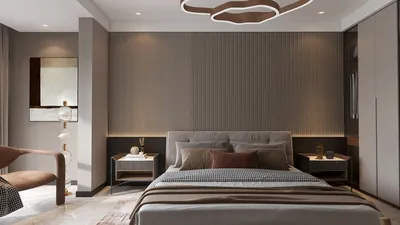
As the future approaches, today’s families face the challenge of maintaining multigenerational privacy while dealing with sporadic power and water resource limitations. Visualizing the city through a 2D plan becomes essential—a framework for establishing routines, resilience, and dignity. Insights from the NAHB reveal that households are shifting their spatial allocations towards adaptive areas rather than leaving corridors empty, showcasing how a three-bedroom layout can transform. When I envision three-bedroom, six-flat configurations in Indian floor plans, it presents a living operating system ready for enhancements, offering bandwidth for family interactions, tranquility, and workspace all interwoven in one solid structure. This is where tools like Homestyler come into play for effective spatial planning.
Courtyard Backbone with Dual Entry Points
Design Rationale:
A central lightwell acts as a pivotal point; the two stair-lift cores on each end streamline exits and minimize waiting durations. Six units encircle this space, with each 3BHK designed to promote cross-ventilation, a necessity for managing future heat surges.
Flow:
Entry leads to a hygiene foyer, followed by a kitchen hub, progressing to the living area, and finally to the cluster of bedrooms; this arrangement minimizes dust exposure while keeping social interactions fluid.
Sightlines:
From the foyer, there's a thoughtfully controlled view of the skywell; the living area frames a green outdoor space, while bedrooms are strategically positioned to overlook the street for depth and wayfinding.
Storage Solutions:
Integrating perimeter wardrobes and under-bed drawers, alongside a communal service shaft for items like water filters, inverter setups, and fiber optic installations enhances practicality.
Furnishing Considerations:
Living spaces should span 3400 mm with sofas ranging from 2100 to 2400 mm; dining areas feature a round table of 1500 mm for comfortable circulation; bedrooms should have over 3000 mm of clear space allowing for a king-sized bed in the primary room and a queen-sized option in the secondary.
Conclusion:
This resilient circular design—enabling light, service stacking, and cross-breezes—functions much like redundant servers, buffering against climate variations and urban noise.
save pin
Offset Bar With Breezy Corridors
Design Rationale:
Though a linear block, units are staggered akin to code comments—small offsets create pocket balconies and shaded areas. Six three-bedroom apartments share a ventilated corridor that acts as a thermal barrier.
Flow:
The transition from public to private spaces is seamless: a semi-open foyer leads into the living and dining areas, followed by the kitchen functioning as a node, with bedrooms/study areas pleasantly separated; a guest bathroom is conveniently close to the entry.
Sightlines:
Long corridor views punctuated by skylights; the living space provides a diagonal glance at the city while avoiding harsh glare; the kitchen window offers a view towards the service court.
Storage Solutions:
The design incorporates corridor niches for shoes and umbrellas; indoors, full-height wardrobes measuring 600 mm provide ample storage, while utility lofts above the baths ensure optimal space usage; trash and recycling are logically mapped to ensure clear exits—maintaining daily convenience.
Furnishing Considerations:
A dining bench is placed against the wall to optimize the aisle; modular sofa pieces should not exceed 800 mm in depth; children’s rooms can feature bunk beds with a 900 mm study strip.
Conclusion:
The offset design effectively limits heat gains and provides the right amount of privacy—similar to managing bandwidth carefully to maintain speed even during peak times.
save pin
Pinwheel Units Surrounding a Shared Service Core
Design Rationale:
A central mechanical, electrical, and plumbing stack forms the backbone for six pinwheeled 3BHKs; wet areas connect directly to the core while dry areas enjoy natural light. Shorter spans help manage earthquake drift effectively.
Flow:
Entry secured→ shoe bench → combined living/dining → sliding partitions allowing a flexible third bedroom; the kitchen is snugly positioned towards the core with utilities routed to the balcony.
Sightlines:
Direct view from the door to a window-framed horizon; partial-height shelves provide a user-friendly interface—information prioritized, clutter discreetly managed.
Storage Solutions:
An L-shaped pantry measuring 450 mm deep; overhead cabinets placed strategically only where heat can escape; a shared inverter closet on the landing acts as a communal power reserve.
Furnishing Considerations:
The primary bedroom measures 3300 x 3600 mm with an 1800 mm wardrobe; a flexible tatami module in the third room can transition from workspace to guest accommodation.
Conclusion:
The pinwheel configuration reduces ductwork and energy expenses; rooms operate similarly to applications—launching quickly, resting efficiently, and syncing seamlessly through the core.
save pin
Final Insights
When transformed, three-bedroom layouts into six homes per floor serve as a social navigator, weaving connections of family, work, and rest without conflict. Whether labeled as a 3BHK stack or a six-flat blueprint, the future favors designs that promote cross-ventilation, essential service core integration, and precise furniture fitting. For densely populated Indian buildings, innovative layouts featuring dual-core corridors and pinwheel arrangements ensure maintenance ease and occupant comfort. In my view, the most intelligent three-bedroom designs resemble interfaces that facilitate improved living rather than merely serving as containers.
Discover your creative side with Homestyler! This user-friendly online design platform offers an impressive design tool, stunning 3D renderings, and a treasure trove of DIY video tutorials. Perfect for anyone looking to transform their living space with confidence and ease!





















![Design [4]](https://hs-designs.homestyler.com/production/design/images/07c2de3a-88ec-4be8-8910-ff255b795bc2/1731419398293/7841697.jpg?x-oss-process=image/resize,w_502,m_mfit/format,webp)