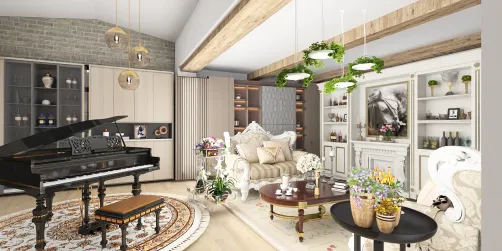
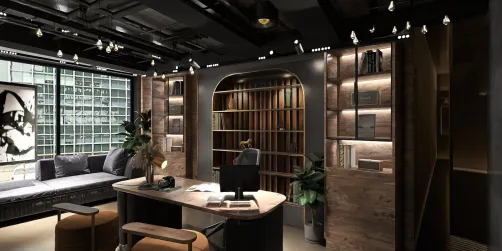
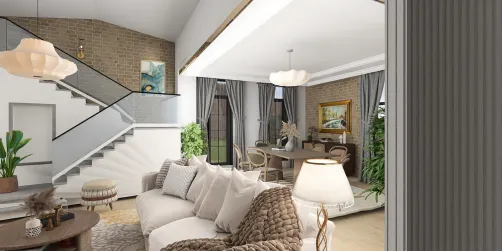
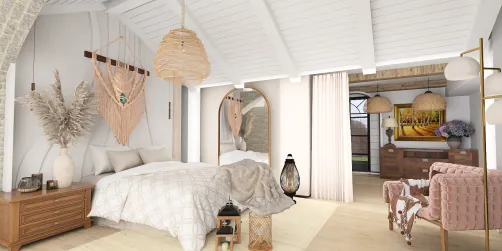
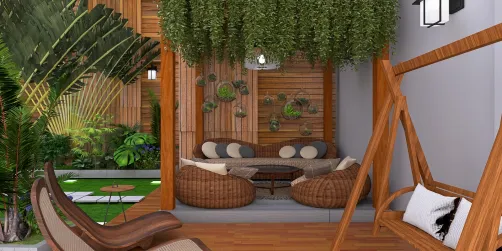
As we look ahead, it's essential to rethink how families navigate their daily lives with a focus on stability and flexibility. Data from organizations like AIA and NAHB highlights that homebuyers are increasingly valuing adaptable spaces and multifunctional areas, even as the overall size of homes remains constant. Within this context, a three-bedroom house design transforms into a blueprint for the rituals of modern life, incorporating elements of privacy, community interaction, and robust systems. This strategic approach to spatial design acts as an effective toolkit, translating lifestyle needs into physical structures like walls, doors, and sightlines, complemented perfectly by tools like Homestyler for visualization.
Urban Courtyard Spine
Design Logic: The central circulation acts as a courtyard-like spine, positioning three bedrooms on quieter peripheries while the lively public spaces thrive at the center—aligning with the rise of hybrid work and communal living styles.
Flow: The journey through the home follows a sequence: entry → drop zone → kitchen hub → living area → bedroom corridor; akin to an efficient function that allows for private offshoots without losing track.
Sightlines: The design offers long axial perspectives, leading from the entrance to the garden, with staggered thresholds unveiling layers of space—first public areas, then semi-private, culminating in private zones.
Storage: Built-in furnishings form a storage belt around the perimeter, with the pantry serving as cold storage, linen towers placed near bathrooms, and under-stair areas designated for seasonal item storage.
Furniture Fit: Sofas span 90 to 100 inches, dining sets accommodate a 36x72 table, and bedrooms are designed to fit queen beds with a 30-inch clearance on each side—API-friendly for everyday movement.
Verdict: This design anticipates the next five years of blended living, ensuring high shared connectivity while maintaining the tranquility of private spaces.
save pinOpen in 3D Planner Processing...
Split-Primary with Flex Lab
Design Logic: The primary suite is strategically separated from secondary rooms to create necessary buffers, with a versatile flex lab situated near the living area that can transition from a studio space to a guest area as family dynamics evolve.
Flow: From the garage entry to the mud/utility area, flowing into the kitchen island, then to the flex lab and terrace; children's rooms and bathrooms branch like subroutines while the primary suite follows a secure route.
Sightlines: The design employs controlled diagonal views, from the kitchen to the play area for quick interaction, while the flex lab features glazed walls for transparency when desired, and the primary suite is layered for privacy.
Storage: Mudroom lockers provide quick access for go-to items, with a wall system in the flex lab featuring adjustable bins, and the primary closet serving as a long-term organized archive.
Furniture Fit: The island measures 9–10 feet with 4-foot clearances; the flex lab accommodates a 60-inch desk and a sleeper sofa, while children's rooms can transition from twin beds to full without major redesign.
Verdict: As daily routines become more diversified, this split layout fosters a calm environment while allowing for quick transitions—designed to be future-ready without increasing spatial dimensions.
save pinOpen in 3D Planner Processing...
Perimeter Suite Ring
Design Logic: Bedrooms encircle the living area, akin to a network ring, ensuring seamless transitions between social engagement and peaceful solitude—ideal for accommodating multigenerational living.
Flow: From the front porch to the foyer, then into the living core and onto the ring corridor leading to suites; each space has explicit connections, reducing potential conflicts.
Sightlines: Core-to-corner connections create depth; corridor niches introduce visual breaks, and windows are strategically aligned to frame seasonal changes, enhancing the ambient experience.
Storage: Strategically distributed storage options include corridor wall niches, drawers positioned under window seats, double vanities equipped with vertical storage solutions, and a loft in the garage for larger items.
Furniture Fit: The core accommodates a modular sectional with 36-inch pathways; suites can house a king bed in the primary and queens in the secondary; the dining area is designed to hold a 42-inch round table for comfortable conversations.
Verdict: This layout synchronizes household activities, allowing diverse generations to share common spaces while preserving personal areas for evolving lifestyles.
save pinOpen in 3D Planner Processing...
Final Takeaway
A three-bedroom house floor plan transcends mere square footage—it represents a dynamic living interface where elements, buffers, and family rituals are continuously updated. Variants such as split-primary layouts and courtyard spines act similarly to resilient code, enabling families to adapt without compromise. My observations suggest that the homes that truly foresee future needs are not the largest; rather, they focus on intentional design regarding flow, sightlines, and storage capabilities. Tools like Homestyler often assist in visualizing these small yet impactful design decisions that fundamentally change the way people experience their living spaces.

Discover Homestyler, your go-to online home design platform! With its user-friendly design tool, stunning 3D renderings, and a wealth of DIY video tutorials, transforming your space has never been easier. Explore countless design projects and unleash your creativity today!