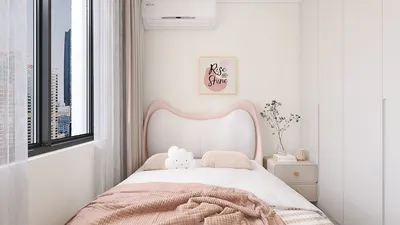


There was an instance when I mistakenly installed wall-mounted sconces upside down in a client's nursery due to a misinterpretation of the wiring diagram — the baby remained undisturbed, but I was not so fortunate. This little mishap taught me that minor errors in lighting can lead to significant lessons swiftly. A thoughtfully positioned sconce can transform a confined space in ways that nothing else can. Limited areas often inspire immense creativity, leading me to discover effective sconce solutions that appear intentional, even if the initial approach was merely to make it fit.
1. Swing-arm sconces for bedside flexibility
Swing-arm wall sconces are my favorite choice for compact bedrooms, as they allow you to conserve space on nightstands while still providing ample reading light. The benefits are straightforward: they offer adjustable reach for various tasks and maintain a sleek wall appearance when retracted. The main challenge lies in the wiring location; however, opting for plug-in models or relocating an outlet typically resolves this issue without exceeding budget constraints. In a recent studio project, I paired two brass swing-arms with matte-black shades, adding warmth and a striking contrast.
save pin
2. Mini uplight sconces to enhance low ceilings
When dealing with a low ceiling that feels suffocating, mini uplight wall sconces are a game changer — they reflect light upwards, creating the illusion of a lifted ceiling. These sconces are particularly effective on narrow walls or flanking a tall mirror. One downside is their lack of strong task lighting, so it's advisable to pair them with pendant lights or under-cabinet options in multifunctional areas. In a townhouse project, I used them above a slim console, and it remarkably made the hallway feel twice as spacious.
save pin
3. Backlit mirror sconces for bathrooms
For compact bathrooms, integrated or backlit mirror sconces provide flattering, shadow-free illumination while maintaining a minimalist footprint. The benefit lies in their clean, modern appearance and even lighting for grooming routines. The trade-off can include a higher initial cost and the potential complexity of installation, especially if you desire hardwired, dimmable capabilities. I once replaced a bulky vanity light with a backlit mirror, and the client’s morning routine significantly improved.
save pin
4. Picture-style rails with adjustable sconces
Looking to make art or shelves stand out in a small living room? Picture-style rail systems paired with small adjustable wall sconces enable you to accentuate your pieces without needing to drill new holes each time you change displays. These systems are versatile and can create a gallery-like ambiance, but you’ll need a clear design strategy to ensure the sconces complement the artwork. I advised a renter with a rotating collection on this approach, resulting in a museum feel and an absence of visible anchor clutter.
save pin
5. Layered low-profile sconces in kitchens and hallways
In tight kitchens or hallways, low-profile linear sconces provide seamless ambient light without hindering movement. These fixtures install flush against the wall, are easy to maintain, and keep sightlines clear. A downside is that they cannot replace focused task lighting, so I typically combine them with under-cabinet LEDs in kitchens. For one galley kitchen, I used a series of low sconces, creating an airy feel while allowing the backsplash tile to shine.
Interested in testing the layout before making a commitment? Utilize a free online planner to visualize sconce placements in relation to furniture and architectural features. This way, you can prevent mishaps like my upside-down sconce experience and achieve accurate placement from the get-go. Seeing a room mockup can help you gauge scale and light balance effectively.
save pin
FAQ
Q: What height should wall sconces be positioned at?
A: As a general guideline, position sconces about 60–66 inches (152–168 cm) from the floor to the center of the fixture. For reading sconces by the bed, align them with eye level when seated (roughly 40–48 inches). Adjust as necessary based on ceiling height and the surrounding furniture.
Q: Can wall sconces be hardwired or plugged in?
A: Yes, many sconces are available in both hardwired and plug-in configurations. Hardwiring offers a streamlined appearance and pairs well with dimmers, while plug-in options are more suitable for renters and simpler to install.
Q: Are LED sconces energy-efficient?
A: Absolutely. LED wall sconces consume significantly less energy, operate at cooler temperatures, and have a longer lifespan than incandescent bulbs, making them perfect for layered lighting designs.
Q: How do I select the appropriate sconce size for a small area?
A: Consider the surrounding furniture — choose sconces that do not exceed one-third of the nearby piece's depth. In hallways, opt for sconces that are narrow and shallow to avoid obstructing movement.
Q: Can sconces serve as the primary light source?
A: In particularly small rooms, it's possible for layered sconces to act as the main light source. However, they are generally best when combined with ambient and task lighting for well-rounded illumination.
Q: Is dimmable lighting recommended for sconces?
A: Dimmers enhance versatility and control over the atmosphere; ensure you select dimmable LED-compatible fixtures and corresponding dimmer switches for optimal performance.
Q: Any safety tips for installation?
A: Always turn off power at the breaker panel before starting the installation, and adhere to the manufacturer's wiring instructions. For hardwired installations, consider consulting a licensed electrician if you are unsure.
Q: Where can I find trustworthy planning tools for sconce placement?
A: For precise room designs and lighting mockups, I frequently utilize reliable online floor planners and layout tools — these assist you in testing placements and scaling prior to making any purchases. Resources like the U.S. Department of Energy and the Lighting Research Center provide solid guidance on lighting design and energy usage (https://www.energy.gov/ and https://www.lrc.rpi.edu/).
save pin
Looking to revamp your home? Homestyler is your go-to online design platform! With its user-friendly design tool, stunning 3D renderings, and a wealth of DIY video tutorials, you can effortlessly create and visualize your dream spaces. Design made simple and inspiring!
Дизайн сейчас бесплатно
































