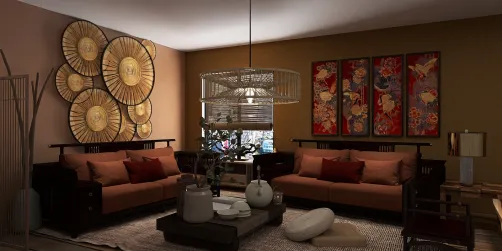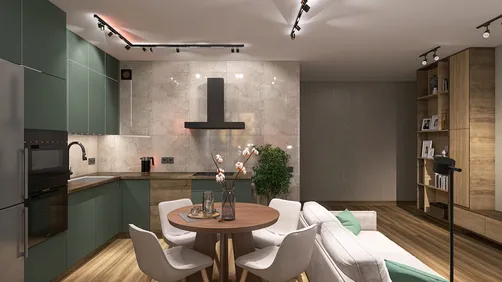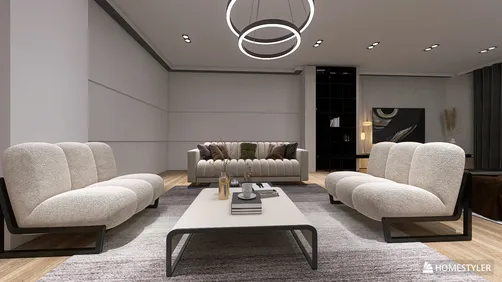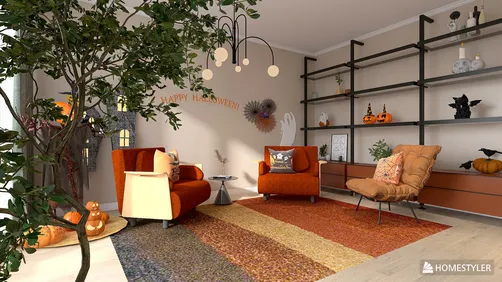
As families navigate the complexities of modern life, they face challenges related to noise, privacy, and storage solutions. Current AIA statistics highlight a consistent trend: there is a growing desire for adaptable living spaces that can change over time. In this context, I explore three-dimensional floor plans for three-bedroom townhouses as a blueprint for future living habits—spaces designed to meet the demands of hybrid work, multigenerational families, and moments of quiet recovery. By utilizing tools that enhance spatial reasoning, I envision the evolving lifestyles of the next decade.
Split-Level Social Hub & Serene Upper Retreat
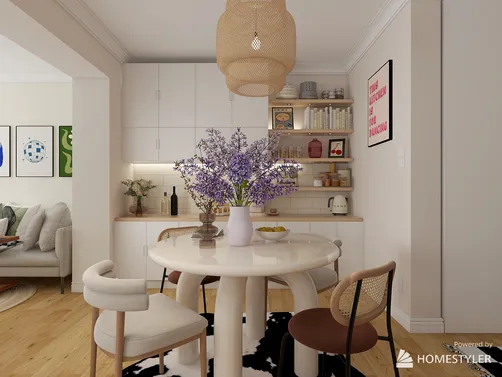
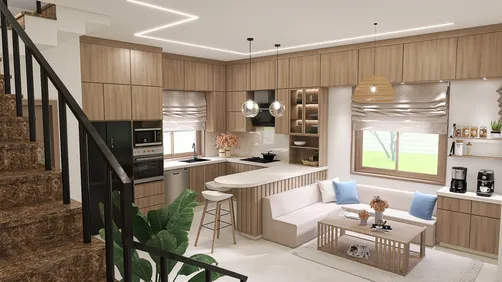
Design Principles: The public spaces are centered on the mid-level, while private areas are situated above, creating a sound gradient that resembles time zones. With the rise of remote work, this layout effectively buffers noise during bedtime and transforms dining into a multifunctional social hub.
Layout Flow: Entrance → mudroom → staircase to kitchen focal point → dining area serving as a router → living area → terrace. A private staircase ascends to three bedrooms, providing a sense of security and separation.
Visual Sightlines: The diagonal sightline from the kitchen island to the terrace's glass panels allows parents to oversee play areas while cooking; the upper hallway windows provide views of the sky, relieving mental bandwidth for relaxation.
Storage Solutions: Under-stair pull-out drawers, a wall grid at the entry, pantry columns, and linen towers on the upper floor ensure that storage is readily accessible without leaving behind isolated drawers.
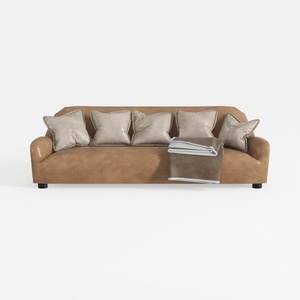
Furniture Integration: A 96–108" sofa with 36" for movement, a 30" deep dining bench, a queen-sized bed in the master suite, and two twin beds that can convert into a bunk bed setup in the children's room.
Conclusion: This design is future-proof: the mid-level fosters daily activities while the upper level safeguards rest. Even in five years, it continues to represent a calm and functional living environment.
save pin
Ground-Level Studio & Versatile Loft Space
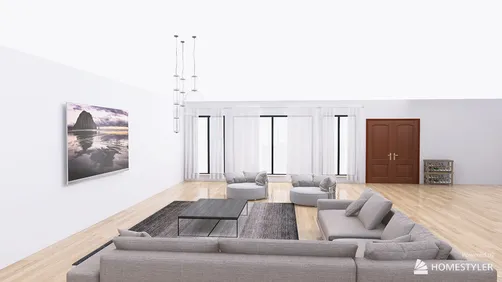
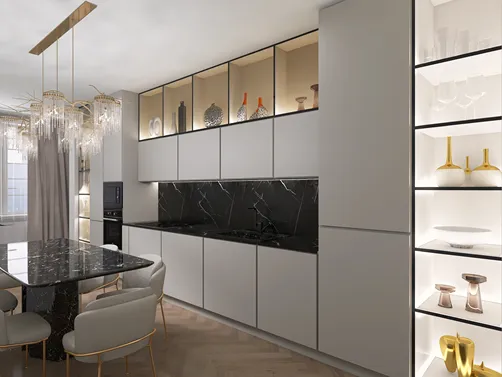
Design Principles: The first-floor suite can serve as a rental studio or an elder care room, while the top loft adapts between an office and a media space. With future homes requiring income-generating areas and caregiving zones, this layout meets those demands.
Layout Flow: Street entrance → small foyer → studio with a wet bar → garden access; a separate main staircase leads to the living area/kitchen and a loft that serves as a command center above.
Visual Sightlines: The loft offers an oversight of the living area like an interactive interface; the glass guardrail allows natural light to pour in while minimizing noise. The studio is oriented towards the garden instead of the street, enhancing the user experience.
Storage Solutions: A secure owner closet for studio mode, a vertical bike rack, a deep wall of wardrobes, and overhead loft cubbies create a tiered storage system based on accessibility.
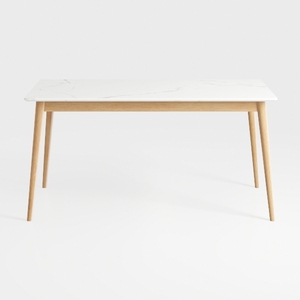
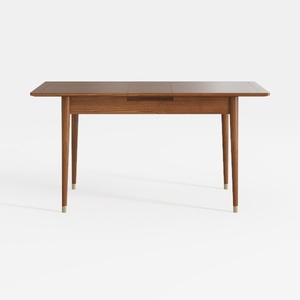
Furniture Integration: The studio can accommodate a full bed or a daybed, compact 24" appliances; the main level fits a 72" extendable table; the loft can hold a 60" desk along with sound-dampening panels.
Conclusion: This design offers immediate income potential or care options from day one and evolves into a creative space by year three, reflecting a modular approach to living rather than a rigid structure.
save pin
Central Stairway as a Source of Natural Light
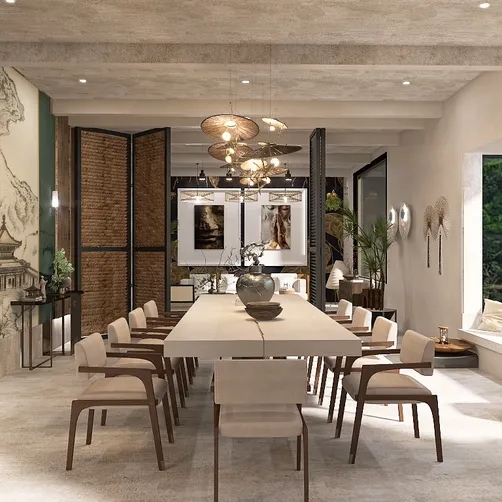
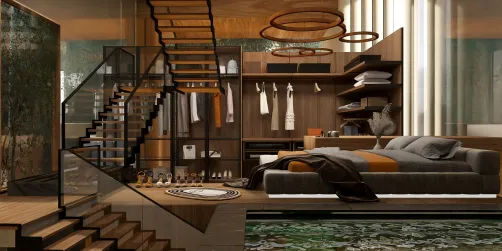
Design Principles: A skylit stair serves as the heart of the home, distributing natural light throughout the space. This sustainable approach is rooted in psychological benefits, as bright circulation areas help in reducing fatigue.
Layout Flow: Porch → entryway → stairwell (light shaft) → perimeter of kitchen/living spaces → ascending to bedrooms that encircle the core, eliminating dead-end areas.
Visual Sightlines: From the landing, layered views extend into the living area and upwards to the sky; transitional spaces function like user interface tabs, providing essential information while keeping clutter out of sight.
Storage Solutions: Landing libraries, toe-kick drawers at window seats, and deep wardrobes maintain order during busy mornings by placing storage near essential nodes.
Furniture Integration: An 8' x 3' island with adequate clearance, a sectional sofa capped at 108" to ensure clear pathways, a king-sized bed for the main suite, and a convertible crib that transforms into a desk in the children's room.
Conclusion: This light-centric design stabilizes mood and daily routines; even five years later, it remains efficient, economical, and inviting.
save pin
Final Insights
Three-bedroom townhouse floor plans in 3D are more than just images; they are a collection of behaviors waiting to be realized. With adaptable bedrooms, dual-purpose lofts, and strategically positioned storage, these townhouses become responsive interfaces for work, caregiving, and relaxation. In my view, the most intelligently designed homes of the future will not necessarily be larger but rather more intentional. I consistently design with this vision in mind, utilizing tools like Homestyler to bring these concepts to life.

Looking to transform your space? Homestyler is your go-to online home design platform! With its user-friendly design tool, stunning 3D renderings, and an array of inspiring design projects, plus helpful video tutorials, you can unleash your creativity and make your dream home a reality effortlessly!