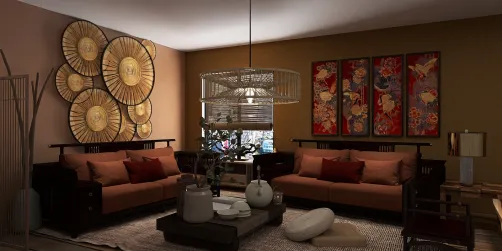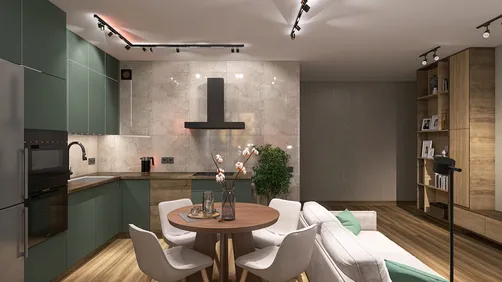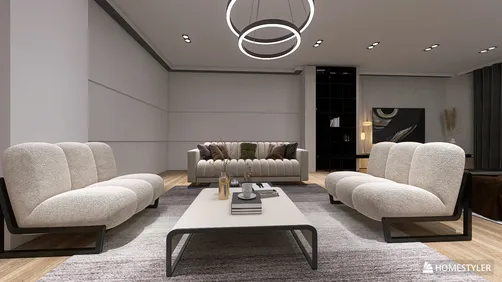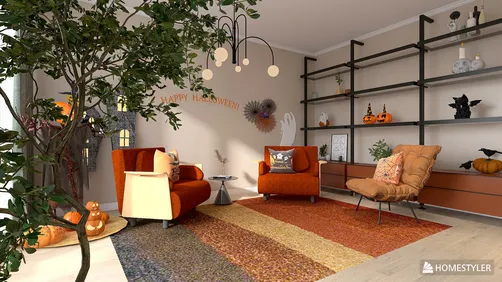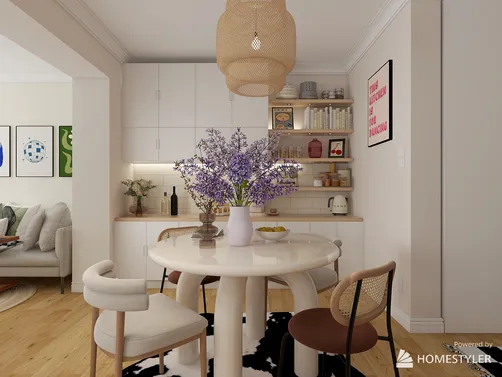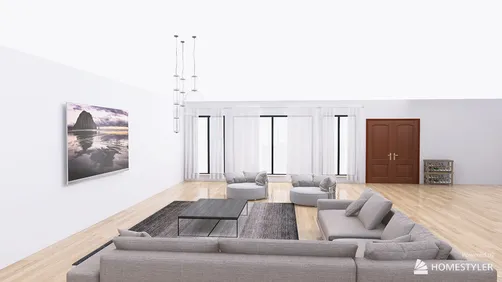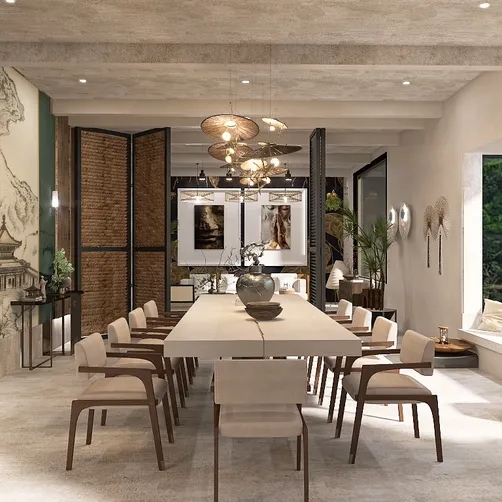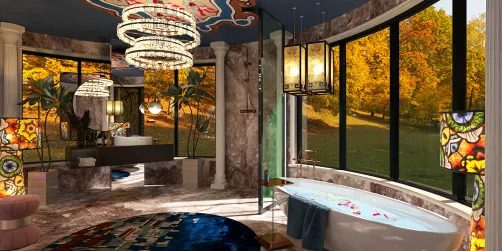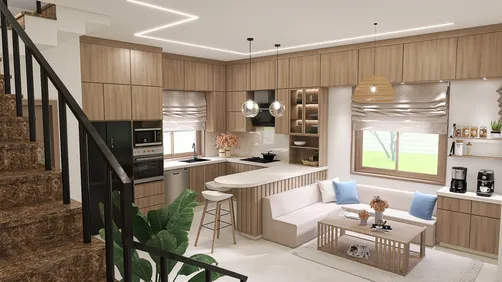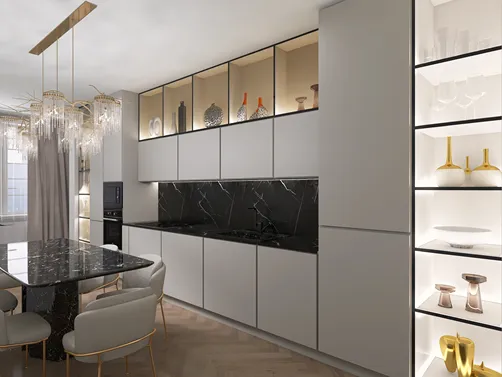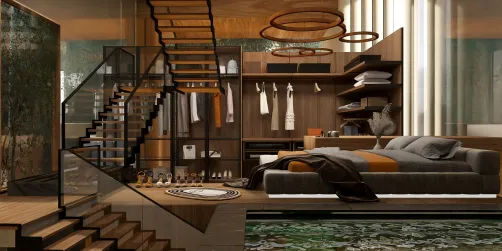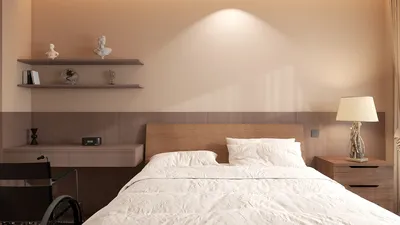
As we move into the future, my clients are often faced with the challenges of managing noise, storage limitations, and privacy issues in their compact living spaces. The AIA reports an ongoing demand for flexible, multi-purpose rooms, even as available floor space continues to decrease. This is where three-bedroom small house floor plans play a pivotal role in fostering a more serene living environment. I view these plans as a user interface: a single gesture can streamline interactions, while a strategically placed wall can redirect focus. Here's my exploration of spatial organization designed for future households, incorporating the capabilities of Homestyler.
Axial Spine Layout: Primary Suite plus Two Compact Rooms Adjacent to a Service Corridor
Design Principles: A central circulation spine operates like a primary thread; rooms are designed as modular units that connect seamlessly without losing functionality. Homes of the future require a tranquil nucleus with flexible peripheral spaces.
Traffic Flow: From the entryway to a combined mud/laundry node, then to the kitchen-living area, leading into the spine and culminating in the primary suite situated at the quieter end—while children's and office spaces are centrally located for supervision and energetic activity.
Sightlines: Extend a long view from the front of the house to the garden, utilizing partial walls to control cross-views; the layout establishes an information hierarchy, beginning with public areas and transitioning to more intimate settings.
Storage Solutions: Corridor closets serve as cache layers, complemented by a deep pantry and a bench-drawer at the entrance; an attic hatch provides cold storage for seasonal items.
Furniture Arrangement: Choose from an 84–96 inch sofa, a 30x60 dining table, a queen-sized bed for the primary suite, as well as twin beds or a desk-wall in secondary rooms; maintain clear 36 inch pathways to ensure smooth flow throughout the space, an API of sorts for movement.
Conclusion: This spine design anticipates five years of evolving daily routines—children growing, remote work increasing—while ensuring that attention and comfort aren’t compromised.
save pin
Split-Wing Layout: Parents on One Side, Children/Studio on the Other with a Shared Core
Design Principles: Two wings facilitate distinct processes: rest and work. The shared heart—a kitchen and living area—becomes a focal point for family gatherings.
Traffic Flow: From the entryway to an open core, leading to the primary suite in the left wing and two compact rooms with a pocketed bath in the right wing; movements operate like mirrored subroutines.
Sightlines: Diagonal transparency across the core, framed by a raised island and lowered ceilings; wings create private viewing zones, resembling a tiered permission system for privacy.
Storage Solutions: Each wing includes specific closets, a lidded island for added concealment, and under-bed drawers; garage wall racks manage overflow and prevent storage chaos.
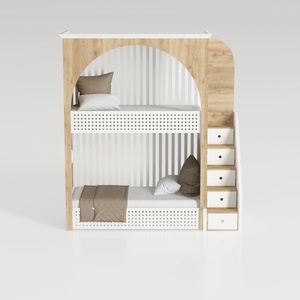
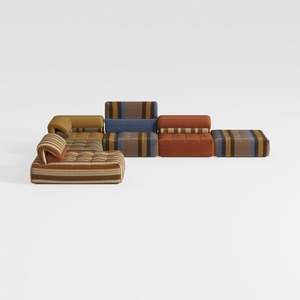
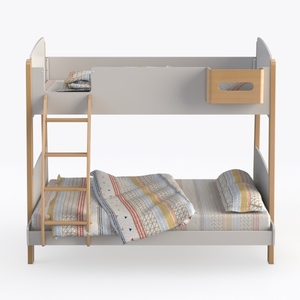
Furniture Arrangement: A 36x72 island, and a sectional sofa with chaise to ensure a 42-inch swing radius; consider bunk beds or Murphy beds in the children's area for adaptable spaces.
Conclusion: The split-wing design effectively anticipates future demands for privacy and noise management, allowing the home to transition effortlessly between study, sleep, and social activities without the need for major alterations.
save pin
Courtyard Loop: Internal Garden as a Light and Air Resource, Rooms Organized for Calm
Design Principles: A small internal courtyard acts as both a thermal and social hub; adjacent rooms are positioned to maximize natural light and promote airflow, highlighting renewable resources.
Traffic Flow: From entry to living-dining area, leading through a courtyard door and looping back to the bedrooms; this design prevents dead ends and minimizes daily friction.
Sightlines: Layered views from the kitchen to the courtyard and bedroom edges; this UI enhances clarity—foreground tasks, mid-ground leisure, and background retreat.
Storage Solutions: Built-ins around the perimeter, tall hallway units, and a concealed laundry wall; an outdoor bench trunk keeps gear organized and indoor clutter to a minimum.
Furniture Arrangement: A round 48-inch table to facilitate easy movement, slim 12–14 inch book walls, a queen-sized bed with 24 inch nightstands, and compact desks in the secondary rooms.
Conclusion: The loop and courtyard design foster a balanced atmosphere and climate, resembling an intelligent architecture that self-regulates, much like an efficiently functioning operating system.
save pin
Final Insights
Three-bedroom small house floor plans focus not on cramming more people into limited space, but on enhancing bandwidth, establishing privacy protocols, and providing clear interfaces that redefine daily living. Variations like the split-wing and courtyard loop exemplify how compact homes can adeptly handle multi-generational tasks without any latency. My observations indicate that the most intelligent homes of the future won't necessarily be larger, but rather more thoughtfully designed, with flows that subtly adjust daily habits—something achievable through tools like Homestyler.

Homestyler is your go-to online platform for home design! Its user-friendly design tool allows you to create stunning spaces with ease. Explore numerous 3D renderings and inspiring design projects, and enhance your skills with helpful DIY video tutorials. Transform your home effortlessly!