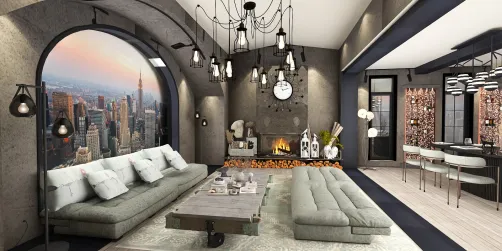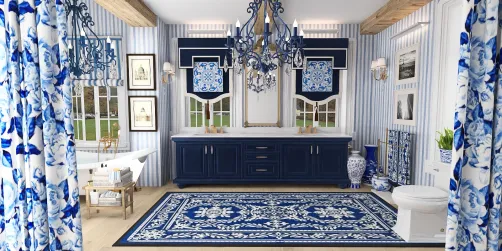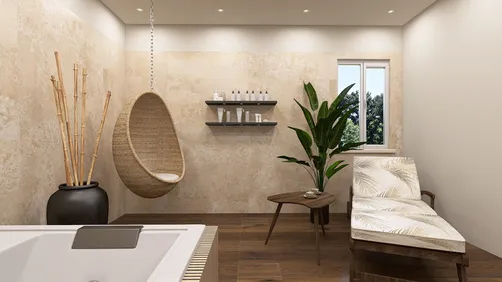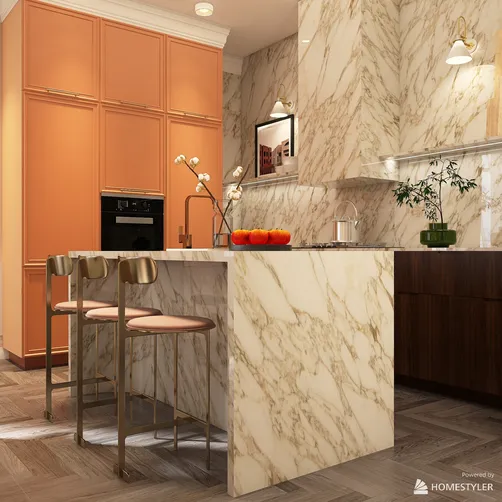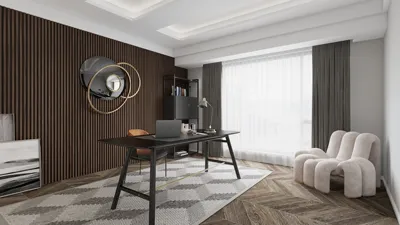
As the demands of modern lifestyles clash with our increasingly compact living spaces, it's evident in the width of hallways and the clearance required around beds. Recent surveys by AIA reveal a growing trend among homeowners who favor versatile rooms that serve multiple purposes over mere square footage. This shift means that a three-bedroom layout is not just about its dimensions; it's about a thoughtful approach to our living spaces that accommodates future needs. We assess sizes not merely as numbers but as previews of our behavioral patterns, and the future is nearing—it can be envisioned through tools like Homestyler that enhance spatial reasoning.
My clients require more than just rooms; they seek adaptability, a buffer for various activities, and a logically organized layout that accommodates the overlaps of work, schooling, and relaxation.
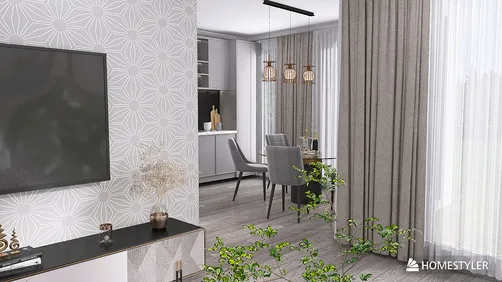
Split-Core Three-Bedroom (Central Spine + Dual Wings)
Design Logic: The design features a central 4-foot circulation spine that distinguishes between public and private spaces, with a living/dining area anchoring one section and the bedrooms in another. As routines evolve, it's crucial to separate work signals from family noise, making the split-core a fundamental operating system for daily life.
Flow: The entry foyer measures 4' x 6', leading into a 10' x 16' living area, then into a 10' x 12' dining space, followed by a 9' corridor leading to the bedrooms—all designed to minimize cross-traffic in the living areas.
Sightlines: A 26-foot sightline from the entry to the window establishes a clear visual interface: public spaces are emphasized first, while private areas are discreetly placed behind a corridor.
Storage: Corridor depth closets, measuring 24 inches, serve as valuable storage; a utility closet of 5' x 7' assists with seasonal transitions and gear organization.
Furniture Fit: An 84-inch sofa fits well within a 10-foot deep room, allowing for 36-inch walk paths, while queen-sized beds accommodate 30-inch side clearances and desks require a minimum of 48 inches for efficient hybrid work.
Verdict: This layout is designed to embrace the next five years of multi-functional living, fostering quiet sleep areas, consistent work environments, and a social hub that remains cohesive.
save pinOpen in 3D Planner Processing...
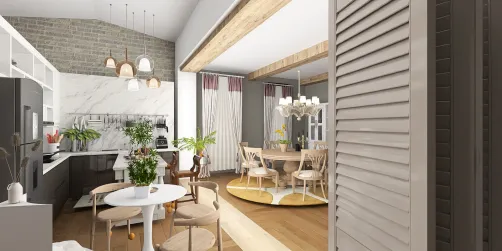
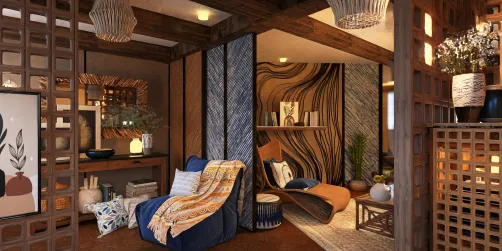
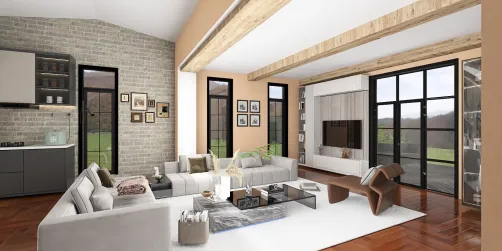
Corner-Window Three-Bedroom (Diagonal Visual Bus)
Design Logic: Corner windows bring daylight into the space diagonally, transforming the layout into an intuitive interface: bright public areas are positioned where the light is strongest, while private zones are thoughtfully separated by soundproof partitions.
Flow: From the entry to the kitchen (11' x 12'), then into a living area (12' x 16') along the window wall, the bedrooms are accessed via a 3'6" hall, minimizing space collision and delays.
Sightlines: A diagonal view spanning 28 feet from the kitchen to the corner window acts as a focal point; the hall serves as a subdued sidebar for rest and relaxation.
Storage: Built-in solutions under the windows, measuring 15 inches in depth, function as efficient storage, while a primary closet of 6' x 8' with double hanging rails enhances accessibility.
Furniture Fit: A 72" x 36" dining table is seamlessly centered within a 36-inch circulation loop; the bunk room accommodates twin-over-twin beds with a 30-inch clearance requirement.
Verdict: The abundant light defines priorities, while organized circulation maintains calm. This plan ranges from family dinners to night shifts effortlessly, remaining intact throughout.
save pinOpen in 3D Planner Processing...
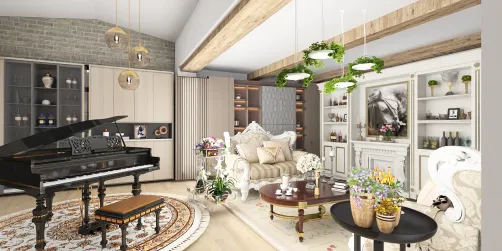
Flex-Node Three-Bedroom (Convertible Third Room)
Design Logic: The third bedroom is a transformative space; measuring 10' x 10', it features a sliding wall that allows it to function as an office, nursery, or guest suite, adapting to the evolving needs of work and school.
Flow: Entry leads into a 5' drop zone, progressing to a living area (12' x 15') and a flexible node situated at the public edge, with bedrooms accessible via a 4-foot hallway to ensure privacy.
Sightlines: A calming 24-foot line of sight to the terrace maintains a tranquil public atmosphere; the flex node benefits from a clerestory for partial transparency, indicating its status without disruption.
Storage: A 30-inch deep wall unit in the flex room provides equipment storage, while a linen closet (3' x 3') and a pantry (4' x 5') support daily organizational tasks.
Furniture Fit: A Murphy bed (60" x 80") folds away to allow circulation paths of 36 inches; an L-shaped desk (60") fits neatly into a corner without disrupting overall movement.
Verdict: This compact space operates like elastic code—easily adaptable for work, rest, or hosting guests—ensuring a coherent layout across various life cycles.
save pinOpen in 3D Planner Processing...
## Final Takeaway
A well-designed three-bedroom layout serves as a blueprint for living in increasingly complex routines that require more versatility. The adaptations seen in split-core, corner-window, and flex-node designs illustrate that simply increasing the size of a home isn't the key; rather, it's about precise calibration. Future living spaces will feature clear flows, structured sightlines, and smart storage—all designed to keep life efficient and responsive. In my professional journey, the most effective plans become evident when viewed as an interface, making tools like Homestyler invaluable in visualization and design.

Looking to transform your home? Homestyler offers an innovative online design tool that makes home styling simple and fun! With stunning 3D renderings, a wealth of design projects, and helpful video tutorials, you'll easily bring your dream space to life—no design experience necessary!