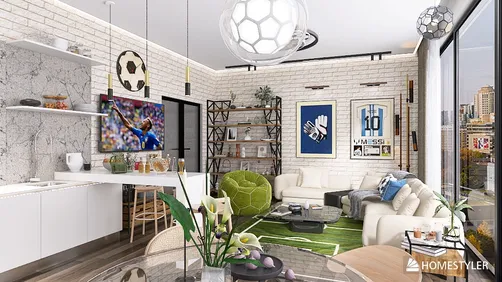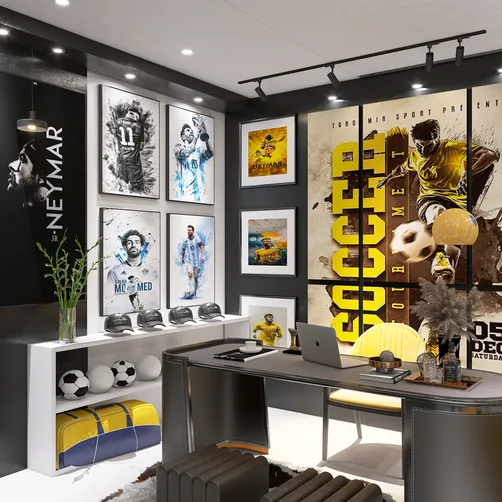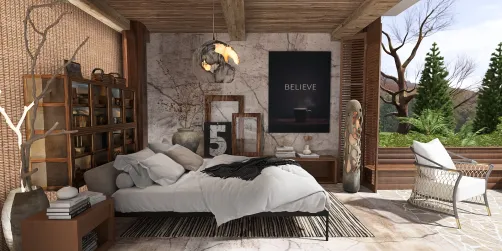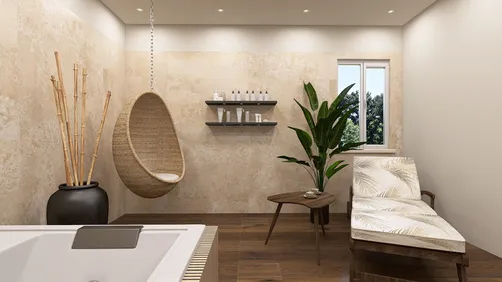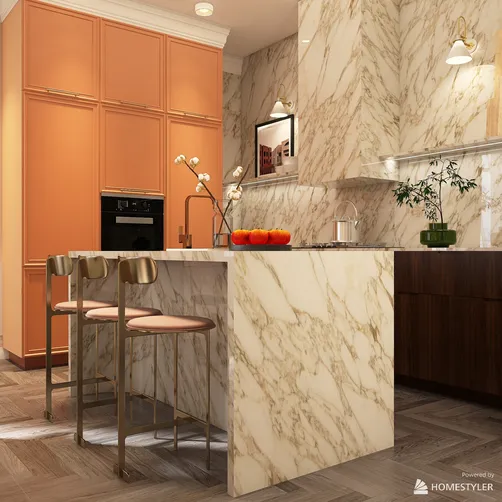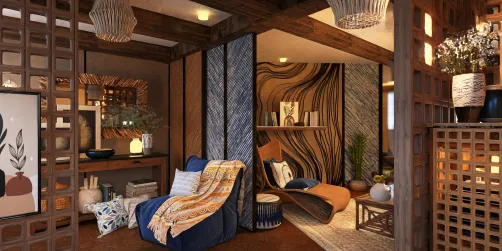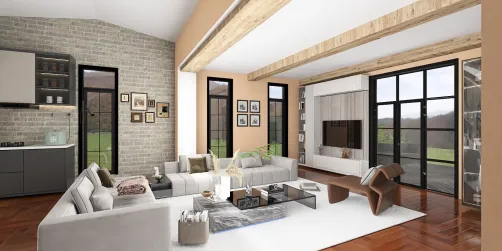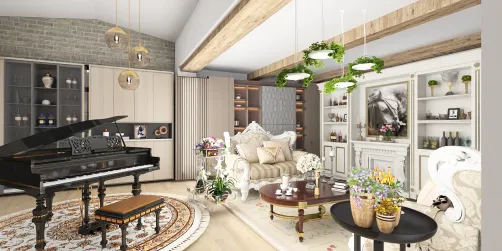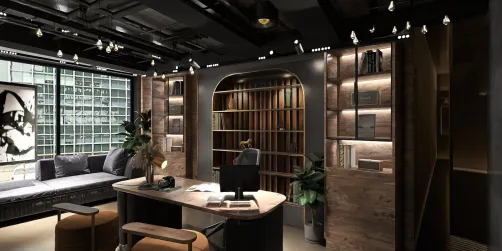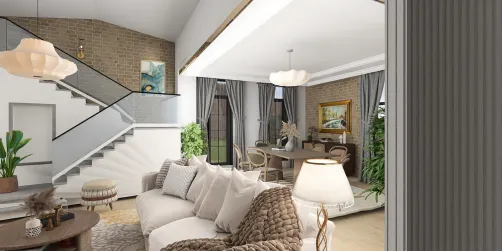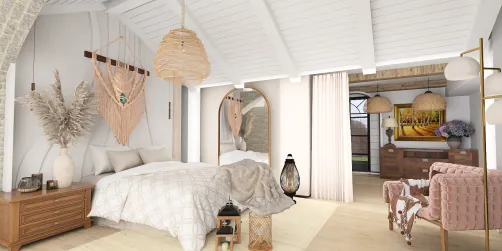
As we look toward the future, renters are still facing challenges such as noise interference, unconventional entryways, and limited storage options. I navigate these complexities by aligning emerging trends—like micro-mobility, hybrid work models, and the necessity of privacy—through the lens of design, imagining space as a dynamic operating system. My approach considers each single bedroom as a living code that can be optimized with a spatial reasoning toolkit. According to the NAHB, there's a noticeable trend towards smaller living spaces that prioritize functional density; the design of single-bedroom rentals on lower floors is a testing ground for the future of living arrangements.
Threshold Studio + Courtyard Spine
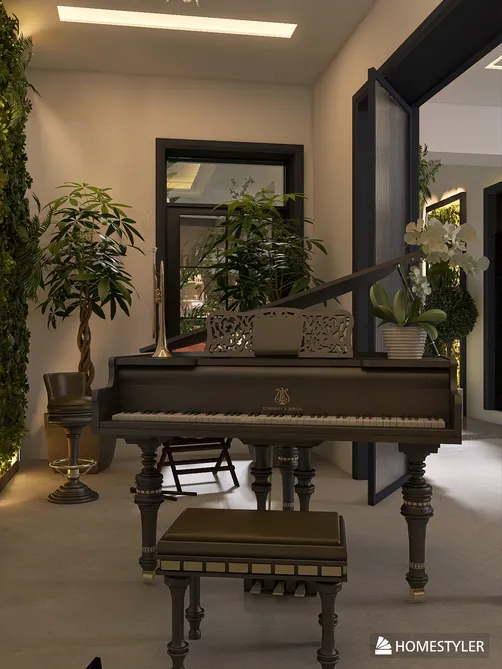
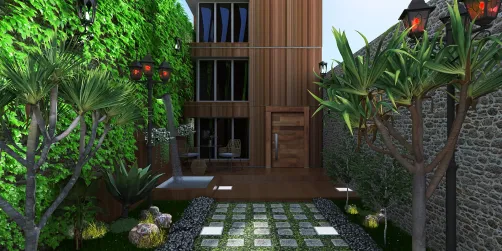
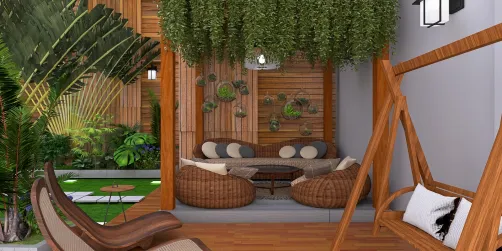
Design Logic: The entryway serves as a buffer against street noise, leading into a living room adjacent to a courtyard that feels open and inviting; the strategic first-floor location enhances connection to a garden interface.
Flow: The layout unfolds as follows: Entry → mudroom → kitchen core → central living area → bedroom anchor → bathroom; the flow of movement is straightforward, transitioning smoothly from public to private spaces without retracing steps.
Sightlines: The diagonal view from the entrance toward greenery establishes a serene ambiance; the bedroom is semi-enclosed by a partial wall, effectively managing noise levels.
Storage: A well-thought-out combination of storage solutions—such as cubbies in benches, a tall pantry, and drawers beneath the bed—ensures an uncluttered environment; seasonal bins are conveniently stacked near the entrance for easy access.
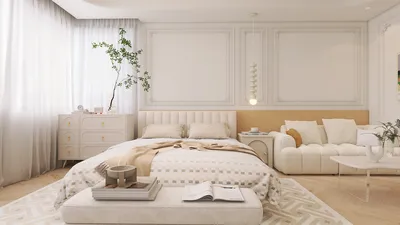
Furniture Fit: A sofa measuring between 72 and 78 inches complements a living bay of 9 to 10 feet; a queen bed finds its place in a room measuring 10 feet 3 inches, maintaining at least 30 inches of clear path space; a dining table for two tucks neatly into the kitchen island, much like a useful plugin.
Verdict: This design approach acts like a low-latency system: tranquility is immediate upon entry, social spaces accommodate gatherings, and private areas are resilient, adapting seamlessly over the next five years.
save pinOpen in 3D Planner Processing...
Work-Ready Rail + Quiet Core
Design Logic: The demands of hybrid work necessitate careful acoustic zoning; the bedroom occupies a quiet core while a rail kitchen and a compact workspace support the more active areas of the home.
Flow: The pathway is organized sequentially: Entry → coat storage → streamlined kitchen → flex space → bedroom → bathroom; this predictable layout reduces mental stress during daily routines.
Sightlines: Subtle reveals maintain kitchen tools out of immediate sight; the primary visual axis centers on a plant wall rather than a screen, prioritizing a calm atmosphere.
Storage: A wardrobe that is 24 inches deep, complemented by overhead storage, serves as reliable long-term organization; a rolling cart can be repurposed easily from coffee station to printer space.
Furniture Fit: A narrow desk with a depth of 18 to 22 inches, a compact task chair, and a wall-mounted media panel are employed to save floor space while maximizing functionality.
Verdict: The apartment operates as a structured thread of efficiency—focus is maintained, life flows naturally, and the convenient first-floor access transforms errands into streamlined activities.
save pinOpen in 3D Planner Processing...
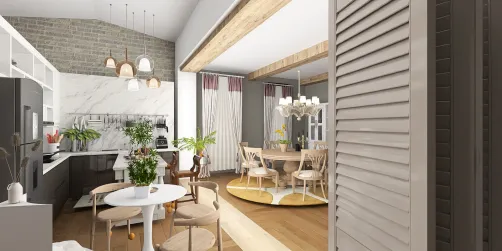
Perimeter Kitchen + Expandable Lounge
Design Logic: The kitchen's relocation to the perimeter liberates space for a central lounge; the future of entertaining favors versatility and modularity over sheer size.
Flow: The movement pattern is designed as: Entry → drop zone → perimeter cooking area → open lounge → sliding partition → bedroom; this results in an uninterrupted loop of traffic without congestion.
Sightlines: From the sofa, the kitchen serves as an indicator of status, while the sliding partition transforms the bedroom into a private retreat, accessible yet discreet.
Storage: A full-height utility wall essentially operates as a database for essential items—appliances, cleaning supplies, and bulk goods; shelves within the bed niche keep overnight necessities easily accessible.
Furniture Fit: A 36-inch round table serves as a dynamic hub for dining or working; nesting coffee tables adapt to various needs, similar to microservices within the lounge.
Verdict: This layout evolves over the next five years, adapting seamlessly like software—supporting hosting, work, and relaxation all within a flexible design that ensures that clutter remains out of focus.
save pinOpen in 3D Planner Processing...
Final Takeaway
In the context of first-floor single-bedroom rentals, the most effective strategies revolve around managing bandwidth—how entryways, storage solutions, and sightlines can mitigate daily distractions while accommodating future habits. Configurations like compact one-bedroom designs and small apartment blueprints illustrate that precision and thoughtful design triumph over mere square footage. The overarching principle here—the privacy strategy of first-floor living—turns proximity into a valuable asset rather than a limitation. Through my work, it has become clear that the most enduring homes view space as an interactive interface, with flow resembling a well-written code. Additionally, utilizing tools like Homestyler can enhance visualizing these concepts effectively.

Discover the power of design with Homestyler! This user-friendly online platform offers a robust design tool, stunning 3D renderings, and a wealth of inspiring design projects and video tutorials. Transform your home effortlessly—whether you’re a beginner or a DIY pro!