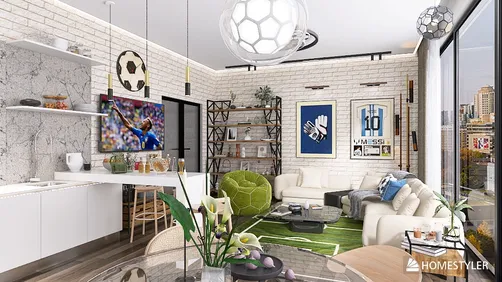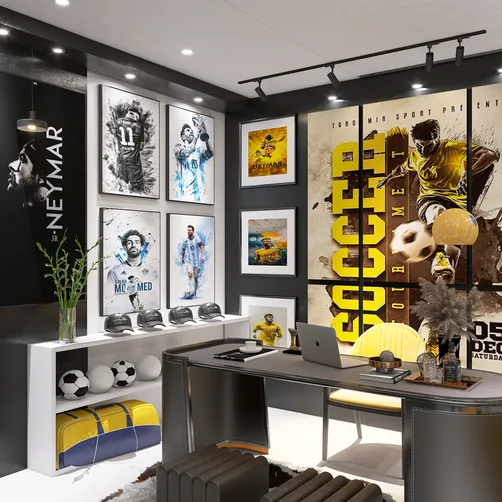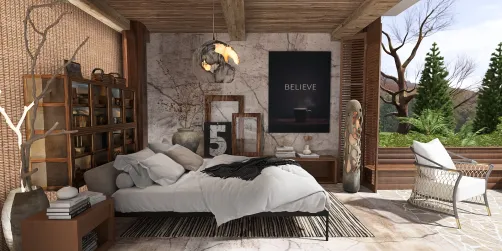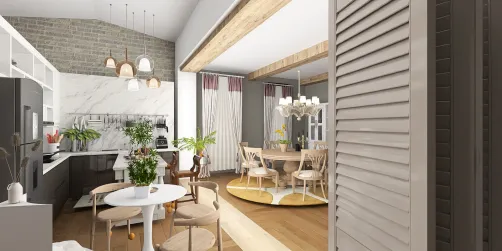
As we move into the future, current challenges such as budget limitations, the overlap of remote working, and the fatigue of accumulating possessions are revolutionizing our living spaces. I visualize two-bedroom small house floor plans as foundational components for how we will live tomorrow. Drawing insights from AIA and NAHB trends, it is evident that homes are increasingly adopting smaller footprints with enhanced functionality. My approach to design treats space similarly to a software interface, wherein each room acts as a module and thresholds function as protocols, shaping our movement and perception as the operating system of our lives. Utilizing Homestyler can help realize these concepts effectively.
Split-Core with Diagonal Flow
Design Logic: This layout features two compact bedrooms flanking a central living-kitchen hub. Diagonal connections link the entryway to the terrace, minimizing corridor congestion while offering adaptability for multiple living modes such as work, relaxation, and hosting. Using tools like Homestyler can illustrate these versatile adjustments.
Flow: The layout follows an entry → drop zone → kitchen pivot → living area → terrace path; the bedrooms branch off like functions that are activated only when necessary, ensuring an uncluttered public space.
Sightlines: Upon entering, oblique views reveal daylight sources; privacy gradients are created at 45° turns, allowing social interactions to take precedence before revealing private spaces.
Storage: Tall perimeter units serve as storage caches, complemented by bed platform drawers and hall niches for quick access, thus preventing any overflow delays.
Furniture Fit: The space accommodates a sofa measuring 72–78", a table sized at 30"×60", and queen beds in 10'×11' areas while maintaining a clearance of 30–36" for smooth movement, thus ensuring efficient daily performance.
Verdict: This floor plan promotes streamlined routines adaptable to both remote work and social gatherings. In five years, it will continue to function swiftly without compromising on storage capabilities.
save pinOpen in 3D Planner Processing...
Offset Bedrooms with Flex Pocket
Design Logic: Staggered bedrooms prevent shared headwalls, with a flexible pocket in between that serves as an acoustic buffer, optimizing the space to transform into a micro office or nursery as life changes.
Flow: The design includes an entryway → gallery spine → flex pocket → living area → kitchen; short branches off the main path provide access to bedrooms, minimizing dead ends and fostering modular updates.
Sightlines: The gallery delineates a long axis of natural light; door placement is strategic to avoid any direct sightlines from the beds, ensuring both UI hierarchy and tranquility.
Storage: The flex pocket wall is equipped with built-ins that are 20–24" deep, while an additional hall linen cache and vertical pantry help maintain daily routines without visual clutter.
Furniture Fit: The living area supports a compact sectional (84") with a media console under 60"; full or queen beds alongside 24" nightstand bays provide ergonomic arrangements.
Verdict: The flex space serves as a transitional area, easily converting from a desk today to a crib tomorrow, and later to gear storage, exemplifying a sophisticated design approach for small spaces.
save pinOpen in 3D Planner Processing...
Side-Load Entry with Rear Primary Suite
Design Logic: A side entryway streamlines the arrival process and reserves the rear for a serene primary suite, while the forward-facing secondary bedroom accommodates guests or housemates.
Flow: The layout navigates through a side porch → mud area → kitchen island → living area → rear suite, effectively directing noise away from sleep zones.
Sightlines: The kitchen island aligns with a window array, creating views that transition to greenery in the back, providing a calming aesthetic essential for recovery and focus.
Storage: Features include a mud bench and tall closet to manage daily items; the rear suite boasts a 7–8' wardrobe wall, while any under-stair area can act as a storage archive.
Furniture Fit: The island measures 36"×72", the dining area is 32"×60", primary suite accommodates a king-sized bed in 11'×12', and the secondary fits a full in 10'×10', all while preserving clear 36" pathways for fluid movement.
Verdict: Effective noise barriers and organized storage contribute to a maintained cognitive space; even in five years, the suite remains insulated from the activity of the home.
save pinOpen in 3D Planner Processing...
Final Takeaway
Two-bedroom small house floor plans transcend mere sketches; they serve as operating systems that condense comfort, privacy, and work into strategic pathways. Variations of compact two-bedroom designs and small home blueprints leverage diagonal views, ample storage, and meticulous dimensions to adapt to future living needs. The most intelligent two-bedroom homes will not necessarily be larger—they will be more purposeful in their flow, sightlines, and buffers. My experience shows that thoughtful spatial choices can significantly transform how my clients navigate their daily lives, and utilizing Homestyler can be a crucial part of that process.
Homestyler is a fantastic online home design platform that empowers you to create stunning spaces effortlessly. With its user-friendly design tool, impressive 3D renderings, a wealth of design projects, and helpful video tutorials, you can easily turn your home decor dreams into reality.