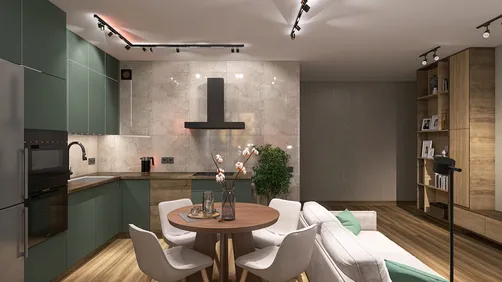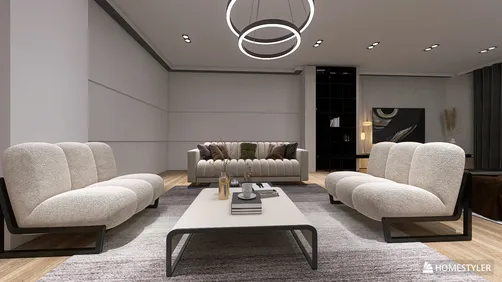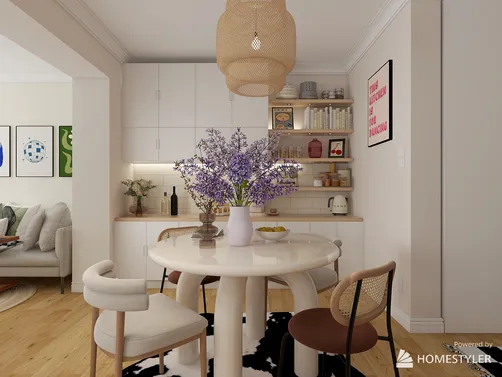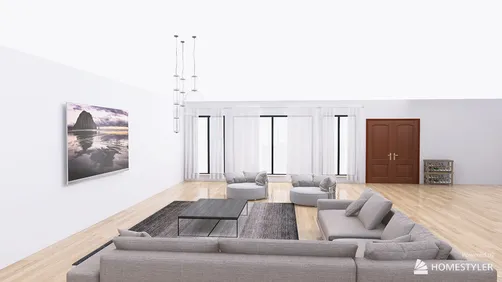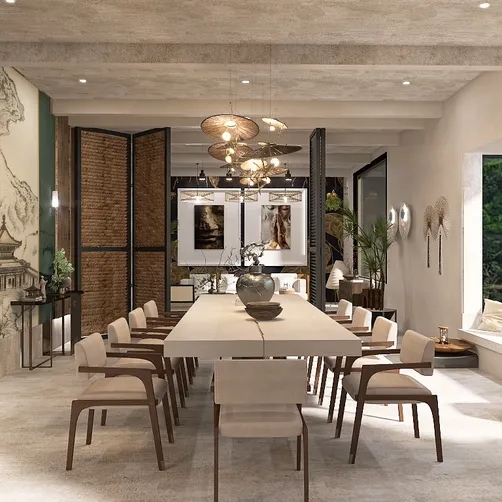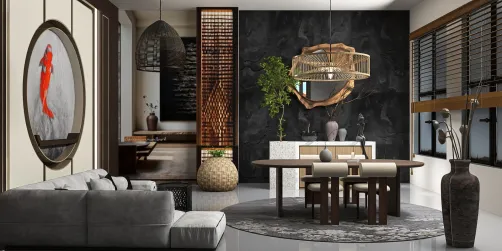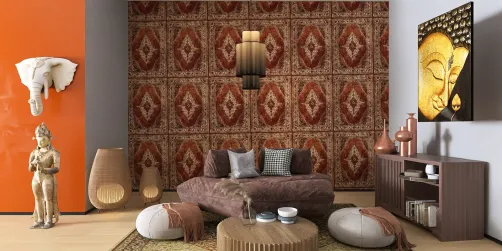
As we look ahead to the future of living spaces, it's clear that contemporary homes face challenges such as noise, durability, and adaptable protection. When I consider the design of single-level missile-class homes, they resemble the early software versions meant for promoting tranquility at home. Trends suggest a significant change; data from Zillow indicates that buyers are increasingly prioritizing advanced building features and energy efficiency, moving towards strong and effective home designs. In my approach to creating single-story layouts, I envision the blueprint like an operating system, where circulation paths, sightlines, and storage come together to form a secure and user-friendly environment. My design process relies heavily on spatial reasoning tools, for it's the minute details that contribute to future-proofing our living spaces.
Perimeter Shield Loop
Design Principle: A circular corridor envelops the central living space, providing a barrier that effectively dampens external noise and stress, making it ideal for resilient one-floor living.
Flow: The path begins at the entry, moving through a mudroom, along the loop corridor, into the living and kitchen core, then into the bedrooms, returning via the loop; this structure acts as a fail-safe to avoid critical breakdowns.
Sightlines: A long, uninterrupted view extends from the kitchen to the patio, with strategically placed niches to reduce glare; visibility is prioritized by functionality—public areas are most visible, while private spaces remain discreet.
Storage: The circular corridor features dual-depth wall compartments serving as storage for emergency supplies, pantry items, and seasonal bins, organized for easy access based on frequency of use.
Furniture Fit: With dimensions of 38" for the sofa, 36" clearance for the table, and 30" aisles in bedrooms, the space is designed considering movement efficiency and the need for rapid shelter.
Verdict: This circular design fortifies everyday life against disruptions while ensuring the heart of the home remains illuminated and welcoming; after five years, it emanates a sense of calm rather than a fortress-like shelter.
save pin
Core-Safe Spine with Split Zones
Design Principle: A structural spine clearly delineates public and private areas, consolidating essential services for power, water, and mechanical systems to function like a reliable server rack.
Flow: From the front entry to a flexible studio, leading into the spine zone which houses the laundry and mechanical areas, and then to the kitchen area, moving towards the primary and secondary bedrooms; this creates a well-defined navigation route.
Sightlines: By incorporating layered transparency, the design allows for partial views from the entry into the kitchen, while obscuring lines of sight to the bedrooms; clerestory windows attract natural light without compromising security.
Storage: The spine's closets transform into tiered storage options, allowing for quick access in the hub while providing deeper storage at the extremities; organized and labeled modules help reduce mental clutter in times of stress.
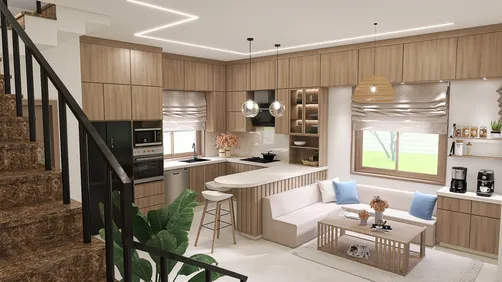
Furniture Fit: Modular seating at 96" paired with movable ottomans, bed frames varying from 60 to 76" with integrated cubbies, and a 42" clearance around the kitchen island create a fluid and functional living environment.
Verdict: By centralizing services, this design remains intelligible during power outages as well as in daily use; in the coming years, simplicity will take precedence over extravagance.
save pin
Safe Room + Adaptive Living Grid
Design Principle: A concealed safe room integrates seamlessly into the layout, while the living space operates on a flexible 3'-6" grid, enabling swift reconfiguration—where resilience meets hospitality.
Flow: Beginning with the garage and mudroom, transitioning through the living grid towards the safe room accessed via the pantry, then leading to the bedrooms and outdoor terrace; this structure mimics a well-ordered protocol.
Sightlines: The design utilizes low-sill windows for calm and nested views, offering perspectives of approach paths while ensuring that sightlines to the safe area are shielded; this layout is sensitive to awareness without creating anxiety.
Storage: Organized under-bench drawers, ceiling-hung racks, and designated pantry zones enhance storage; this systematic approach keeps daily essentials and contingency supplies tidy without visual chaos.
Furniture Fit: The grid-friendly design incorporates a 72" media wall, 30" deep benches, and an 84" x 42" island, with every piece aligning seamlessly for effortless updates.
Verdict: The safe room is simply another functional space within the home rather than a manifestation of fear; over time, the adaptability of the design will prove more valuable than mere physical strength.
save pin
Final Takeaway
Single-story missile-class housing designs can be viewed as resilient operating systems rather than mere fortifications. The effectiveness lies within the flow of movement, strategic sightlines, and organized storage. Future-ready homes will prioritize warmth without compromising on protective features, creating an ambiance that feels lighter, clearer, and more purposeful. Ultimately, safety begins with intuitive, legible design supported by tools like " Homestyler" to visualize and enhance these living spaces.

Transform your home design dreams into reality with Homestyler! This intuitive online platform offers a powerful design tool, stunning 3D renderings, and inspiring DIY video tutorials. Whether you're a beginner or a seasoned designer, Homestyler makes it easy and enjoyable to create your ideal space!