As the future approaches, today’s renters are grappling with issues such as storage limitations, commute exhaustion, and the blending of work and leisure environments. This need for adaptability is underscored by AIA’s Home Design Trends Survey, which indicates a persistent demand for versatile interiors that promote both work and wellness. I view floor plans for 1500 sq ft apartments as a blueprint for emerging routines—where rooms serve as permissions and thresholds convey logic. I strive to keep an eye on what lies ahead, incorporating tools like Homestyler to visualize these transformations.
spatial reasoning toolkit
In conversations surrounding housing trends with Zillow and NAHB, the concept of mid-size spaces emerges as a pivotal threshold. This size is sufficient for accommodating diverse daily activities while remaining compact enough to encourage organization and efficiency. The 1500 sq ft layout serves as a platform—facilitating flow, optimizing sightlines, and fine-tuning storage—all of which are akin to software updates for enhancing our living experiences.
Dual-Core Living + Remote Studio
Design Logic: The living and dining areas function as integral processors, while a secluded studio provides a concentrated workspace. Future routines will necessitate a quiet core, distinct from social distractions.
Flow: The layout flows seamlessly from entry to buffer alcove, through an open lounge, into a dining area, and ultimately reaching the studio door and private rooms; it’s a cohesive journey that mirrors a well-structured algorithm.
Sightlines: The linear path from the window wall to the kitchen peninsula is deliberate, with the studio positioned off-axis to enhance privacy, similar to hidden features in a user interface.
Storage: Shallow cabinets in the hallway function as quick-access storage, while a wall system in the studio acts as an organized archive, and the primary closet utilizes modular dividers to maximize efficiency.
Furniture Fit: The appropriate dimensions for key furniture pieces include an 82-90" sofa, a 36" deep desk, and a 60" dining table, all designed with circulation clearances in mind (36" pathways and 18" edge buffers).
Verdict: This arrangement is designed with upcoming hybrid workweeks in mind—balancing social spaces on the front end with focused areas at the back—proving stable for the anticipated five years of remote flexibility.
save pin
Split-Primary Suites + Shared Commons
Design Logic: Two equally sized bedrooms at opposite ends signal future co-living arrangements or multigenerational setups, while the communal areas serve as a shared, neutral space.
Flow: The layout navigates through the entry to a coat closet, continues along the kitchen spine, and leads to the living hub where corridors branch off to each suite, reducing collisions similar to streamlined processes.
Sightlines: A cross-view from the balcony to the cooktop allows for simultaneous supervision and hosting, while staggered bedroom doors ensure privacy and minimize direct sightlines.
Storage: Dual walk-in closets are designed to cater to varying functions, accompanied by a pantry column for efficient storage, and entry bench drawers for small essentials.
Furniture Fit: Queen-sized beds paired with 24" nightstands, a sectional limited to 96", and an island measuring 36" x 72" all maintain a streamlined flow with low movement latency.
Verdict: This design is poised to be future-proof, accommodating diverse occupants, maintaining clean communal spaces, and providing flexibility for role changes without needing major redesigns.
save pin
Linear Gallery Plan with Pocket Flex Room
Design Logic: A continuous layout aligns the living area, kitchen, and balcony, creating a clear visual pathway, while the pocket flex room adapts to various functions like a nursery, library, or wellness area as required.
Flow: The flow navigates from the entry through a storage niche, past the gallery kitchen and living area, leading to the pocket room and then the bedrooms; this structure avoids dead ends and prioritizes reversibility.
Sightlines: Upon entering, one’s gaze is drawn to the natural light streaming in at the far end, while the pocket room can be discovered as if it were an additional option on a menu.
Storage: Full-height cabinetry along the gallery wall provides continuous storage, complemented by hidden compartments for items such as brooms, luggage, and hobbies.
Furniture Fit: Console depth is set at 14", dining benches at 18" deep, and compact lounge chairs occupy a 30" footprint; these precise specifications ensure unobstructed passage.
Verdict: The gallery design highlights light and efficiency, while the pocket room is capable of adapting to life changes—creating an environment that is effective, user-friendly, and forward-thinking.
save pin
Final Takeaway
Floor plans for 1500 sq ft apartments transcend mere size; they center on creating interfaces that facilitate a harmonious mix of work, care, and leisure without disruption. With configurations like split suites, linear galleries, and studios designed for remote work, mid-size layouts are transformed into adaptable routines. From my perspective, the most intelligent homes of the future won’t be larger—they will be more intentional, and I contend that this scale strikes the perfect balance where proactive spatial decisions redefine daily living.
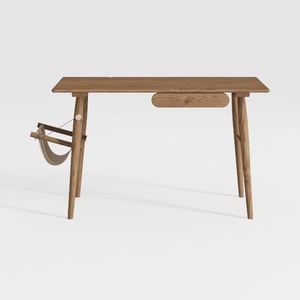
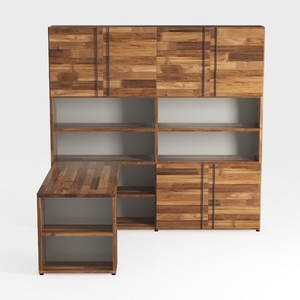
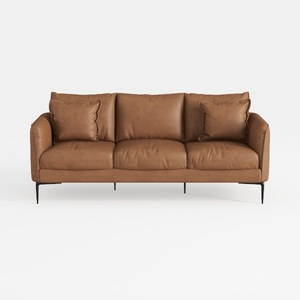
Homestyler is an amazing online platform for home design enthusiasts! With its user-friendly design tool, stunning 3D renderings, and a vast library of inspiring design projects and video tutorials, you'll effortlessly turn your home design dreams into reality. Start creating today!
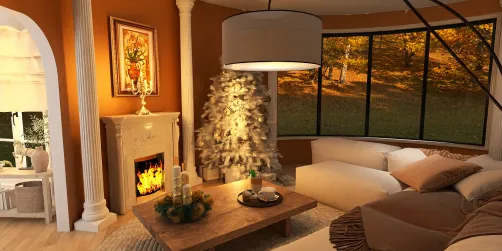



















![Design [4]](https://hs-designs.homestyler.com/production/design/images/07c2de3a-88ec-4be8-8910-ff255b795bc2/1731419398293/7841697.jpg?x-oss-process=image/resize,w_502,m_mfit/format,webp)