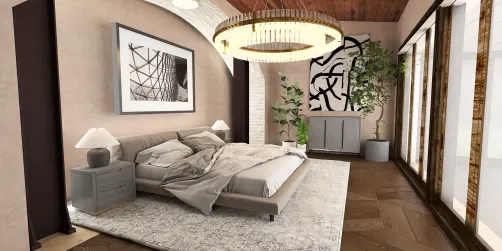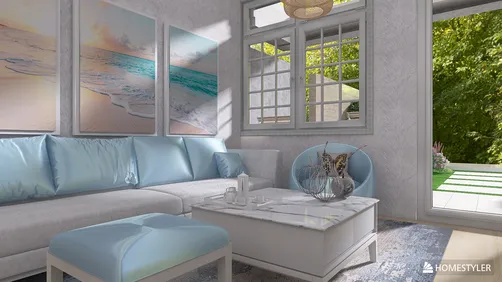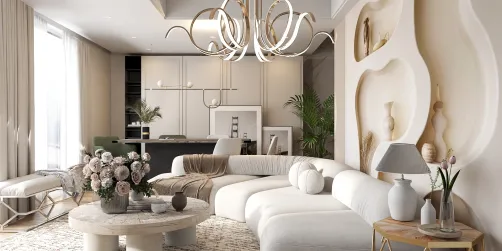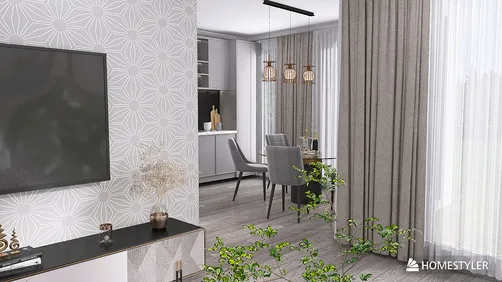
As we look towards the future, residential designs are evolving into more streamlined and intelligent layouts. Many current homes struggle with inefficient space utilization and flow, ultimately leading to wasted time and effort. Recent surveys by NAHB reveal a trend towards smaller home footprints, emphasizing the importance of functionality over superfluous features. This is where the concept of a ground floor plan for an 800 sq ft single-house becomes relevant—it serves as a foundational blueprint for modern living. The future is rapidly taking shape, and I envision it manifesting within this ground-level framework, with elements such as doors, sightlines, and functionality defined in a spatial reasoning toolkit that incorporates solutions like Homestyler.
Linear Spine Layout
Design Logic: This layout features a central service spine from which various rooms—kitchen, living room, and bathroom—extend outward, concentrating utilities and making future modifications affordable while supporting electrification and flexible areas.
Flow: The pathway transitions seamlessly from entrance to mud area, then to living space, kitchen, pocket hall, and finally bathroom/bedroom, eliminating any need for unnecessary backtracking, similar to a well-organized software function.
Sightlines: Door frames are strategically aligned along a long axis, connecting the living area with the garden and the kitchen with natural light; user interface layers unfold progressively, minimizing noise and distraction.
Storage: Features like a deep pantry and hall niches serve as efficient storage solutions, with measurements of 24" width and 8–10 linear feet located near the kitchen, plus an under-stair trunk provided the slab permits it.
Furniture Fit: Recommended furniture sizes include a sofa of 72–78 inches, a round table of 36 inches in diameter, and a queen bed measuring 60 inches, keeping 24 inches of clearance on the sides; design parameters prevent overflow into the spine area.
Verdict: This layout effectively compiles daily routines; in five years, it will accommodate tech upgrades seamlessly without needing to reconfigure the house’s foundational logic.
save pin
Courtyard Core Layout
Design Logic: Arranging a compact circle around a micro-courtyard prioritizes natural light as a key element, ensuring biophilic design principles and passive comfort are integrated within the 800 sq ft space.
Flow: The movement pattern progresses from the entrance to the living ring, then to the kitchen, bath gateway, and bedroom, creating a loop that continuously orbits the garden, much like a feedback mechanism.
Sightlines: The layout allows for short, engaging views into green spaces, with layered thresholds creating varying levels of privacy—from public spaces to intimate zones—marked by gentle transitions.
Storage: A combination of perimeter seating and vertical lockers along with 12" deep wall cladding provides hidden storage opportunities around the courtyard.
Furniture Fit: Includes a built-in banquette with a seat height of 16–18 inches, a compact kitchen island measuring 48" x 24", and beds with integrated shelving, maximizing the use of limited space.
Verdict: This courtyard-centric layout acts as a vibrant hub; future outdoor work and wellness activities can easily integrate into this core without necessitating expansion of the overall footprint.
save pin
Split-Zone Offset Layout
Design Logic: This design features two offset rectangles that designate a social space in front and a private area at the back; the connection zone efficiently accommodates storage and utilities, functioning like a communal bus system.
Flow: The route takes you from a porch to the living/kitchen area along a shared corridor, leading to the bath and bedroom spaces, allowing children or guests to navigate independently without disrupting the main areas.
Sightlines: Window placements are designed diagonally; the social zone offers expansive views, while the private zone is more compact to help reduce cognitive overload.
Storage: The seam wall, measuring 30 inches deep, efficiently houses coats, a laundry unit, and a cleaning station, providing a predictable and stable storage solution.
Furniture Fit: Recommendations include a sectional up to 90 inches for walls over 11 feet long, and a maximum dining table size of 30" x 60"; bedroom wardrobes should maintain a flush 24" depth to ensure space efficiency.
Verdict: This layout preserves sound privacy; flexible lifestyle adjustments in the coming years won’t complicate the foundational design’s structure.
save pin
Final Takeaway
A thoughtfully designed 800 sq ft ground floor plan optimizes the interplay of movement, light, and storage, resulting in a seamless daily experience. Different configurations, such as the linear spine or courtyard core layout, illustrate how a single-house footprint can evolve to accommodate changing needs. A well-crafted ground floor plan for 800 sq feet single houses effectively transforms daily activities into streamlined processes, ready for future upgrades and innovations. As I've observed, the most intelligent homes of the future will not necessarily be larger; rather, they will be more deliberately designed with solutions like Homestyler to enhance livability.


Homestyler is your go-to online home design platform! With its user-friendly design tool, stunning 3D renderings, and a wealth of DIY video tutorials, you can effortlessly create and visualize your dream space. Unleash your creativity and transform your home with ease!