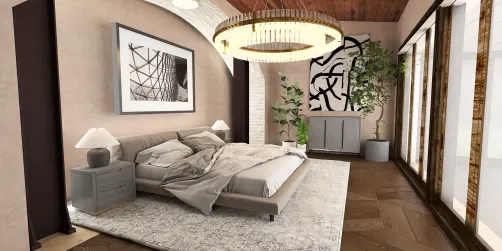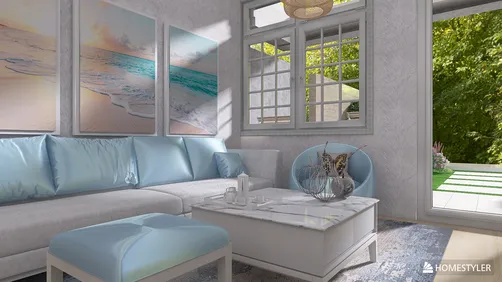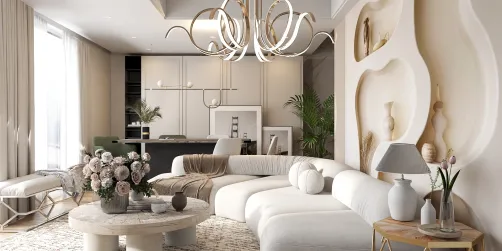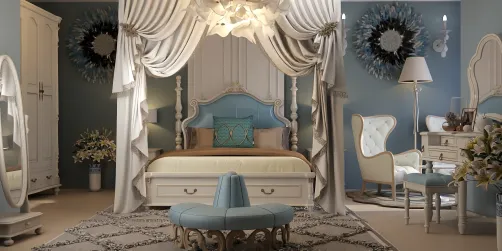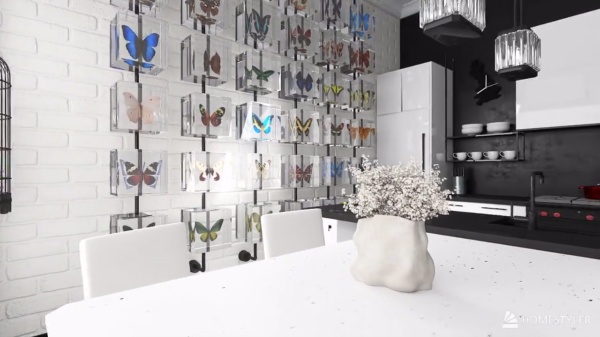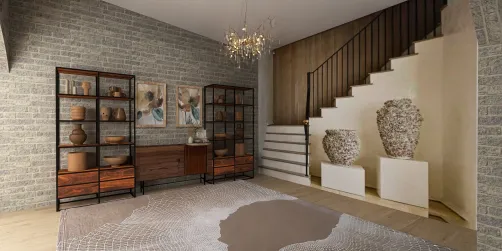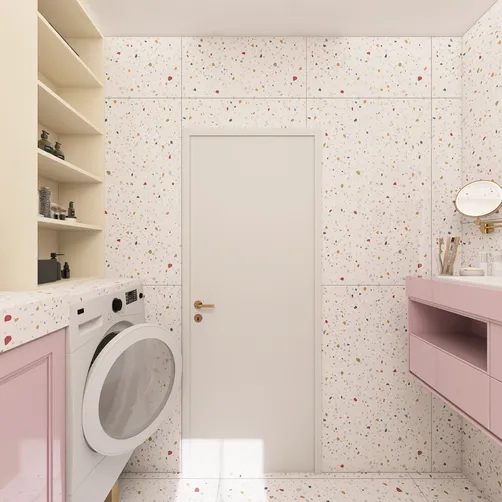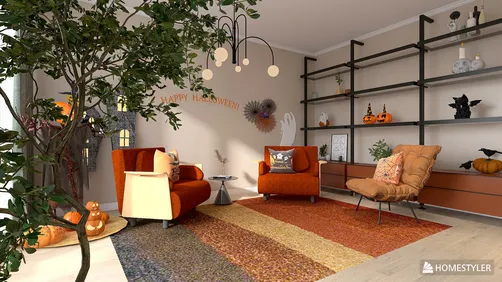
The evolving lifestyle increasingly minimizes the gap between work and relaxation, yet many modern homes still struggle with inefficient layouts. To address this, I conceptualize ground floors as integrated, responsive spaces. Data from AIA indicates that families are streamlining circulation to maximize usable space, which is why a well-thought-out ground floor plan for a 8 marla house is crucial for enhancing daily activities. As we look to the future, I'm investigating how spatial organization can function as a guiding framework, with Homestyler serving as an essential tool in this design process.
Courtyard Spine + Split Living
Design Logic: Incorporating a narrow internal courtyard creates both a thermal and social backbone for the home, effectively separating the living and dining areas while allowing the layout to adapt to the changing needs of the family.
Flow: The sequence—from entrance to foyer, then moving to the living space, followed by a pause in the courtyard, and finally leading into the dining and kitchen area—ensures that movement is smooth and minimizes retracing steps, much like a well-planned daily routine.
Sightlines: The design captures the viewer's experience from the entrance all the way to the green space and cooking area; depth has been layered to gradually enhance privacy, resembling a user interface that transitions from communal to private areas.
Storage: Strategic placements such as under-stair drawers, a dining sideboard, and a pantry wall create a buffer for daily usage spikes without cluttering the visual space.
Furniture Fit: Sofas are designed for a 9–10 ft area, while dining tables fit within a 6–7 ft space, ensuring that walkways maintain a width of 36–42 inches—a crucial limit to avert congestion in the living area.
Verdict: This architectural arrangement is designed with the future in mind: it accommodates hosting, study sessions, and calm evenings along a cohesive backbone, resilient enough to adapt to family dynamics over the next five years.
save pin
Front Flex Room + Rear Open Kitchen
Design Logic: A versatile front-facing flex room transitions seamlessly between a home office and a guest suite, recognizing hybrid work as a constant feature in today’s lifestyle.
Flow: The layout provides a direct path from the porch to the flex room (which serves as a quick-access point), continuing to the hallway, and then into the open kitchen and garden; these parallel routes help prevent overlap when work and cooking occur at the same time.
Sightlines: The design allows for selective views: the flex room offers a shallow perspective, while the kitchen and garden extend a deeper view to help alleviate cognitive overload after a long day of screen time.
Storage: High-capacity cabinetry and a concealed utility space are included to manage a variety of items—be it appliances or paperwork—keeping everything organized and out of sight.
Furniture Fit: Equipped with a 60-inch desk, sleeper loveseat, and a modular dining table, this design adheres to corridor standards to ensure that human traffic flows smoothly without interruption.
Verdict: This flex-orientated ground floor is prepared for the shifting schedules of modern life; it quietly transforms open space into tranquility, ready to meet the demands of future hybrid living.
save pin
Central Stair Core + Perimeter Rooms
Design Logic: A centralized stairway core enhances vertical movement while allowing the outer rooms to serve distinct functions, whether as a living area, elder suite, or play zone.
Flow: The layout guides movement from the entrance through a circular corridor to the stair core, where rooms radiate out; this configuration functions like a reliable bus system, redirecting flow during peak household activity.
Sightlines: Visual transitions from the corridor to framed room openings are prioritized to maintain clarity and privacy across the entire plan.
Storage: Continuous millwork along the perimeter offers extensive storage options, reducing clutter around the core and allowing for a clean, organized environment.
Furniture Fit: Room widths of 10–11 ft are ideal for accommodating sectional or twin beds while ensuring clearances of 36 inches—a clear boundary for daily movement.
Verdict: The spatial organization creates a stable operating system for the home, enabling future adaptations—be it caregiving or new hobbies—without needing to overhaul the foundational layout.
save pin
Final Takeaway
The ground floor design for an 8 marla house acts as a dynamic interface, where circulation, storage, and furniture arrangements function like coded elements. From designs featuring courtyard spines to central cores, these variations empower families to create diverse routines without needing to expand their living space, effectively echoing the principles of compact home design and optimizing smaller lots. Ultimately, the most innovative layouts will feel spacious not due to their size, but because they reduce friction at every touchpoint; through my experience, the most adaptable homes are those where the flow and sightlines are meticulously aligned, much like software integrated with Homestyler.


Homestyler is an exceptional online home design platform that makes it easy to create stunning spaces. With its user-friendly design tool, impressive 3D rendering, diverse design projects, and helpful video tutorials, you can effortlessly bring your creative visions to life. Perfect for all design enthusiasts!