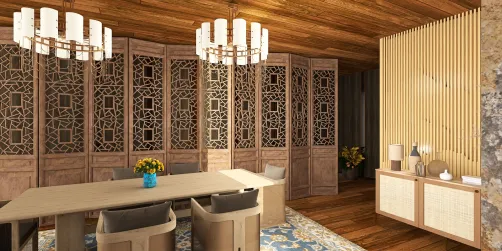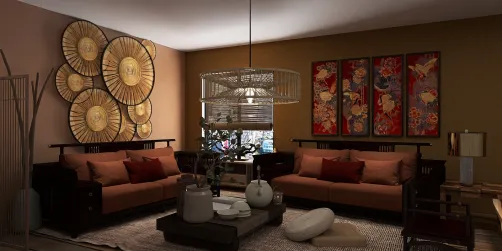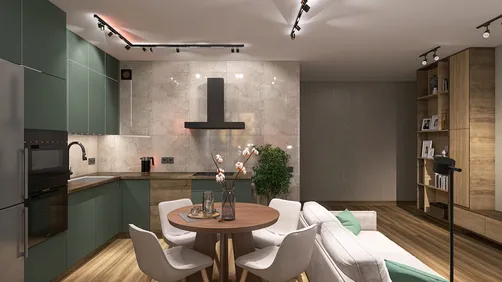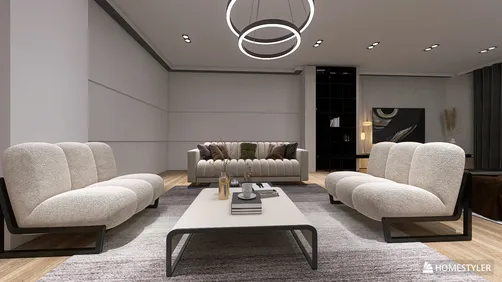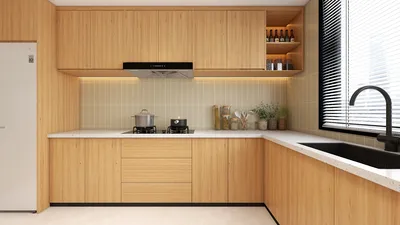
As future lifestyles continue to influence our present, many clients are grappling with the challenges posed by hybrid work, multigenerational dynamics, and increasing energy efficiency demands. When Australian families search for three-bedroom floor plans, utilizing a spatial reasoning toolkit becomes crucial to balance daylight, privacy, and versatile spaces. Recent reports from AIA and NAHB illustrate a surge in demand for home offices and multifunctional rooms, demonstrating how this data seamlessly integrates into logical planning: treating rooms as functional units, hallways as communication pathways, and entryways as permissions. Incorporating tools like Homestyler can significantly enhance this planning process.
Courtyard Spine + Dual Suite Option
Design Logic: A central courtyard functions as a climate buffer and social nucleus; it is flanked by two bedrooms while a flexible suite can transition between a guest room and an office. This design is poised to ensure thermal comfort, maintain outdoor-indoor continuity, and support remote work activities effectively.
Flow: Entry flows into a drop zone, leading to a living area and kitchen facing the courtyard, branching off to bedrooms, creating a tranquil route to the suite; this layout minimizes cross-traffic and preserves acoustic comfort.
Sightlines: The long axial view from the door to the garden, with side glimpses connecting cooking areas to play spaces; visibility is layered like a user interface: bright for public spaces, softer for private areas, and hidden for service zones.
Storage: Perimeter wall banks, under-bench storage, and linen points close to bathrooms are strategically placed; capacity is designed to accommodate seasonal equipment and WFH accessories, preventing overflow issues.
Furniture Fit: Sofas are positioned for clear circulation at 900–1000 mm, queen beds feature 800 mm of clearance on each side, and dining arrangements for six do not compromise movement; these dimensions align with an upgraded daily living experience.
Verdict: Over the span of five years, this design adapts to new lifestyles, accommodating guests and climate variations while ensuring that routines remain clear, all the while the courtyard balances energy consumption and emotional well-being.
save pin
L-Plan with Split Zoning and Breezeways
Design Logic: The L shape encapsulates a northern yard, carefully segregating busy daytime functions from a quieter bedroom zone; breezeways serve as cooling mechanisms during the hot Australian summer and help meet future energy efficiency goals.
Flow: Carport leads into a mudroom, then to a central kitchen, flowing to the living space along the long leg, with a pivot to bedrooms on the shorter section; this arrangement streamlines movement and minimizes interruptions between tasks.
Sightlines: The design ensures sightlines are choreographed from the kitchen to the yard and study nook; window treatments function like tabs in a user interface—open for interaction, subdued for relaxation.
Storage: Custom built-in units at junctions, pantry storage, and children's compartments along the corridor create a clear organization system so that items are easily stored and retrieved.
Furniture Fit: A modular sectional measures 3.0–3.2 meters, while a bunk room is designed for growth; the primary suite accommodates a king-size bed alongside cozy seating; precise dimensions maintain functional layouts without issues.
Verdict: This layout evolves well as children gain independence; breezeways ensure ongoing comfort while the split zoning contributes to harmonious home office arrangements.
save pin
Compact Urban Three-Bed with Flex Pod
Design Logic: For urban lots with limited space, a compact rectangular design incorporates three bedrooms plus a sliding-wall pod; this layout compresses functionality without sacrificing usability, anticipating the need for urban infill and changing requirements.
Flow: Entry leads to a combined living and dining area, adjacent to the flex pod, followed by a short hall toward clustered bedrooms; this arrangement optimizes workflow by minimizing unnecessary movements.
Sightlines: The design features layers from the street to the balcony, with controlled visual access to the pod; a hierarchy of visibility directs focus, similar to notifications—revealing only essential elements.
Storage: Ceiling-height wardrobes, under-stair compartments, and balcony lockers are thoughtfully integrated; storage capacity meets the demands of city living while ensuring easy access for daily routines.
Furniture Fit: A round table promotes easy movement, a narrow-depth sofa is provided, and there are 600 mm desk modules in the pod; dimensions respect personal space and future hybrid working setups.
Verdict: The flex pod can easily adapt for use as a study, nursery, or micro-gym; over time, this compact plan remains versatile as family roles evolve without requiring major renovations.
save pin
Final Takeaway
Three-bedroom floor plans in Australia achieve optimal functionality when the home operates like an interface: adaptable, easy to understand, and efficient under varying demands. Variants like split zoning, courtyard designs, and compact rectangles all contribute to a cohesive design that supports multigenerational living and remote work. Long-term requirements, such as energy-efficient layouts and flexible WFH pods, make these architectural solutions feel relevant and timely. Based on my experience, the most intelligent homes of the future will not necessarily be larger, but rather more intentional in their design—tools like Homestyler can greatly assist in visualizing these concepts.
Discover your inner designer with Homestyler! This exceptional online platform offers an intuitive design tool, stunning 3D renderings, and a wealth of DIY video tutorials. Perfect for anyone looking to create beautiful, personalized spaces with ease—no experience needed!