In my experience, I have designed numerous compact powder rooms where maximizing every square inch is crucial. A pedestal sink frequently becomes the centerpiece: it lightens the room's footprint, exposes more floor area, and creates a sharp focal point. The challenge lies in harmonizing storage, lighting quality, and code compliance while ensuring the space does not feel cramped and retains its charm.
The concepts of scale and perception are integral to my design approach. Research, such as Gensler’s Workplace Survey, connects feelings of spaciousness and clear sightlines with user satisfaction. In a similar vein, a study by Steelcase indicates that visual clutter heightens cognitive load and stress levels, especially in confined areas. For wellness considerations, the WELL v2 guidelines stress the importance of proper lighting and glare management for occupant comfort. In the context of a small powder room, I recommend keeping the lower section of the wall visually subtle, ensuring there is adequate clear space in front of the sink, and utilizing layered, soft lighting for accurate reflection in the mirror. The IES suggests approximately 300–500 lux for grooming tasks at the mirror level with a color rendering index (CRI) of 90 or higher for true-to-life skin tones.
The psychology of color significantly impacts design choices. An overview from Verywell Mind explains how cooler shades tend to recede visually while warmer tones appear to advance; I leverage this principle to manipulate perceived spatial depth. For instance, a soft, cool backdrop complemented by warm metallic accents exhibits a sense of balance. From an ergonomic perspective, a standard pedestal sink height of 34 to 36 inches accommodates most adults, though accessible designs necessitate detailed planning in more expansive bathrooms. In compact powder rooms, I keep clearances intuitive: ideally 21 inches in front of the bowl (preferably 30 inches) and a 15–18 inch offset from the sink centerline to adjoining walls or obstacles for comfort.
Establishing the Focal Axis is essential in a powder room design.
A pedestal sink thrives in a well-defined axial arrangement: position the bowl in line with the door sightline if feasible. To create a vertical rhythm, align the mirror and a pair of slimline sconces. In narrower rooms, orient the axis along the length and place the pedestal against the long wall—this minimizes cross-traffic issues and maintains an elegant entrance.
Plan the Layout Around Clearances is crucial for functionality.
In limited spaces, every millimeter counts. Ensure the door swing doesn’t impede movement, and provide at least 30 inches of unobstructed width in front of the pedestal for ease of use. When balancing the door, pedestal, and toilet, I often simulate various configurations to safeguard these clearances and maintain line of sight from the hallway. If you’re evaluating layout options, utilizing an interior layout planner or room layout tool like Homestyler can facilitate quick iterations without committing to plumbing changes.
Choose a Pedestal Profile That Enhances Volume.
Opt for slender, tapered pedestals that reveal more base and floor tiles, making the room feel larger. Rounded bowls can soften corners in very small spaces, while angular shapes suit modern aesthetics. I avoid bulky pedestals with heavy bases, as they can visually constrict the area and complicate cleaning.
Mirror Strategy: Taller Over Wider is essential for visual perception.
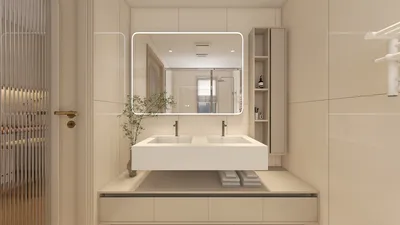
Using a tall mirror can create an illusion of increased ceiling height. A width of 24 to 28 inches generally suffices for most pedestal sinks. I often install the mirror 6 to 8 inches below the ceiling to reflect light and create an elongated appearance for the wall. Beveled edges or narrow metal frames help maintain a sharp profile without consuming depth.
Layered Lighting That Flatters enhances the overall ambiance.
Install even, vertical lighting at eye level. Flanking the mirror with sconces set at approximately 60 to 66 inches above the floor helps avoid shadows. Target 300 to 500 lux for facial lighting with a warm-neutral color temperature of 2700 to 3000K and a CRI of 90 or above for accurate color depiction. A small downlight can be included for ambient lighting but should be shielded to prevent top-down glare. This setup aligns with IES standards for task lighting and improves comfort as per WELL v2 lighting concepts.
Color and Finish: Recede the Perimeter, Highlight the Center is a strategic approach.
Utilize cool, light walls (such as gentle gray-green, powder blue, or soft taupe) to allow the pedestal and mirror to stand out. Deeper colors can be effective when utilizing lighter flooring and ceilings to frame the space. Metallic finishes in brushed nickel or warm brass can enhance depth without introducing visual chaos. If patterns are desired, limit them to a single surface—often the floor—to prevent overwhelming the eye.
Wall Treatments That Earn Their Keep utilize vertical space efficiently.
In compact areas, walls serve dual purposes of storage and art. A narrow ledge shelf of 3 to 4 inches in depth above the sink can hold essentials like soap and a small flower vase without obstructing movement. Installing wainscot at 36 to 42 inches in a satin finish can protect from splashes; painting the upper section in an eggshell or matte finish helps manage glare and texture.
Tile and Flooring: Scale and Grout Tactics help in visual spaciousness.
Utilizing large-format floor tiles (12×24 or 24×24 inches) with minimal grout lines can create a broader illusion of space. For those who prefer mosaics, a tone-on-tone palette is ideal to prevent the grid from dominating the design. Ensuring floor tile runs beneath the pedestal facilitates cleaning and emphasizes a seamless look.
Smart Storage Without a Vanity is essential for space management.
Rather than a bulky vanity, consider hidden storage solutions. Options I advocate for include a recessed medicine cabinet, a niche beside the pedestal with a stone sill, or a shallow tower cabinet situated above the toilet at 8 to 12 inches in depth. Open shelves should remain minimalistic and aesthetically arranged to avoid visual clutter that can shrink the perception of space.
Acoustics and Privacy in a powder room are equally important.
Powder rooms located near public areas tend to benefit from acoustic control measures. Implementing solid-core doors, weatherstripping around the perimeter, and soft finishes (such as a framed textile or a small runner rug) can help minimize sound reflections. If tile is prevalent, a fabric Roman shade or linen wallcovering can help absorb echoes without sacrificing precious space.
Hardware and Accessories: Edit to Essentials streamlines functionality.
Opt for a compact, pivoting towel ring situated close to the sink centerline; a distance of 8 to 12 inches from the edge of the bowl offers convenience. A wall-mounted soap dispenser can help clear countertop clutter. Keep finishes consistent, utilizing no more than two different metals to maintain cohesion and prevent visual fragmentation.
Sustainability Touchpoints should be integrated into the design.
Installing low-flow faucets (1.2 gpm) and EPA WaterSense toilets reduces water consumption without compromising functionality. Choose LED fixtures rated at 2700 to 3000K to ensure color fidelity while conserving energy. For the walls, select low-VOC paints to enhance indoor air quality; the slight difference in odor and curing time can be quite noticeable in compact areas.
Casework Alternatives to Vanities allow for creative storage solutions.
If you desire a touch of furniture aesthetics, consider a petite console shelf below the mirror—just deep enough for a tray and tissues—allowing the pedestal leg to remain unobstructed. Alternatively, an ultra-slim drawer ledge can be incorporated into a wainscot cap. Both solutions preserve the pedestal’s elegance while providing practical utility.
Layout Scenarios I Use Often clarify practical arrangements.
Position the pedestal beneath the window to create an anchored axis, place the toilet on the side wall, and flank the mirror with sconces mounted on narrow panels or stiles. This arrangement ensures that natural light illuminates the face while maintaining lateral movement.
Alternatively, place the pedestal centrally along the long wall with a tall mirror and vertical sconces, installing a pocket door to reclaim clearance. Use a runner to elongate the room's appearance and select a single large-format floor tile to maintain a simplified look. Experimenting with both left and right-hand placements using an interior layout planner like Homestyler can pinpoint the most accommodating entryway.
Styling That Supports Function enhances visual appeal.
Maintain a cohesive palette with two primary colors and a single accent. Introduce one standout piece—a sculptural sconce, vintage mirror, or patterned flooring—and allow negative space to balance the overall look. Hanging a small artwork at eye level opposite the mirror adds depth without increasing bulk.
FAQ provides common inquiries about powder room design.
Q1: What are the ideal clearances around a pedestal sink?
A1: Strive for 30 inches of clear space in front (21 inches minimum in tighter areas) and maintain a distance of 15 to 18 inches from the sink centerline to nearby walls or obstacles. Ensure the entry swing does not intersect the sink zone.
Q2: How bright should lighting be for a powder room?
A2: Aim for 300 to 500 lux at face height with a CRI of 90 or higher for accurate skin tones. Position sconces beside the mirror at 2700 to 3000K, with the addition of a shielded downlight for ambient lighting, as per IES recommendations.
Q3: Can dark paint be successful in a small powder room?
A3: Absolutely—pair dark wall colors with lighter ceilings and floors to maintain a buoyant feeling. Restrict patterns to a single surface to avoid visual congestion.
Q4: How can I incorporate storage without using a vanity?
A4: Consider installing a recessed medicine cabinet, adding a 3 to 4 inch shelf above the sink, or placing a shallow cabinet above the toilet. Utilize concealed storage for larger items while keeping open displays minimalistic.
Q5: What is the optimal mirror size for a pedestal sink?
A5: A mirror width of 24 to 28 inches that extends tall toward the ceiling helps elongate the wall and enhances light reflection. A vertical orientation is beneficial, especially in lower rooms.
Q6: Are pedestal sinks practical for guest use?
A6: Certainly. Powder rooms primarily facilitate handwashing and quick touch-ups, not extensive storage. A pedestal design fosters visual space and is easy to clean; pairing it with a minimal shelf can accommodate essentials.
Q7: Which tile size is best for making a small room feel more spacious?
A7: Large-format tiles (12x24 or 24x24 inches) with close grout lines minimize visual breaks and enhance the perception of a larger floor area. Keeping grout color similar to that of the tile helps as well.
Q8: What color temperature is ideal for flattering skin tones?
A8: Warm-neutral lighting at 2700 to 3000K with a CRI of 90 or above presents a natural appearance in mirrors, aligning with IES guidelines for residential grooming purposes.
Q9: How can I enhance acoustics in a small space without introducing bulk?
A9: Employ a solid-core door with weather seals, use a small runner rug, and consider a fabric Roman shade. Soft materials can help diminish reflections from hard surfaces like tile.
Q10: Am I required to have a GFCI outlet, and where should it be located?
A10: Yes, it is generally required by code to install a GFCI outlet near the sink. Place it at a height of 42 to 48 inches above the floor while maintaining some distance from the mirror edge to avoid cluttering the visual field.
Q11: What faucet projection is ideal for pedestal sinks?
A11: A spout reach of 5 to 6 inches typically centers the water stream over the bowl, minimizing splashing. Wall-mounted faucets free up counter space, aiding in easier cleaning.
Q12: How can I make a compact powder room feel inviting rather than sterile?
A12: Introduce a tactile element—such as linen wallcovering, ribbed tile, or a framed textile—paired with clean lines. Incorporating a single natural accent (like a branch, bloom, or stone tray) can add warmth without causing clutter.
Homestyler offers an exceptional online home design experience for everyone! With its easy-to-use design tool, impressive 3D rendering capabilities, and a wealth of inspiring design projects and video tutorials, you can effortlessly transform your space and unleash your creativity.








![Design [4]](https://hs-designs.homestyler.com/production/design/images/07c2de3a-88ec-4be8-8910-ff255b795bc2/1731419398293/7841697.jpg?x-oss-process=image/resize,w_502,m_mfit/format,webp)