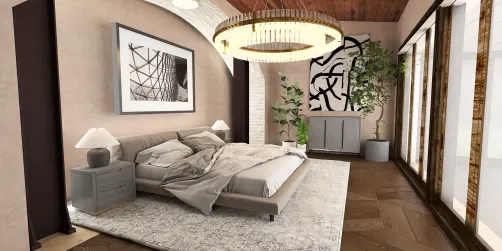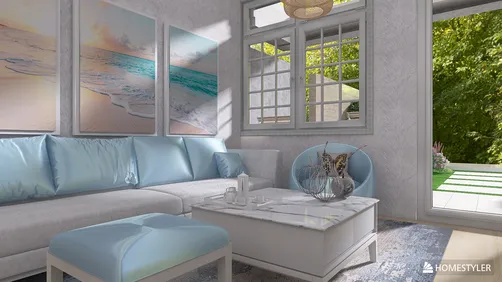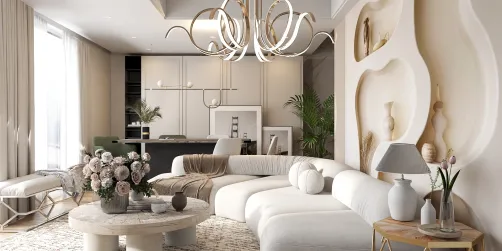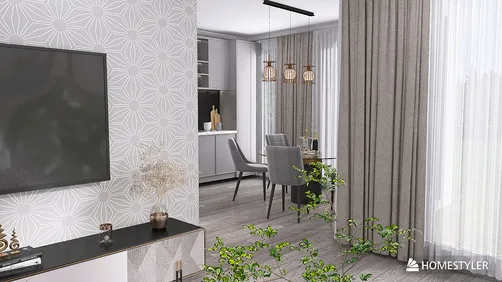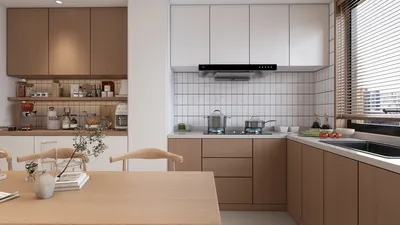
As the future approaches, my clients manage the exhaustion from commuting, anxiety over storage, and the increase in utility expenses. I approach design as if the home acts like a user interface. Recent AIA surveys reveal a growing preference for smaller, well-organized spaces rather than larger ones—this trend highlights the effectiveness of designing a one-bedroom home within a 100 square yard framework. With an eye toward the next decade, I perceive the home as a dynamic operating system evolving through spatial coding, particularly utilizing tools like Homestyler for design planning.
Linear Spine Layout
Design Logic: A central axial corridor functions as a data bus that facilitates movement smoothly from the entryway to the living areas and into the bedroom, minimizing diversions—perfectly suited for the changing dynamics of remote work.
Flow: The entry node leads into an integrated kitchen hub, flows into a living module, and then through a pocket door into the sleeping area; each transition represents a straightforward instruction sequence with minimal delay.
Sightlines: The sightlines are carefully planned: a shallow reveal from the entrance, comprehensive visibility to the living space, and moderated exposure to the bedroom—there's a balance between privacy and openness.
Storage: The corridor functions as cache zones with built-in closets; toe-kick drawers, headboard nooks, and a vertical pantry help turn clutter into manageable segments.
Furniture Fit: A sofa measuring 78–84" wide, a dining table of Ø36", and a queen-size bed with 24" space on either side—these constraints ensure fluid movement throughout the space.
Verdict: This spine layout is well-suited for the upcoming years, adapting to remote work needs, micro-fitness activities, and energy-efficient living without compromising functionality.
save pin
Courtyard Node Layout
Design Logic: A compact internal garden (or light well) serves as a central point, directing air and light effectively, thereby stabilizing biological rhythms and managing thermal loads.
Flow: From the entry, the layout creates a ring path around the courtyard, leading to the living/kitchen on one side and the bedroom on the opposite; this design helps to avoid congestion, resembling resilient network routing.
Sightlines: The user interface layers emanate from the central green space; surrounding areas give curated views without overwhelming exposure—clear signals emerge with minimal distraction.
Storage: Features such as ring shelving, bench bases, and corner towers serve as distributed storage solutions for seasonal belongings and tools.
Furniture Fit: The seating arrangement includes modular elements 72" wide with a movable ottoman; a wall desk at 48"; and a bed platform with built-in drawers—precision that respects spatial constraints.
Verdict: This layout excels in future-proofing well-being; light transforms into an invaluable utility, while maintenance requirements remain minimal for smaller households.
save pin
Split-Zone L Layout
Design Logic: The L-shaped plan distinguishes between public and private spaces, with the kitchen/living area situated on the longer side and the bedroom/bath on the shorter, utilizing the corner as a shared entry point.
Flow: The entry at the bend leads to first engaging with living areas before branching into kitchen duties, and ultimately transitioning to the bedroom for rest; this keeps interactions straightforward.
Sightlines: Diagonal views help expand the perception of space, adding depth while concealing bed visibility—maintaining a serene hierarchy in the user interface.
Storage: Elements like a corner pantry, bedhead walls, and shallow credenzas function as tiered storage—each layer offers quick access versus archival solutions.
Furniture Fit: An 86" sectional on the longer side, a drop-leaf table measuring 30"×60", and a queen bed with a sliding door clearance of 30"—these dimensions are calculated to facilitate unhindered movement.
Verdict: Over time, this split-zone layout establishes an effective protocol: social interactions are contained, restful spaces are safeguarded, and updates are seamless.
save pin
Final Takeaway
The design of a one-bedroom home with an area of 100 square yards focuses less on sheer size and more on how the arrangement facilitates routines, light management, and efficient storage. Concepts such as 'compact one-bedroom layout' and 'small house plan' effectively cater to hybrid work and environmentally conscious living without enlarging the physical space. From my professional viewpoint, the most intelligent homes of the future will not necessarily be larger; they will certainly be more purposeful, showcasing how precise sightlines and organized storage can significantly transform day-to-day living—something that tools like Homestyler can greatly assist in achieving.

Looking to transform your home? Homestyler is your go-to online design platform! With its user-friendly design tool, stunning 3D renderings, and a treasure trove of DIY video tutorials, it's never been easier to visualize and create your dream space. Dive into your home design journey today!