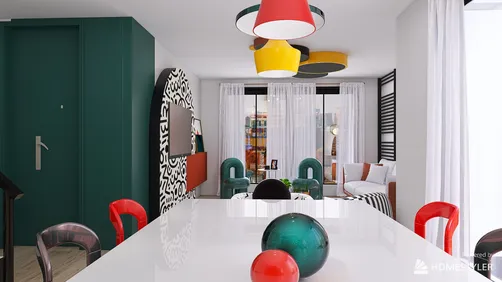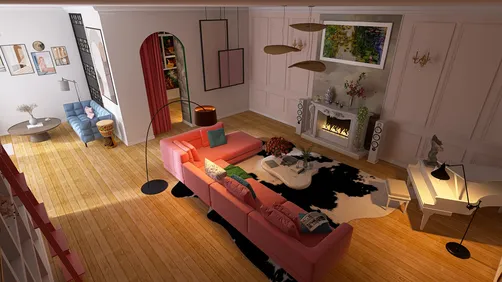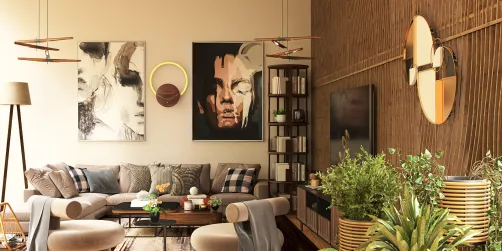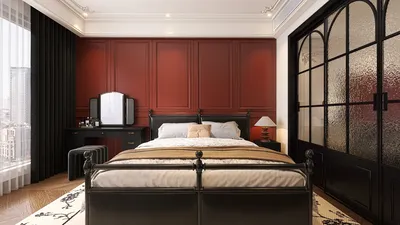
As the future approaches, there's a noticeable trend towards smaller living spaces and more efficient routines. Today's common challenges—such as noise, clutter, and privacy issues—are magnified in compact homes. Recent data suggests that the American Institute of Architects (AIA) reports a continuous need for flexible, multifunctional rooms. This requirement shapes my perspective on designing a 450 square foot 2-bedroom, echoing the increasing demand for homes that function like sophisticated software—modular, low-delay, and deliberately designed. Utilizing tools like Homestyler can help visualize these efficient spaces more effectively.
Micro Dual-Core Plan
The design concept involves two small bedrooms functioning like dual processors, efficiently dividing sleeping and focused work areas from a compact living-kitchen zone. This approach aligns seamlessly with trends in remote work and modern family structures, allowing for personal space without overwhelming the layout.
Flow: The layout transitions from the entryway to a storage zone, then into a streamlined kitchen area, leading to a living space that branches out to the bedrooms, with a bathroom positioned at the quiet end. This design ensures a smooth command chain with minimal disruptions.
Sightlines: A diagonal sightline from the entryway to a visually appealing window in the living area is complemented by strategically staggered bedrooms to maintain privacy, ensuring personal spaces are respected with minimal visual interference.
Storage: Utilizing full-height wall closets serves as an effective storage solution, complemented by toe-kick drawers and over-door shelves. Everything is organized to enhance efficiency and speed up retrieval.
Furniture Fit: A suitable arrangement includes a 72-78 inch sofa, a 24-inch deep media shelf, a queen or full bed in the primary bedroom, and a twin/sofa-bed in the secondary bedroom. Tables are designed to collapse easily, functioning like APIs that manage space usage.
Verdict: This split-core design will maintain an effective balance in daily routines, allowing sleep, work, and social activities to coexist without conflict for the next five years.
save pin
Rail Kitchen + Sliding Partition
Design Logic: The concept of a linear kitchen acts as the central processing unit, while a sliding partition allows for a flexible living space that can transform into a guest room when necessary—offering future-friendly adaptability without cumbersome walls.
Flow: From the entryway, there is a designated area for storage, followed by a kitchen rail that leads into a movable partition. This configuration offers options for living or guest accommodations, culminating in a bathroom located at the end of the space; this layout facilitates efficient routines.
Sightlines: The sliding partition can be tucked away to create an expansive view; when in use, the frosted panels provide privacy while allowing light to filter through, creating a balance between openness and seclusion.
Storage: A ceiling track valance effectively conceals slender cabinets, while bed bases are designed to include drawers for storage, and the partition itself can house a compact library—keeping essential items within easy reach.
Furniture Fit: The plan accommodates a foldable dining setup for two to four people, with an 18-inch deep console and a full-size wall bed in the secondary bedroom; this precision ensures comfortable interactions.
Verdict: This innovative architectural design is elastic, adapting its purpose from day to night, while maintaining low latency in functionality.
save pin
Corner Bath + Windowed Primary
Design Logic: By relocating the bathroom to a corner, center space can be maximized, while the primary bedroom benefits from a window that aids natural rhythms, whereas the secondary bedroom ensures acoustic comfort by being internal.
Flow: The layout moves from the entry to a hall with pocket storage, into the living area, branching out to the bedrooms, with the bathroom situated at the quieter end; this arrangement minimizes disruptions during busy times.
Sightlines: The primary bedroom captures outdoor light, serving as a focal point; the living space enjoys indirect brightness, which mitigates glare and enhances concentration.
Storage: The plan incorporates a corner linen tower, a recessed medicine cabinet, and wardrobe niches designed with depths of 22-24 inches; these features enable efficient usage tailored to daily needs.
Furniture Fit: A compact vanity, a shower with adequate clearance, and a full bed featuring a 24-inch side margin are seamlessly integrated, ensuring each dimension caters to ease of use.
Verdict: Over the next five years, this thoughtfully positioned bathroom and light-enhanced primary bedroom will stabilize routines, elevating the overall experience of living in a small home to a high-quality level.
save pin
Final Takeaway
A 450 square foot 2-bedroom unit requires us to approach space optimization with the same care as managing bandwidth, designating room functions thoughtfully. In this particular layout, features such as flexibility, controlled sightlines, and effective storage interplay to create a cohesive living environment. The most effective micro-homes won't necessarily expand; rather, they will refine their existing layout. Drawing from my experiences, the tighter the design, the more each square foot must act like a user-friendly interface, and using tools like Homestyler can greatly aid in achieving this efficiency.

Homestyler is your go-to online platform for home design inspiration! With its user-friendly design tool, stunning 3D renderings, and a wealth of DIY video tutorials, you can easily create and visualize your dream spaces, regardless of your experience level. Transform your home today!
























![Design [4]](https://hs-designs.homestyler.com/production/design/images/07c2de3a-88ec-4be8-8910-ff255b795bc2/1731419398293/7841697.jpg?x-oss-process=image/resize,w_502,m_mfit/format,webp)