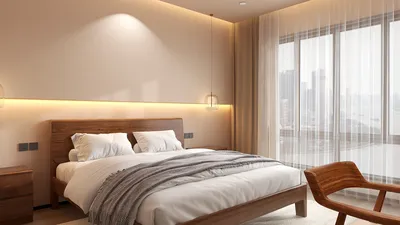


A four-poster bed can serve as a stunning centerpiece in a small bedroom, provided you select the appropriate proportions, materials, and arrangement. In my experience designing compact spaces, a carefully designed canopy frame has the potential to enhance movement flow and improve sleep quality by clearly defining the sleeping area. The dimensions and layout are crucial: research from Gensler shows that a perception of spaciousness and clearly defined pathways can reduce cognitive load and enhance focus throughout the day, a notion that certainly applies to bedrooms where traffic flow is essential. WELL v2 guidelines also stress the importance of acoustics and light management around sleeping areas, emphasizing that the bed should act as a foundation for healthy habits rather than a hindrance to the room's aesthetics. Incorporating tools like Homestyler can help visualize these concepts.
I begin by establishing clear dimensions. Aim for a minimum of 24 to 30 inches (61 to 76 cm) of space on the longer sides and 30 to 36 inches (76 to 91 cm) at the foot of the bed to ensure uninterrupted movement. According to the IES, lighting for reading should reach around 150 to 300 lux while minimizing glare; strategically placing fixtures behind a four-poster frame can achieve this goal without casting disruptive light that interferes with melatonin production. For color choices, insights from Verywell Mind reveal that softer hues like blue and green promote calmness and a reduction in heart rate, which is particularly advantageous when using a tall bed frame that might otherwise seem overwhelming. For further insights about spatial well-being and productivity, explore resources from steelcase.com/research.
Right-Size the Frame
In smaller rooms, a queen-sized four-poster often performs better than a king bed, as it allows for necessary side clearances for items such as drawers, blackout curtains, or door swings. I recommend frames with a post thickness of 1 to 1.25 inches and an open top design to maintain a sense of vertical space without overwhelming the area. A post height to mattress width ratio of about 1:2.2 tends to create an aesthetically pleasing appearance without reaching too close to the ceiling. If your ceiling height is less than 8 feet (244 cm), you might consider a low canopy option with crossbars positioned 8 to 10 inches below the ceiling to prevent visual crowding and ensure no clash with ceiling fixtures.
Lightness Through Material and Color
In compact spaces, perceived visual weight is more important than the actual mass of items. For instance, a powder-coated steel frame in a matte, neutral hue appears less bulky than solid wood alternatives. Should you prefer wooden options, consider ash or oak with a light finish and softened edges to minimize shadow impact. A color temperature ranging from 2700 to 3000K creates a warm and inviting atmosphere; on the contrary, cooler light may give the four-poster a harsh appearance. Often, I paint the wall behind the headboard a shade darker than adjacent walls to create an illusion of depth, allowing the bed posts to stand out beautifully without appearing disconnected.
Layout That Breathes
When positioning a four-poster bed, centering it on the main wall ensures predictable traffic flow, though slightly offsetting it may be advantageous for accessing a closet or setting up a dressing area. In testing small bedrooms, I create a circulation area measuring 36 inches from the door to the opposite side of the bed—should a frame corner intrude on this path, I make adjustments accordingly. If you're experimenting with layouts, utilizing a room design tool like Homestyler can simulate clearances, accessibility for nightstands, and door swings before you finalize your arrangement.
Headboard, Canopy, and Linen Strategy
A slim upholstered headboard (2 to 2.5 inches thick) provides comfort without taking away valuable space. Keep the canopy minimal: one or two crossbars suffice to delineate the volume and support a light sheer. Avoid heavy fabric draping from all four sides in smaller spaces, as this strategy can obscure light and hinder sightlines. Instead, consider a single sheer panel at the headboard to diffuse morning brightness while maintaining lateral visibility. Linens in mid-tone solid colors help minimize visual clutter; delicate stripes or subtle checks can work effectively if they align with the vertical elements of the frame for a cohesive look.
Integrated Storage Without the Bulk
In smaller rooms, I steer clear of bulky storage headboards. Rather, I recommend using shallow floating night shelves (8 to 10 inches deep) attached to the posts, along with under-bed drawers featuring recessed handles. Maintain a 3 to 4 inch shadow under the storage area to give the appearance of the frame floating, enhancing the perceived floor space. Ensure that the drawer interiors do not obstruct the path next to the bed—keeping at least 24 inches from the drawer face to any adjacent object when opened allows for comfortable access.
Control Light, Sound, and Glare
Bedrooms greatly benefit from a layered lighting approach linked to the frame. Install low-glare reading lights on the head posts or the wall about 24 to 28 inches above the mattress top, ensuring that the beam spreads avoid disturbing a sleeping partner. I typically include a dimmable uplight positioned at the foot post to illuminate the ceiling and enhance the room's height visually. For sound control, incorporating a rug beneath the bed and full-length drapery on one wall reduces echo; WELL v2 guidelines emphasize that managing noise levels is vital for improving sleep quality, so select soft materials wisely rather than relying on additional furniture.
Proportion Rules That Keep It Calm
For optimal tranquility, maintain a balanced rhythm between empty space and solid forms: posts, then air, and finally the headboard plane. Ensure that nightstands do not exceed the width between the post and the mattress edge; otherwise, the bedside area may feel constricted. In spaces under 100 square feet (9.3 square meters), a full/double four-poster with slimmer posts often provides the desired visual impact without crowding. Mirrors should ideally reflect depth (such as a window or doorway) rather than reflecting the bed directly to prevent visual chaos at night.
Color Psychology for a Tall Frame
A tall object can easily dominate a room's perspective. To reduce this effect, I lightened the ceiling's color to be a half-tone lighter than the walls to draw the eye upwards; employing warm neutrals (like greige, clay, or mushroom) in textile choices softens the atmosphere, while restricting vibrant accents to only one item within the bed area. Insights from Verywell Mind indicate that various shades of blue and green invoke feelings of calmness; I incorporate muted tones, like smoky teal, eucalyptus, or slate blue, so the posts retain a bold look without overwhelming the space.
Ventilation, Cable Runs, and Safety
When including four-poster beds, be mindful as they may obstruct ceiling fan airflow; ensure canopy bars are positioned 8 to 12 inches away from the fan's reach. For cable management, thread lamp cords along the interiors of the posts using fabric sleeves and strain reliefs for a tidy appearance, preventing interference with drawers and foot traffic. It’s essential to maintain a firm mattress edge for ease of use—the ideal seated height for most adults is between 18 to 20 inches, which minimizes strain on the knees when standing up.
Budget Moves with High Impact
Select a modular frame with detachable posts for easier maneuverability through narrow hallways or when moving into rental units. Substitute solid footboards with a low rail design to enhance the openness of the room. If customization isn't an option, consider utilizing a ceiling-mounted canopy ring above a conventional platform bed to create an appearance of vertical definition without occupying the full footprint of four posts.
FAQ
I have successfully placed a full/double four-poster bed in rooms measuring approximately 9×10 ft (2.7×3.0 m). For queen sizes, a 10×10.5 ft space is appropriate, as long as you maintain side and foot clearances.
It can if the crossbars are positioned too close to the ceiling. Allow for an 8 to 10 inch gap and opt for slender cross members; incorporating ceiling wash lighting can help visually elevate the ceiling.
Yes, as long as the setup is limited to one or two planes. Full drapery enclosures can trap dust and absorb light; a single sheer panel at the headboard softens bright light without constricting the room's ambiance.
Consider wall-mounted or post-mounted reading illumination with focused lighting around 150 to 300 lux located at the pillow, maintaining a color temperature between 2700 and 3000K, along with dimmable ambient lighting for creating a wind-down atmosphere.
Ensure nightstands are narrower than the space between the post and the mattress edge. Utilizing floating shelves or 8 to 10 inch shallow tables allows ease of movement while maintaining visibility of the posts.
Only if you can maintain clearances. In various configurations, a queen bed can offer better flow, more storage capabilities, and less visual heaviness, all while remaining comfortable.
Materials such as matte powder-coated steel, aluminum, or lightly finished oak or ash with slim profiles work best. Avoid ornate carved details, thick railings, or high-contrast joinery elements.
While the frame itself won't block sound, it can help arrange soft surfaces. Adding a rug beneath the bed along with full-length curtains can significantly reduce reverberation, fostering a serene atmosphere.
Keep the top of the mattress at a height of 18 to 20 inches; ensuring a stable edge and an unobstructed 36-inch path from the door to your side of the bed ensures safe movement at night.
You can achieve a similar vertical emphasis by using a ceiling-mounted canopy ring or featuring slim corner posts at the head of the bed paired with a light headboard, allowing you to enjoy an uplifting look without occupying extensive space.
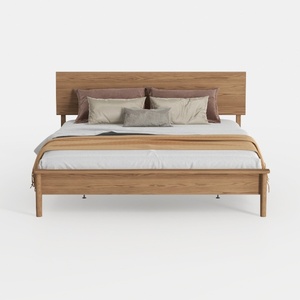
Minimalist Solid Oak Wood Platform Bed with Headboard 3D Model

Minimalist Solid Wood Nightstand With Lower Shelf 3D Model

Modern Solid Oak Wood King Size Bed With Geometric Headboard 3D Model
Homestyler is an exceptional online home design platform that empowers you to create stunning spaces effortlessly. With its user-friendly design tool, impressive 3D rendering, and a wealth of DIY video tutorials, you’ll easily transform your home ideas into reality. Perfect for both beginners and seasoned designers!
Дизайн сейчас бесплатно
































