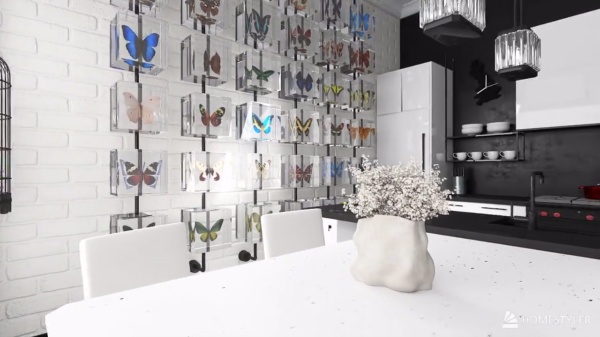
Compact living spaces thrive on versatile furniture that adapts to everyday activities. My designs for expanding tables cater to various needs—whether it's a cozy breakfast for two, a dinner for six, or reverting to a smaller size without overwhelming the area. The ideal balance integrates small footprints, durable extension hardware, and ergonomic space, ensuring ease of movement around the table. Research from Steelcase indicates that flexible environments enhance effectiveness and satisfaction, a concept that seamlessly transitions from offices to homely settings, aligning perfectly with the capabilities of Homestyler (steelcase.com/research). Furthermore, WELL v2 promotes adaptable furnishings for different activities and postures, informing my considerations on table height, accessibility, and steadiness (wellcertified.com).
Effective space planning is grounded in essential dimensions: a comfortable dining experience typically requires 24 to 30 inches of elbow room per person, with a minimum of 36 inches of circulation space around the table for smaller homes—48 inches is preferable when nearby doors, drawers, or appliances are in use. I adhere to IES standards that recommend targeting approximately 300 to 500 lux of task lighting on dining surfaces to facilitate both dining and DIY projects (ies.org/standards). This data informs the dimensions and expansion limits of each table design to avoid compromising flow.
Fundamental Design Principles for Expanding Tables
• Maintain an honest closed footprint. A tabletop width of 32 to 36 inches allows seating for two, while its expanded length can extend to 60 to 72 inches to accommodate four to six individuals.
• Focus on leg structure. Outboard legs or a central pedestal design help eliminate knee collisions with corner legs as the table extends.
• Prioritize reach and stability. Leaf mechanisms need to securely lock in place; cantilevered leaves should not extend beyond 8 to 10 inches without additional support. I favor steel runners and mortised locks for durability.
• Adjust to suitable height. The ideal height for dining is between 28.5 to 30 inches. If the table also serves as a workspace, consider raising it to 30 to 31 inches, pairing it with chairs that have a seat height of 17 to 18 inches to ensure comfortable knee clearance.
Popular Mechanisms and Their Functional Feel
• Butterfly leaf mechanism: This design folds and hides beneath the center of the table, creating an elegant and quick solution that maintains seamless grain patterns when crafted from a single board. It's particularly advantageous for narrow dining areas, as it lengthens the table without necessitating added supports.
• End-leaf brackets: Leaves can slide or drop down from either end. It's crucial to incorporate swing-down supports or hidden pull-out rails to manage additional weight; using through-bolted hardware can help mitigate hinge sag.
• Slide-and-rail extensions: The table splits into two parts that glide apart on sturdy steel rails, revealing center leaves. Opt for full-extension ball-bearing slides rated for over 100 pounds, as lower-quality slides may get stuck due to seasonal wood shifts.
• Gateleg with swing-out support: Ideal for micro-apartments. One fixed side functions as a console, while a leaf swings up on a rule joint and secures to a hinged leg. It's compact but requires attention to toe clearance around the swing leg.
Durable Materials for Longevity
• Solid hardwoods such as oak, ash, and maple are stable, easy to repair, and accommodate joinery well. It's important to align the grain across leaves to reduce varying movement, using breadboard ends to maintain a level surface.
• Engineered panels like high-quality plywood and MDF with veneer offer dimensional stability for leaf alignment. Reinforce edges with hardwood lipping to enhance durability and screw anchoring.
• Hardware: Select stainless or zinc-plated steel slides, barrel locks, cam latches, and quality piano hinges. Verify load ratings, and test with actual weight before finalizing the design.
• Finishes: Waterborne polyurethane is effective against heat marks and is easy to clean. A low-sheen finish (10 to 20 gloss) minimizes glare under task lighting, promoting visual comfort.
Ergonomics, User Considerations, and Clearances
I first analyze the usage scenarios: brisk breakfasts, work from home, and dinner gatherings. Each context influences the required legroom and elbow space. Plan for 12 to 15 inches of knee depth under the apron; maintaining apron heights of 3 to 4 inches aids rigidity while avoiding discomfort. Rounded corners and small edge breaks lessen the impact in confined areas. For users of varying heights, incorporating leveling glides helps keep the tabletop even across leaves, mitigating wobbling.
Lighting and Acoustic Comfort Near the Table
Even lighting enhances the feeling of spaciousness around expanding surfaces. Aim for 300 to 500 lux on the table, employing warm-neutral color temperatures of 2700 to 3500K for dining, and 3500 to 4000K for task-focused work. To prevent glare from glossy surfaces, opt for diffusers or textured finishes. Employ soft furnishings like rugs and curtains, along with felt pads beneath chairs to minimize noise, ensuring clear conversations in smaller rooms. If the table serves dual purposes for meetings or studying, consider adding a fabric panel or bookcase behind seating to absorb echo.
Smart Layout Strategies for Limited Spaces
When working with constrained spaces, I view the table as a dynamic island. Position it parallel to circulation paths, allowing chairs to slide out into low-traffic areas. Align extensions away from doors and appliances. In galley kitchens, a slender table can serve as a prep area by day and extend at the end without obstructing aisles. To effectively visualize circulation paths, employing a room layout tool can assist in planning clearances, chair movements, and door placements: room layout tool.
Step-by-Step: Constructing a Reliable Butterfly Leaf
1) Size the closed top to fit approximately 32×48 inches; design the leaf to add 16 to 24 inches of length.
2) Mill the boards, orient the grain, and glue up the top and leaf to ensure patterns align when extended.
3) Attach breadboard ends with floating tenons to prevent cupping over time.
4) Mortise steel slides beneath both halves; select slides rated at 100 to 150 pounds with ball-bearing technology for optimal performance.
5) Install concealed barrel locks to secure the extension and prevent movement.
6) Utilize rule joints and concealed hinges for the folding leaf; check for flushness with a straightedge.
7) Incorporate a central support rail that drops down when the leaf opens; ensure no bounce occurs during use.
8) Sand edges to 220 grit, soften corners, and apply two to three coats of waterborne poly for finishing.
Finishing, Color, and Visual Harmony
The choice of color can significantly influence perceived space. Verywell Mind’s guidance on color psychology reveals that lighter, cooler shades can enhance feelings of spaciousness and tranquility (verywellmind.com/color-psychology). I often pair light ash or maple with muted tones of gray and blue; darker tables may feel more substantial but benefit from soft matte finishes to counterbalance visual heaviness. Maintain a cohesive variety in seating—select one dominant hue with subtle texture variations—to preserve a rhythmic aesthetic as the table extends.
Maintenance and Long-Term Stability
Seasonal adjustments are unavoidable. Allow for 1/16 to 1/8 inch expansion gaps around leaves; wax slides annually to prevent sticking. Tighten hardware quarterly, focusing on cam locks and hinges. If a leaf begins to sag, introduce an adjustable support pin or re-level glides. In rental spaces, utilize felt washers beneath locks to avoid finish marks.
Common Challenges and My Solutions
• Overly long cantilevers leading to bounce—resolved with flip-down brackets.
• Excessively thick aprons taking up knee space—reduce to 3 inches and notch for clearance around slides.
• Mismatched grain creating unsightly seams—bookmatch panels and plan for expansion.
• Insufficient lighting—install a dimmable pendant and indirect wall lighting to ensure uniformity during table expansion.
Frequently Asked Questions
For comfortable settings, maintain between 32 to 36 inches to ensure sufficient mobility and usability in tight rooms.
A minimum of 36 inches is essential for walkways; increase this to 42 to 48 inches if appliances or doors are situated near the table.
Slide-and-rail systems featuring steel, full-extension ball-bearing slides rated for over 100 pounds guarantee predictable alignment and durability.
Aim for 300 to 500 lux for dining and task lighting, with color temperatures of 2700 to 3500K for optimal comfort and minimized glare.
Utilizing a center leaf of 16 to 24 inches typically allows seating for four to six individuals, with 24 to 30 inches allotted per person.
Employ rule joints, robust concealed hinges rated for the load, and supportive flip-down rails or pins under the leaf.
Waterborne polyurethane with a low-sheen finish is recommended to resist heat marks and scratches while reducing glare.
Indeed. A central pedestal design reduces conflicts with corner legs, enhances knee space, and simplifies chair arrangement when the table is extended.
Lighter hues that are cool in tone visually expand spaces; matte finishes lessen apparent mass and glare on larger surfaces.
Certainly. Consider incrementally increasing the height (30 to 31 inches), establish appropriate task lighting, and select dependable hardware that locks securely under load.
Homestyler is your go-to online home design platform! With its user-friendly design tool, stunning 3D renderings, and a wealth of DIY video tutorials, you can effortlessly create and visualize your dream spaces. Transform your home design journey with ease and inspiration!