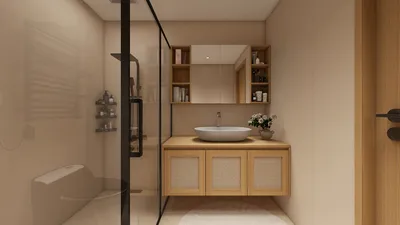


Combining black and white kitchen wall tiles creates a unique blend of modern and timeless aesthetics. The contrasting color scheme enhances sightlines, frames cabinetry beautifully, and allows materials and natural light to become the focal point. In my experience using these monistic tiles, homeowners often express that cooking becomes a more deliberate and serene experience, indicating a mix of design appreciation and psychological effect. This correlation is more than mere intuition; various studies have shown that clarity in visual design and reduced clutter significantly lessens cognitive load, leading to improved concentration and wellbeing. For instance, Gensler's research in workplace environments consistently demonstrates that maintaining simplicity and coherence in visual presentation can enhance perceived effectiveness, a principle that applies equally well in the design of home kitchens, especially with tools like Homestyler for layout planning.
Effective light management is crucial in black-and-white designs. As addressed by WELL v2 Lighting, achieving a balance in ambient lighting and controlling glare is vital for visual comfort. It’s also important to adhere to IES standards for task lighting, which typically recommend levels between 300–500 lux for countertop surfaces—ensuring that the darker tiles don’t absorb too much light while the lighter tiles don’t create overpowering glare. In practice, I often use matte or satin finishes in primary working areas paired with a semi-gloss feature field to maintain a controlled reflectance level.
Understanding Contrast: The 60/30/10 Proportion for Monochrome Designs
Monochrome design hinges not only on color choice but also on proper proportions. A consistently reliable guideline is to allocate 60% of light tiles (field tile), 30% to darker accents or framing tiles, and 10% to metallic or wooden elements (hardware or trim) for added warmth. This proportion fosters a harmonious visual flow, guiding movement and avoiding fatigue from stark contrasts. If your layout includes open shelving or expansive window walls, you might reverse this to 60% white, 30% patterns, and 10% black to ensure brightness levels throughout the day. When strategizing layouts, I often utilize a room layout tool like Homestyler to preview two to three tiling alternatives side by side, allowing me to assess contrast during varying daylight conditions.
Versatile Tile Formats That Always Shine
• Classic subway (2"x6" or 3"x6"): A timeless choice that can be arranged in stack bond for a sharp modern look or a 1/3 offset for a softer, flowing appearance.
• Large-format porcelain (12"x24" or 24"x24"): With fewer grout lines, these tiles create smoother surfaces, making them ideal behind busy countertops.
• Small mosaics (1" hex or penny rounds): These add tactile variation; opt for matte black to create depth, white for a touch of shimmer, or alternate rows for subtle gradient effects.
• Checkerboards: Ideal for backsplashes, maintain square sizes between 4" to 6"; larger squares might overwhelm smaller kitchen spaces.
Finishing Touches: The Details That Define Look and Feel
• Finish: Matte or honed finishes minimize glare and smudges, while semi-gloss provides a cleanable sheen. Utilize high gloss sparingly on feature areas to prevent hotspots under task lighting.
• Grout color: Choosing mid-gray grout with white tiles enhances geometric designs without the anxiety of stains, while using charcoal grout with black tiles can conceal joints for a more monolithic effect. For mixed tile fields, color-match the dominant tile and keep joints tight, between 1/16" and 1/8", for a sophisticated look.
Understanding Light, Shadow, and Color Psychology
Black tends to recede, while white appears to advance. This can be skillfully used to adjust perceptions: framing a window with black tiles can deepen views, while white tiles in cooking areas can enhance brightness. From a behavioral perspective, black signifies boundaries and focus, whereas white conveys openness—principles that align with color psychology to create a balance of energy and serenity. Moreover, under-cabinet lighting at temperatures of 3000–3500K can maintain the appetizing look of food, as higher color temperatures may render white tiles bluish and make darker tiles appear stark.
Guiding the Eye with Layouts
• Using a vertical stack bond in white behind cook ranges can create an illusion of height.
• Black pencil liners or Schlüter trims are great for outlining niches and protecting tile edges, delivering streamlined aesthetics without clutter.
• A chevron or herringbone layout in white, accented with a black feature band at eye level, can establish a clear visual horizon. I typically draft these sightlines early in my planning process and validate their effectiveness with an interior layout planner to ensure smooth movement from entryway to sink to cooktop.
Practical Considerations for Ergonomics and Cleanability
In kitchen work zones—specifically around the sink, prep area, and cooktop—grout lines often intersect with splatter and steam. To address this, I choose large-format or slab-look porcelain tiles for the immediate backsplash near the cooktop, reserving intricate mosaics for less frequently touched walls. It's also beneficial to mount outlets horizontally and color coordinate cover plates with the tile or grout to maintain visual flow. Pulls and knobs made of brushed stainless steel or blackened brass provide tactile cues that facilitate navigation without adding visual clutter.
Acoustic and Material Considerations for Your Design
Since hard tiles reflect sound, it’s wise to introduce softer elements across from tiled surfaces in open kitchens—this could include fabric seating, area rugs under dining tables, or acoustically lined banquettes to lessen noise. Opt for porcelain or glazed ceramic tiles with high abrasion resistance (a PEI rating of 3–4 for wall areas is sufficient). For those desiring a natural stone aesthetic, combining honed marble in white with a dense sealer while limiting black accents to porcelain-look panels can prevent issues with etching.
Timeless Combinations I Rely On
• Matte white 3"x12" stack bond paired with charcoal grout and a thin black liner at the shelf datum—minimalist yet forgiving in style.
• A white square grid (4"x4") with black grout creates a studio-inspired vibe; finished edges with white trim provide neat terminations.
• A black satin hex tile at the range niche, surrounded by white field tile—this adds depth without overwhelming the space.
• Micro-checkerboards (2" squares) used across a short backsplash, paired with plain white tiles elsewhere to prevent visual overload.
Sustainability and Durability Considerations
Monochrome designs offer exceptional versatility, making it easy to swap out hardware or paint while keeping the tile consistent. Select tiles that feature recycled materials and low-VOC setting products. Bright white tiles should have durable glazes that are UV-resistant, particularly in sunlit areas. Using LED lighting stripes with a high Color Rendering Index (CRI of 90+) will keep both white and black tiles looking true to color regardless of daylight variations.
Installation Insights from Experience
• Dry-laying patterns helps ensure balanced cuts at corners and alignment with hood and shelf centerlines.
• Reference lines should be leveled at the most visible datum, typically the underside of upper cabinetry.
• Pre-planning niche dimensions in whole-tile increments prevents slivers at terminations.
• Ensure all cementitious grout is sealed; consider epoxy in high-splash zones for added stain resilience.
Maximizing Small Kitchens: Achieving an Airy Feel
Predominantly use white tiles with a narrow black band for definition. Position dark accents lower (near counter height) to preserve a light ambiance in the upper half of the room. Maintain the backsplash height extending to the bottom of the cabinets to create a clean, elongated appearance. For testing different options, a layout simulation tool like Homestyler can help assess how various contrasts influence the spatial perception of width and height.
Lighting Schemes that Enhance Monochrome Designs
• Ambient lighting should provide 200–300 lux, avoiding sharp transitions between light and dark areas.
• Task lighting needs to reach 300–500 lux on countertops as per IES recommendations; shield LED strips to mitigate diode reflections on glossy tiles.
• Accent lighting should constitute 10–20% of ambient light to subtly highlight feature walls; this technique can reveal texture in matte tiles without causing glare.
Budget Considerations, Value, and Phased Approaches
Prioritize spending on tile formats and finishes before investing in specialty patterns. A well-installed white field with thoughtfully chosen trims will outshine a poorly executed complex design. When taking a phased approach, it’s advisable to tile the primary wall first (such as above the sink or range) and then address the sides later—this helps maintain the visual essence while allowing budgets to recover.
Frequently Asked Questions
Using mid-gray grout proves to be the most adaptable option for both colors, emphasizing patterns without drawing attention to stains. Match grout with the dominant tile for a unified appearance.
In moderation and at the correct height, black can enhance depth without making the space feel smaller. Concentrate darker accents at or below counter height to maintain a lighter upper area.
Satin and matte finishes are effective in concealing smudges and minimizing glare, especially under targeted lighting. Semi-gloss finishes are easy to clean on backsplashes, while high gloss should be reserved for select feature areas.
Shielded under-cabinet lights are essential, and selecting matte or satin-finish tiles near task zones ensures a well-balanced light level while adhering to WELL v2 and IES guidelines to manage reflections.
Large-format porcelain tiles reduce grout lines in high-splash areas. If you favor patterns, it’s best to limit them to a designated niche while surrounding them with larger white tiles for straightforward cleaning.
Yes, although it’s crucial to anchor the decor with a dominant tile field (usually white) while confining secondary patterns to a single plane or area to prevent visual clutter.
Brushed stainless steel, blackened brass, and matte nickel all pair well. Select one metal as the primary and apply a secondary metal in limited doses to maintain a cohesive design.
Ensure outlet boxes align with grout lines whenever possible, select a horizontal orientation, and color-match cover plates to tile or grout to minimize visual disruptions.
Absolutely! This palette is widely appealing and easily updated with new hardware or paint choices. Opt for durable porcelain options and mid-tone grouts to reduce maintenance concerns.
Create a complete width mockup on-site and test lighting effects during both day and night. For planning decisions, using an interior layout planner can help compare various patterns and proportions based on context.
Homestyler is your go-to online home design platform! With its user-friendly design tool, stunning 3D renderings, and a wealth of inspiring design projects and DIY video tutorials, you can effortlessly transform your home ideas into reality. Start creating today!
Дизайн сейчас бесплатно
































