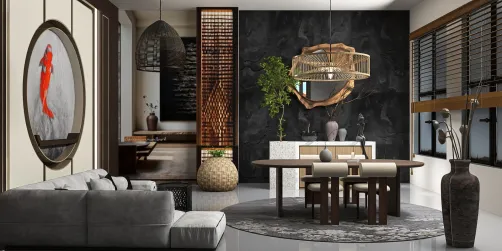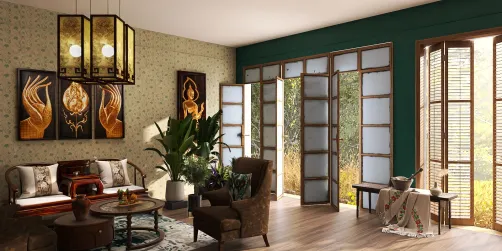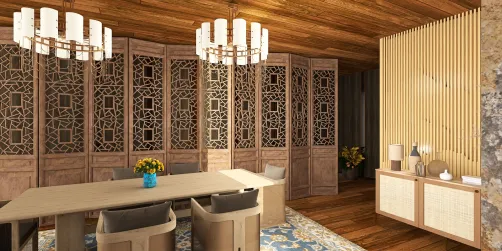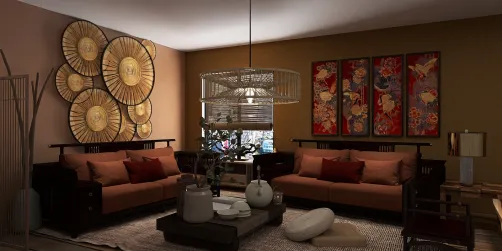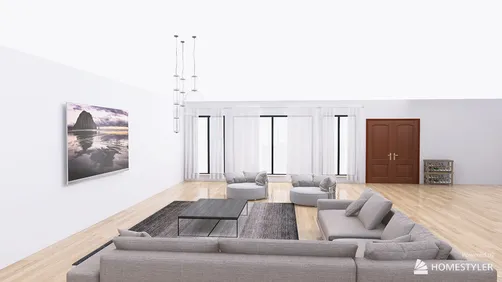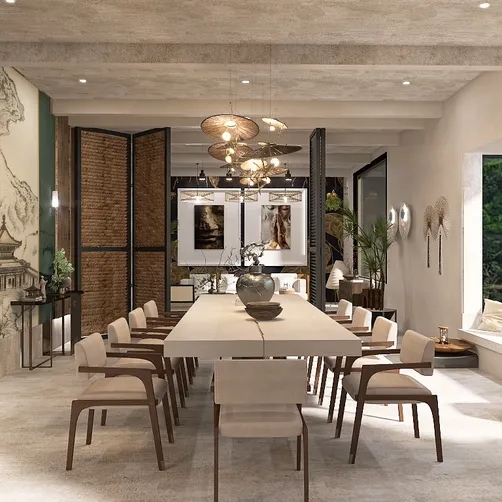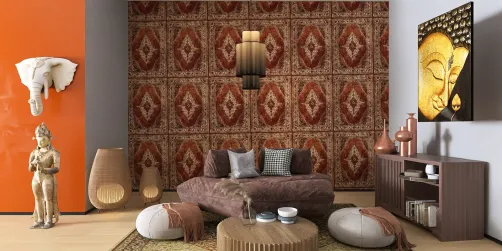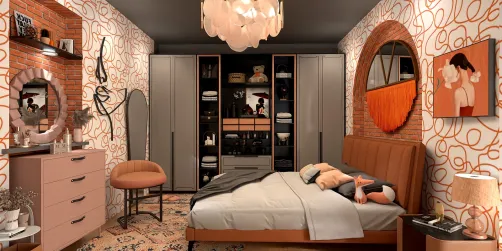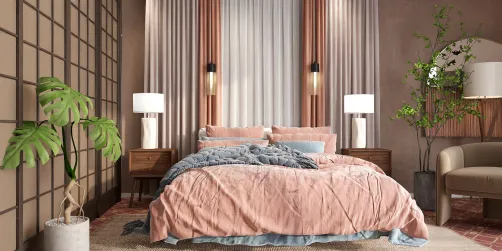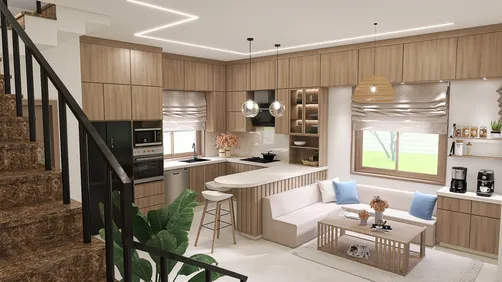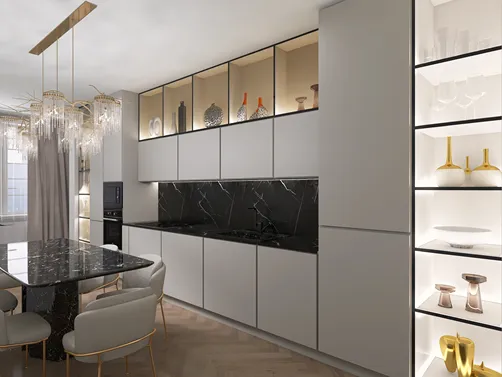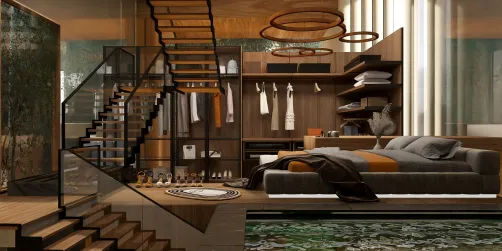
As we navigate the complexities of modern living, many residents find themselves managing a delicate balance between noise control, privacy, and storage challenges. I approach the layout of three-bedroom condos similarly to a firmware update designed to enhance domestic life. Data from the AIA suggests that homeowners continue to prioritize versatile living spaces and multifunctional bedrooms, even as square footage levels off—demonstrating that flexibility is more important than sheer size. The main issue at hand is fragmentation, but a comprehensive spatial reasoning toolkit can reorganize daily activities into efficient, understandable sequences while utilizing tools like Homestyler for optimal outcomes.
Split-Core Layout: Social Front, Quiet Back
Design Logic: Public areas are positioned at the front of the home, while bedrooms are quietly located at the back, enabling family dynamics to flourish without interruptions.
Flow: The sequence flows smoothly from the entrance to a drop zone, through the kitchen hub, to the living area, then down the corridor to the bedrooms; it serves as a structured path that emphasizes priority tasks.
Sightlines: Diagonal views extending from the kitchen to the balcony maintain user interface clarity, while corridor bends obscure direct sightlines to bedrooms, enhancing privacy.
Storage: A thoughtfully designed coat wall at the entrance, a tall pantry, and a linen cache in the corridor distribute storage needs effectively, reducing central congestion.
Furniture Fit: The maximum depth for the sofa is set at 38 inches, while the dining table measures 72 inches by 36 inches, and queen beds maintain a clearance of 30 inches; these parameters help minimize disruption in tight spaces.
Verdict: This layout efficiently accommodates busy mornings without hassle; even after five years, it continues to function seamlessly for multigenerational activities.
save pin
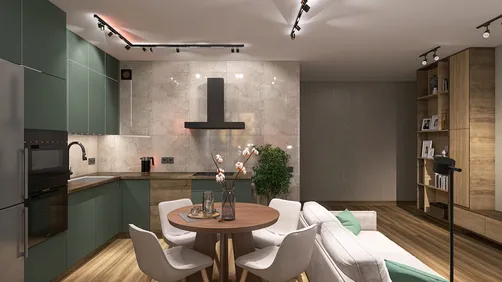
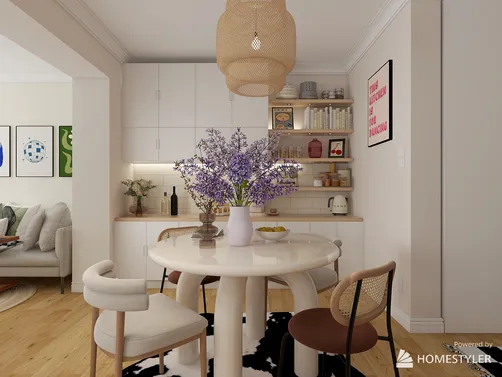
Ring Hub Layout: Kitchen as Operating Kernel
Design Logic: Here, the kitchen is the core component, surrounded by dining, living, and study areas, allowing daily routines to revolve around a central command area.
Flow: The looping path allows children to transition between homework, snacks, and the balcony, while parents smoothly move from cooking to working without encountering dead ends—resulting in a continuous activity cycle.
Sightlines: Low partitions keep visibility clear to both entries and windows, functioning like a dashboard where all activity remains visible without excessive visual clutter.
Storage: Utilizing perimeter credenzas and under-sink drawers allows for organized storage options, with bulk items kept off the main area in a flex room closet.
Furniture Fit: The island measures 8 feet by 3 feet, while a round table of 54 inches allows for easy movement, and the modular sofa consists of 2.5-seat blocks; sizes cater to emerging hybrid work and meal arrangements.
Verdict: A circular core helps mitigate context switching; five years into its use, it efficiently addresses both remote work demands and bustling family activities.
save pin
Dual-Primary + Micro Flex Room
Design Logic: Two spacious suites cater to evolving caregiving and income needs, while the third room functions as a flex space adaptable for a nursery, office, or guest area.
Flow: The primary suites are positioned on either side of the living area, directing noise outward, while the micro room is conveniently located near the entry for quick tasks and visits.
Sightlines: An unobstructed view from the desk to the kitchen and window ensures a consistent flow of information—regarding work status, family updates, and natural light—which remains easily interpretable.
Storage: Each suite features its own wardrobe, complemented by a shared closet near the entry that organizes items from daily essentials to seasonal gear.
Furniture Fit: The king bed fits only in one suite, while the micro room incorporates a wall bed, and desks maintain a depth of 24 inches; these constraints promote an unobstructed hybrid lifestyle.
Verdict: This design anticipates the requirements of gig work, caregiving, and guest hosting; the setup remains effective as roles evolve over time.
save pin
Final Takeaway
The most intelligent layouts for three-bedroom condos function like sophisticated operating systems, translating family dynamics into organized pathways and buffers. Whether referred to as a three-bedroom condo unit design or a versatile multi-suite plan, the future favors precision over excess, as well as visibility over size. Anticipating long-term needs—such as remote work locations and dual-primary setups—can be integrated seamlessly when parameters are adhered to. Based on my experience, minor spatial choices can profoundly transform how clients engage with their living environments, and utilizing platforms such as Homestyler can enhance these decisions.

Homestyler is your go-to online platform for home design! With its user-friendly design tool, stunning 3D renderings, and a wealth of inspiring design projects, you can easily create your dream space. Plus, the DIY video tutorials make it simple to enhance your skills and bring your ideas to life!