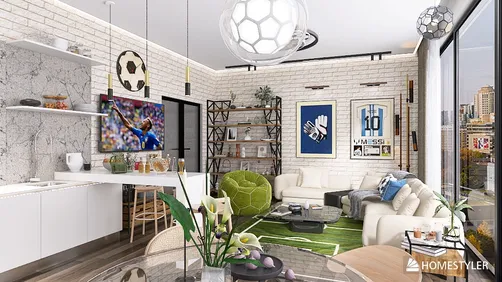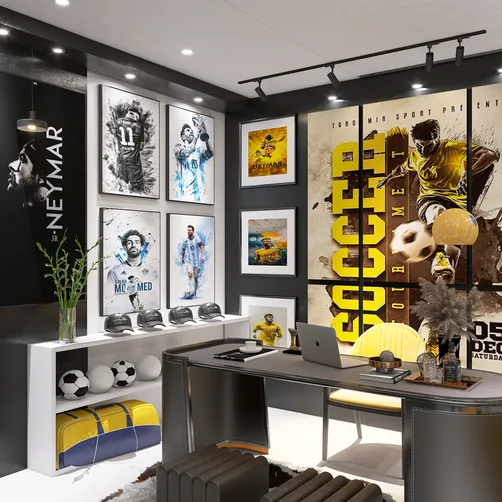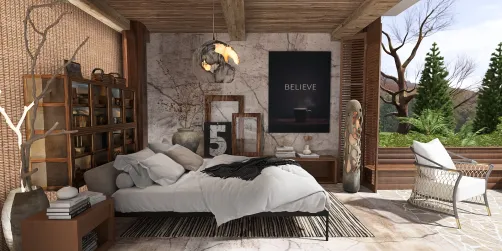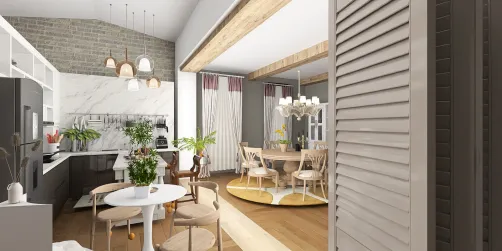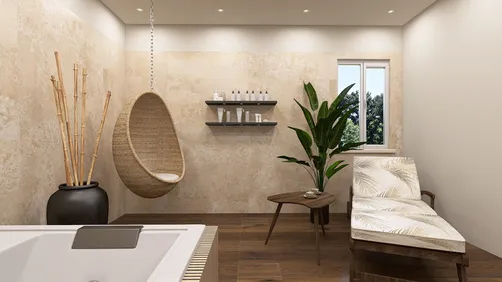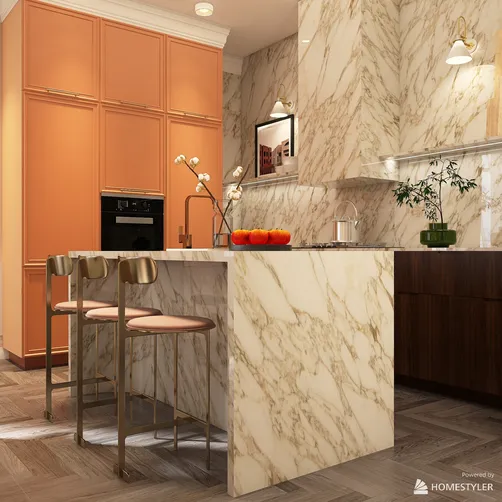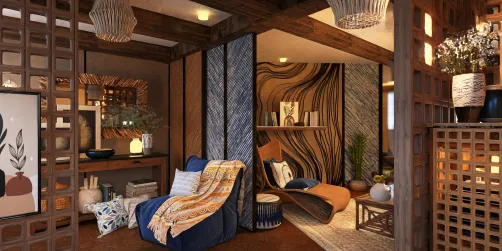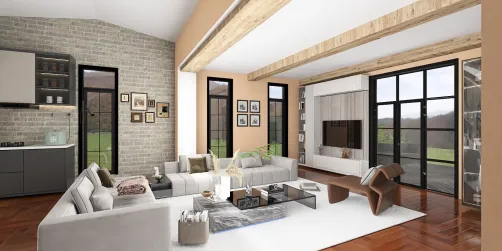
As we move toward the future, I can sense the friction points emerging in today’s compact apartment designs—issues like storage limitations, noise permeation, and insufficient flow. According to the National Association of Home Builders (NAHB), the average size of new apartments has decreased over the past ten years, while the demand for flexibility has grown. In this context, a layout transcends mere lines; it becomes a dynamic interface designed to accommodate tomorrow’s lifestyles, aided by tools like Homestyler that enhance spatial reasoning.
The real challenge we face isn't just the square footage; it's how these spaces function in our daily lives. My design philosophy anticipates the next five years, considering how each area, corridor, and threshold can facilitate privacy, adaptability, and light—much like future software that evolves over time.
Studio Ribbon Plan
Design Principle: A singular loaded wall serves as the service core, housing the kitchen and utilities while leaving the opposite side open for multifunctional living arrangements. This asymmetrical design is essential for tomorrow’s micro-mobility and hybrid work environment.
Flow: Entry → utility core → open area → windowed edge; this setup allows tasks to unfold seamlessly along a linear pathway, reducing cross-traffic.
Sightlines: A direct pathway from the entry door to the windows promotes layered usage: a workstation at the front, a lounge area in the middle, and abundant natural light flooding in.
Storage: Incorporating vertical pantry towers and bed-base drawers, along with a shallow wall rail for storage—every item has a specific place.
Furniture Arrangement: A sofa measuring 72–78 inches can easily fit under a 30-inch clearance; an 80x40 inch folding table connects to the service core just like an API call in software development.
Conclusion: The ribbon design offers subtle adaptability; five years down the line, it will still function smoothly as technology and lifestyle habits evolve.
save pinOpen in 3D Planner Processing...
Split-Core One-Bed
Design Principle: A central block combines the bathroom and storage, creating privacy between the living space and bedroom—ideal for the Zoom era when privacy is paramount.
Flow: Entry → living area → core module → bedroom; this loop design enables two individuals to follow parallel routines seamlessly.
Sightlines: A diagonal view from the kitchen to the bedroom's windows creates a structure of activity: work, rest, and views, with noise sources positioned away from the main pathway.
Storage: The core acts as a storage hub with double closets placed back-to-back, a linen tower, and over-door storage—high-density solutions with minimal visual disruption.
Furniture Arrangement: A queen-sized bed allows for 30-inch aisles on each side, complemented by 18-inch nightstands; a 60-inch media console fits perfectly within wall cavity tolerances.
Conclusion: This split-core layout operates like a well-balanced server—managing separate loads efficiently. Even after five years, it maintains an orderly environment.
save pinOpen in 3D Planner Processing...
L-Loop Micro Two-Bed
Design Principle: An L-shaped circulation path encircles the kitchen and shared living space, placing the bedrooms at quieter endpoints—suitable for future roommates and guests without complications.
Flow: Entry → loop → shared area → private spaces; much like a ring bus, this design disperses movement without bottlenecks.
Sightlines: The corner window forms a focal point while partial-height walls help define spaces without obstructing visibility; edges function as gentle transitions between areas.
Storage: A corner pantry combined with bench-based storage, alongside wardrobes that are 24 inches deep, allows for efficient use of space; seasonal items can be stacked strategically at the loops' bends.
Furniture Arrangement: A 72-inch sectional fits comfortably within the L shape; a 30x60 inch dining island serves as both a dining and workspace; twin desks can occupy 48-inch spots at each bedroom's end.
Conclusion: The L-loop design enhances social interaction while effectively reducing noise; living in this space five years later will still feel spacious and well-structured.
save pinOpen in 3D Planner Processing...
## Final Insight
Compact apartment designs are not limitations; they serve as operational frameworks for how we will navigate life as space becomes increasingly valuable. With tailored living arrangements and micro-unit concepts, the future emphasizes clear flow, organized storage, and furniture functioning as precisely designed APIs. The most adaptive floor plans will withstand changing routines and technology with minimal alterations; from my perspective, tomorrow's smartest homes won't necessarily be larger, but rather more intentional, aided by tools like Homestyler.


Discover your creative potential with Homestyler! This user-friendly online home design platform offers an intuitive design tool, stunning 3D renderings, and a wealth of inspiring projects and DIY video tutorials. Transform your space effortlessly and let your imagination run wild!