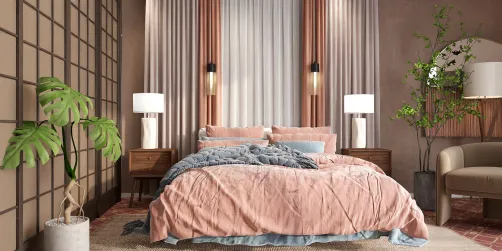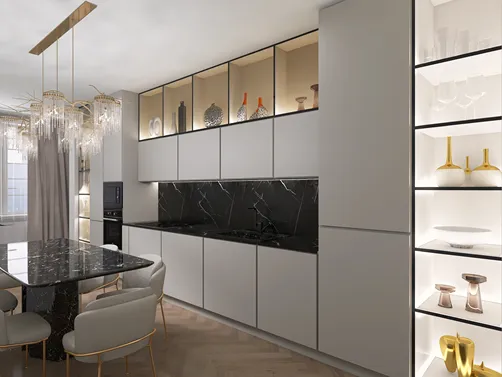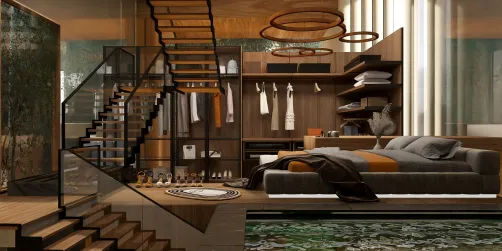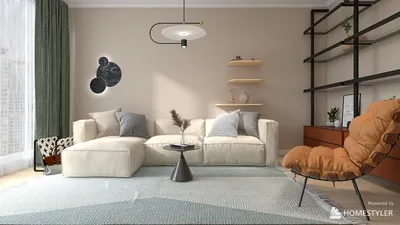
The future beckons as contemporary homes still struggle with inefficient energy use, marked by awkward corridors and unused corners. In Pune, families are increasingly looking for solutions that promote clarity in their living spaces—prioritizing light, airflow, and adaptable rooms while ensuring privacy remains intact. Insights from AIA highlight that flexibility and natural light are closely linked to well-being, making the 3 BHK floor plan without cutaways a promising model for this transformation. I conceptualize layouts similarly to software design: considering spatial nodes, streamlined connections, and utilizing a spatial reasoning toolkit that addresses climate, remote work trends, and the needs of elderly residents.
Courtyard Spine + Dual Aspect Living
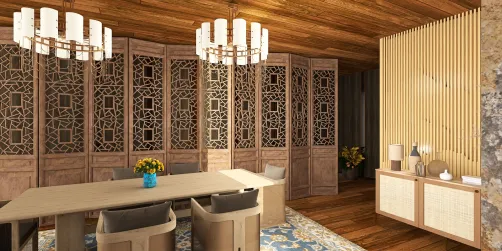
Design Logic: At the heart of the apartment lies a central light-well or micro-court that facilitates cross-ventilation, crucial for withstanding Pune's heat and monsoon seasons. This design approach ensures the creation of resilient and breathable living environments.
Flow: The layout guides residents from the entry into a buffer foyer, through an open living-dining area, leading to the courtyard spine, with bedrooms arranged as serene retreats and the kitchen strategically placed yet connected.
Sightlines: The design features layered viewpoints: the long axis from the door to the courtyard, complemented by side options leading to the dining and study area; privacy measures enhance seclusion near the bedrooms.
Storage: Incorporating perimeter millwork serves as ingenious storage; bench bays nestled beneath windows, and a tall pantry function as a climate buffer for preserving dry goods.
Furniture Fit: The sofa dimensions range between 900-950 mm in depth, complemented by a dining table for 6-8 seated guests at 2100×900 mm. Bedrooms are designed to accommodate a 1600 mm bed alongside a 900 mm clear pathway.
Verdict: A plan devoid of cuts resembles clean coding—ensuring that air, light, and daily routines seamlessly come together without interruption for the next five years.
save pin
Split-Private Wing with Flex Studio
Design Logic: The parents' suite and two secondary bedrooms are distributed across the living core. Multifunctional spaces enable work and guest transitions, allowing the family dynamic to flow effortlessly.
Flow: The entrance leads to a drop zone, evolving into a communal living hub, with a sliding partition allowing access to the flex studio, and a wing for children or guests; the master bedroom is acoustically buffered on the opposite end.
Sightlines: This layout emphasizes controlled transparency, where from the sofa, one first notices the green balcony, followed by angled views towards the studio—creating a balance of focus and sociability.
Storage: A versatile studio wall bed paired with a 600 mm deep wardrobe enhances functionality; a linen tower in the corridor provides additional space-saving solutions; overhead lofts contribute to a feeling of openness if ceiling height permits.
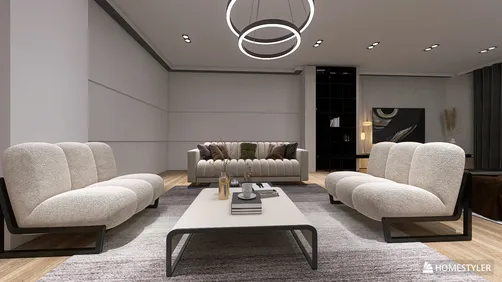
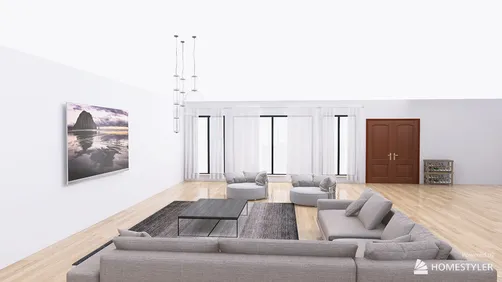
Furniture Fit: The studio desk measures 1600×700 along with a cable management trench, while the sectional seating is arranged to ensure 1100 mm pathways; the inclusion of pocket doors helps reduce conflicts between usage areas.
Verdict: This configuration adeptly accommodates both hybrid work and school needs, acting like a scheduler that brings the right functions to life precisely when needed.
save pin
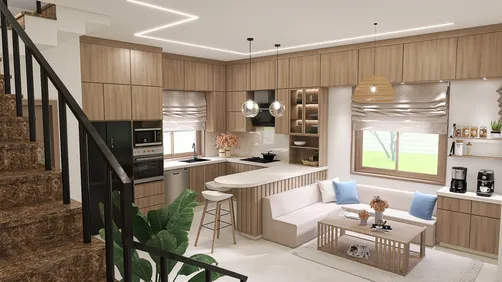
Perimeter Kitchen + Wet Core Efficiency
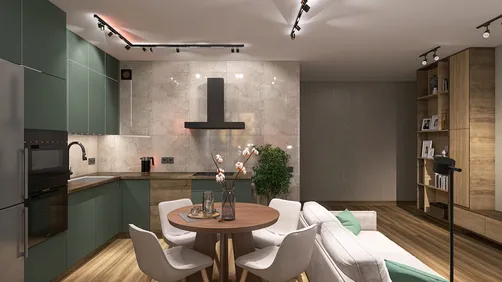
Design Logic: The kitchen is situated along the facade for optimal light and ventilation while wet areas are stacked to minimize plumbing inefficiencies—maximizing usable space and clever geometry.
Flow: The design enables seamless movement from the service entry through a utility area and kitchen, culminating in a dining pass-through; the family loop ensures connectivity between living spaces without disruption.
Sightlines: Cooking allows eye contact to the dining area and a glimpse of the balcony sky; bedrooms are designed for privacy with shallow viewing angles that act like concealed barriers.
Storage: A tall appliance tower, overhead cabinets reaching the ceiling, and pull-out larders offer spacious storage solutions. Bed bases can double as sizable drawers, providing predictable and easily accessible storage.
Furniture Fit: A galley kitchen accommodates 1100-1200 mm wide aisles, with an island measuring 1800×900 if the space allows; children's rooms comfortably fit 1200 mm beds along with 1400 mm study rails.
Verdict: The apartment is designed to remain cooler, quieter, and more purposefully arranged—consolidating services while allowing living spaces to grow in harmony with family life.
save pin
Final Takeaway
The 3 BHK floor plan without cutaways embodies a future-ready blueprint tailored for Pune's climate, family dynamics, and hybrid work schedules. Variations—three-bedroom layouts, compact luxury designs, and those considering Vaastu principles—can all use this clean, low-entropy framework. Moving forward, essential features like cross-ventilation corridors and perimeter kitchens will be pivotal for promoting resilience; in my view, the most intelligent homes won't necessarily be larger but merely more deliberately designed, a principle that can be effectively visualized using tools like Homestyler.
Discover the joy of home design with Homestyler! This user-friendly platform offers an intuitive online design tool, stunning 3D renderings, and a wealth of inspiring design projects and video tutorials. Whether you're a novice or a pro, bring your creative vision to life effortlessly!