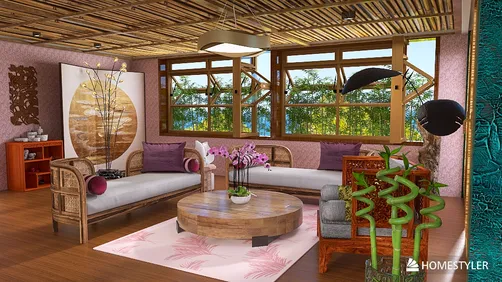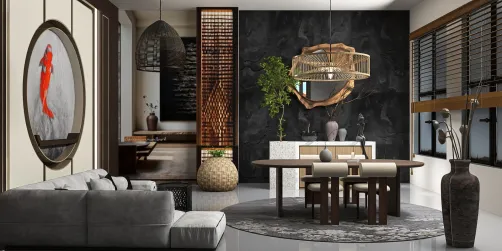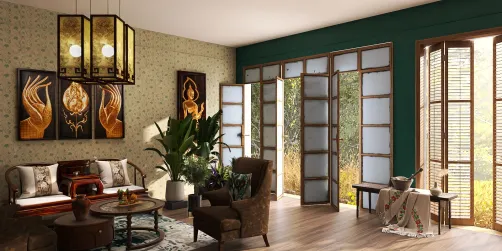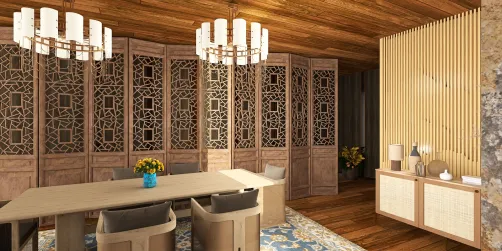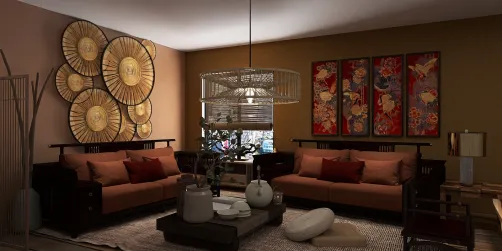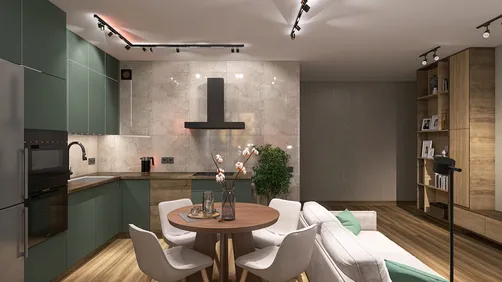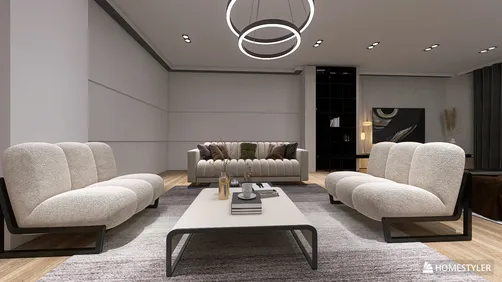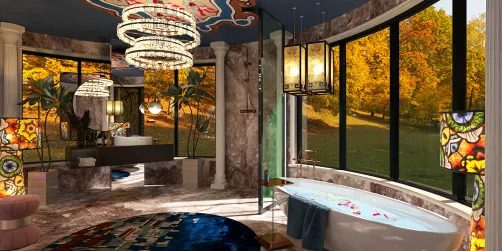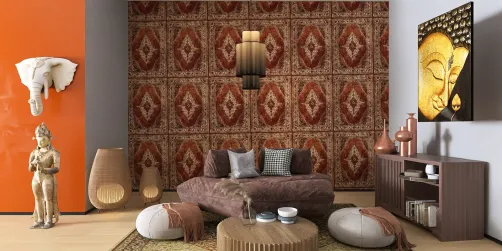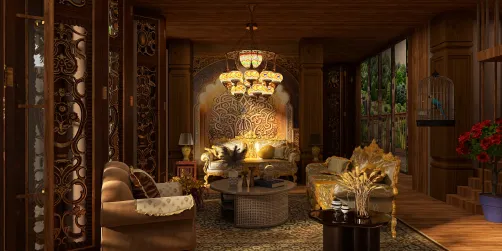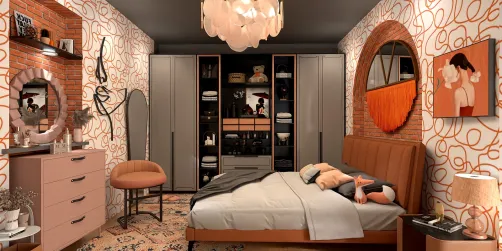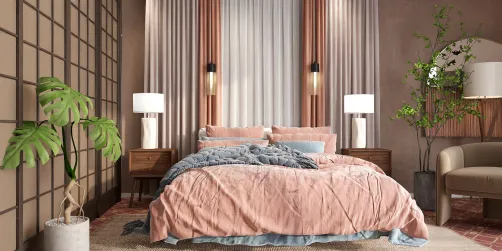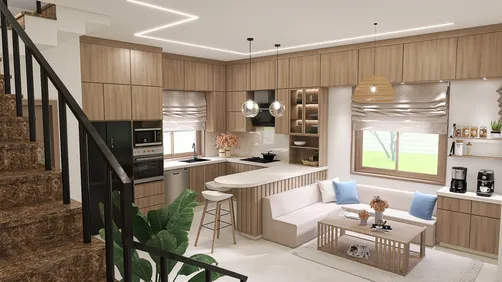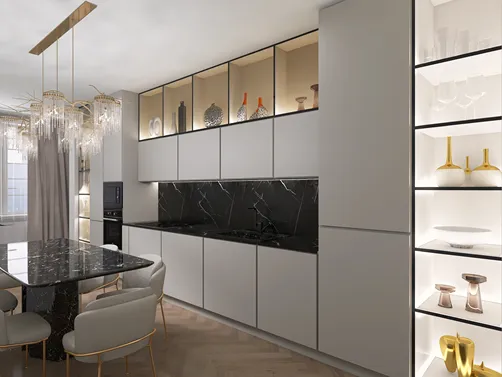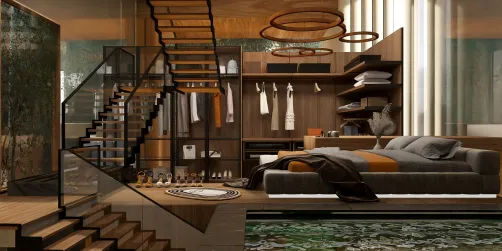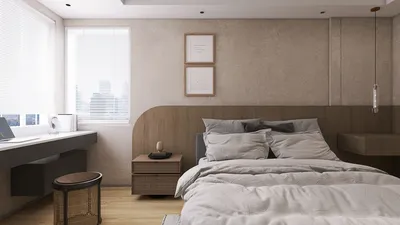
The future continuously interacts with our current challenges—issues like time constraints, overlapping generations, and the complexities of daily life all demand a simpler interface. Recent AIA reports indicate a growing need for adaptable living spaces and wellness-focused designs. In light of this, I explored the spatial reasoning toolkit to develop an Omkar Worli 4 BHK floor plan, envisioning it as a blueprint for the future. Through this design, the layout serves as a structured system emphasizing privacy, movement, and ritualistic practices.
Hybrid Courtyard Living Core
Design Logic: At the center, a living-dining area acts as a communal hub—efficiently distributing natural light, air, and social interaction while providing four bedrooms with a sense of intentional privacy.
Flow: The route begins with the entry leading to a powder room, followed by an open living-dining area, which opens to the balcony and kitchen; an unobtrusive service loop connects discreetly at the back, ensuring guest and utility paths remain separate.
Sightlines: Upon entry, your gaze is drawn first to the balcony and sea views, followed by distinct zones; this visual arrangement helps to calm the space, similar to layers of a user interface.
Storage: Perimeter storage such as consoles and credenza walls serve as an efficient cache; tall pantry columns in proximity to the kitchen prevent clutter from overtaking the central area.
Furniture Fit: The layout accommodates a 3.0m sofa bay, a dining set of 2.4m, and a modular media wall, all designed to preserve circulation lanes at a clear 900mm, making it ready for future mixed-reality screens.
Verdict: This central core supports the family's rituals cohesively; five years down the line, it can seamlessly host hybrid work meetings without disrupting the home's overall flow.
save pin
Dual Suite Stack with Quiet Buffer
Design Logic: Two bedrooms with en-suite bathrooms are strategically positioned at opposite ends, with a study or den providing a quiet buffer—similar to sandboxed processes that prevent interference.
Flow: From the living hub, proceed to the den before entering the primary suite; a separate wing houses the junior suite, with children's and guest rooms branching off for easy access to baths.
Sightlines: The staggered doors create a visual journey, guiding the eye along off-set corridors, progressively revealing rooms—ensuring information unfolds rather than overwhelms.
Storage: A walk-in closet for the primary suite, a reach-in for the junior suite, and a shared linen closet prevent seasonal overflow while keeping organization intact.
Furniture Fit: The junior suite features a 1.8m bed, with the primary suite accommodating beds sized 2.0–2.1m; desks are designed as 1.2m modules, and wardrobes are capped at a depth of 600mm to maintain traffic flow.
Verdict: The design allows for customized privacy; in future iterations, the den can easily transform into a studio or telehealth area without needing an extensive redesign.
save pin
Kitchen-Gallery with Service Loop
Design Logic: A parallel kitchen aligns preparation and plating processes much like an efficient pipeline; the utility balcony and maid's room complete the loop without interfering with main pathways.
Flow: Starting from the foyer, passing through the living area, and arriving at the kitchen gallery leads to the utility and service entry; deliveries and laundry follow discreet paths, keeping the main user interface serene.
Sightlines: Frosted thresholds create a seamless transition between work areas; sightlines are designed to effectively conceal heat and mess, keeping dining activities visible yet contained.
Storage: With overhead storage of 450mm and base units of 600mm, the kitchen features deep drawers; vertical pullouts function as organized tables for quick access to spices, grains, and kitchen gadgets—enhancing retrieval speed.
Furniture Fit: The kitchen includes counter lengths of 2.4–3.0m, with a 900mm island if codes allow, and a 1.2m fridge niche; the design ensures that small appliances fit without obstructing pathways.
Verdict: This service loop ensures efficient household operations; in five years, integration of compost and greywater systems can be easily accomplished without redesigning the flow.
save pin
Final Takeaway
The Omkar Worli 4 BHK floor plan stands as a well-structured script where family life, work, and traditions harmoniously coexist through one integrated interface. Variations of this four-bedroom design, featuring hybrid living cores and service loops, serve as a resilient framework suited for Mumbai's vertical living future. I advocate that the intention behind spatial design—not merely the dimensions—defines how a home evolves as life continues to upgrade.
Homestyler is your go-to online home design platform, perfect for both novices and experts. Explore its user-friendly design tool, create stunning 3D renderings, and dive into a wealth of inspiring design projects and video tutorials. Transform your home with ease and creativity!