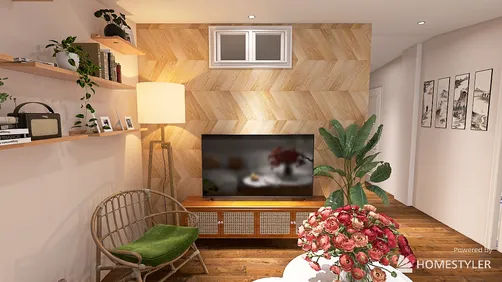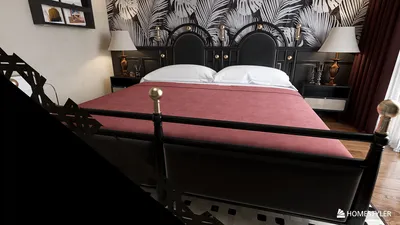
As the future looms ahead, today's renters face the challenges of noise, privacy, and the demands of hybrid schedules; I envision a 2-bedroom unit as a resilient living interface. Reports from AIA highlight an enduring demand for adaptable spaces and enhanced sound control, far surpassing pre-2020 standards. Consequently, the innovative design of a 2-bedroom floor plan serves as a testing ground for the evolving ways people transition between different activities. I perceive this unit as a foundational blueprint for remote work, caregiving, and micro-communities, aligning perfectly with tools like Homestyler for visualizing these spaces.
spatial reasoning toolkit
Despite real constraints such as zoning regulations, natural light access, and budget limitations, the future is already beckoning us.
Split-Core Corridor + Dual Aspect
Design Logic: The primary circulation line divides the unit, placing bedrooms on opposite ends; the lifestyles of tomorrow necessitate separate zones for work, rest, and accommodating multi-generational families.
Flow: From entrance to storage spine, leading into an open living/kitchen area, then branching left or right to the bedrooms; this pathway resembles a simple instruction set, minimizing any context switching.
Sightlines: The kitchen opens up to sightlines that extend through the living space to a window, while strategically placed doors ensure privacy by preventing direct visibility into the bedrooms—privacy akin to layered UI menus.
Storage: A hallway storage wall featuring tall units and bedroom closets, with overflow space discreetly located near the entrance, maintaining an open pathway for daily routines.
Furniture Fit: A sofa ranging from 84 to 90 inches fits comfortably against the corridor buffer, while a 30" × 60" table complements the layout; queen beds with 30" edge clearance optimize movement pathways, integrating seamlessly with our modern lifestyles.
Verdict: The split-core design ensures clear signals within the space: work calls, naps, and dinner gatherings can occur harmoniously without interference over the next five years.
save pin
Corner Living Hub + Sliding Partition
Design Logic: A corner living hub functions as a router, with a sliding partition capable of transforming part of the lounge into a versatile studio bay—this setup future-proofs hybrid work without the necessity to create additional rooms.
Flow: Entry transitions into a decompression zone, then flows into the hub, which can convert to a flexible bay when the partition is closed; bedrooms remain distanced from the main flow for a quieter environment.
Sightlines: Diagonal views from the entry to the glazing amplify the perceived space; partitions keep sensitive visuals contained during video calls or restful moments.
Storage: An integrated media wall features deep drawers, enhanced by a flexible closet that alternates between storing gear and linens; everything is precisely labeled for organized access.
Furniture Fit: Modular sofa sections at 32" depth, complemented by a 48" round dining table designed for smooth movement, and a task desk measuring 24" × 48" positioned by the window.
Verdict: The sliding partition introduces adaptive zones, allowing this 2-bedroom space to evolve dynamically as schedules shift and merge—respectfully adaptable and cleverly designed.
save pin
Wet-Core Cluster + Quiet Perimeter
Design Logic: By consolidating kitchen, bathroom, and laundry into a wet-core layout, the overall efficiency is enhanced; bedrooms are situated along a quiet perimeter, managing noise much like system throttling manages bandwidth.
Flow: The sequence moves from entry to coat storage, then into the wet-core, followed by the living area and onto the tranquil bedrooms; service routes remain short, while user pathways are optimized for long, smooth transitions.
Sightlines: From the living hub, occupants can view across the low island to ambient light; bedroom doors are offset to prioritize privacy over brightness.
Storage: Features include pull-out pantry shelves, a vertical broom storage slot, and a linen tower located near the bathroom; perimeter closets serve long-term storage needs, while the core area provides quick access.
Furniture Fit: A kitchen island measuring 36" × 72" pairs with 24" seating, while a 60" media console keeps the area organized; a king bed fits in the primary bedroom, with 28 to 30 inches of space on the sides, and the secondary bedroom accommodates a queen.
Verdict: Clustering the wet-core ensures that utilities operate like seamless subroutines; the calm edges serve as a sanctuary for rest and concentration amid future disturbances.
save pin
Final Takeaway
The innovative design of a 2-bedroom floor plan transcends mere walls, focusing instead on living protocols. With adaptable sightlines, smart storage solutions, and a flow that resembles a streamlined assembly, a two-bedroom unit becomes an ideal engine for both remote work and relaxation. I believe the homes of tomorrow won’t necessarily be larger; instead, they will prioritize intentional design. This belief is reinforced through my continuous designs, as I've witnessed how nuanced spatial decisions positively influence everyday behavior, perfectly illustrated during the design process using Homestyler.
Looking to transform your home? Homestyler makes it easy! With its user-friendly online design tool and stunning 3D renderings, you can visualize your ideas effortlessly. Explore a vast array of design projects and follow DIY video tutorials to create your dream space—no prior experience needed!















![[For dear Adelina madee 🤎]](https://hs-designs.homestyler.com/production/design/images/8a07e535-9cbc-4132-a42a-5932dac3a112/1706972286037.jpg?x-oss-process=image/resize,w_502,m_mfit/format,webp)