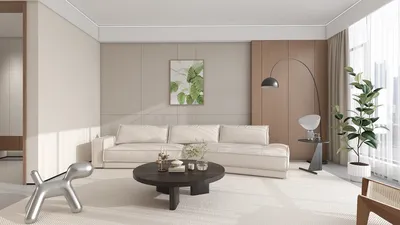


I once took on the challenge of painting a compact studio for a client who was adamant about utilizing semi-gloss white throughout the entire space — including the ceiling. Under harsh lighting, it resembled a showroom, but this experience taught me valuable lessons about the balance of sheen and texture. If you're curious about how to apply interior white semi-gloss paint without transforming your room into a clinical environment, this guide will assist you. To visually illustrate the concepts, I often link paint ideas with an example of a bathroom renovation to explore reflections and lighting.
1. Enhance the look of trim and moldings
I particularly enjoy applying semi-gloss white paint to trim work as it reflects light beautifully, standing out sharply against matte walls. This approach accentuates architectural features and lends a curated air to the rooms, but keep in mind it can reveal flaws more starkly than lower sheen options, making preparation such as sanding and sealing imperative. A small tip: Ensure your trim lines are thin and consistent — semi-gloss rewards meticulousness.
save pin
2. Illuminate small bathrooms
Semi-gloss paint performs well in humid environments, making it an ideal choice for smaller bathrooms due to its easy cleaning properties. Its reflective nature helps to bounce light around, creating the illusion of spaciousness; however, caution is necessary: excessive reflection may highlight imperfections on older drywall. During the renovation of a compact 32 sq ft guest bathroom, using semi-gloss white on the vanity and upper trim helped to enhance the sense of space without overwhelming the design.
save pin
3. Opt for durability on kitchen cabinets
For kitchen cabinets, interior white semi-gloss paint is often the material of choice due to its resistance to scrubbing and oils. It gives a crisp appearance to cabinet doors and withstands fingerprints significantly better than flat finishes, though areas with high contact may require regular touch-ups. To see how cabinet sheen interacts with countertops, I sometimes reference various kitchen case studies to evaluate color and sheen combinations in context.
save pin
4. Add contrast with matte walls
Combining semi-gloss trim or built-ins with matte wall paint is a straightforward technique I employ to introduce depth without additional color. This contrast provides a modern aesthetic and is budget-friendly since you need only apply semi-gloss in high-traffic areas or focal points. The trade-off is upkeep: glossy surfaces necessitate routine cleaning to maintain their pristine look, yet they are far simpler to clean compared to flat paint.
save pin
5. Accentuate built-ins and small features
Painting functional elements like a bookshelf, window seat, or radiator in white semi-gloss transforms them into stylish features. I've observed that compact living spaces appear more organized when a uniform sheen connects built-ins, adding coherence without the need for excessive decor. If you want to visualize how light interacts with different textures in a 3D environment before committing, I often conduct a 3D renovation showcase to identify any glare problems and establish the desired mood.
save pin
FAQ
Q: Where is interior white semi-gloss paint most effectively utilized?
A: It is ideal for trim, doors, cabinetry, and in bathrooms and kitchens due to its durability and ease of cleaning. It is best avoided on textured or poorly prepped surfaces since it highlights imperfections.
Q: How does semi-gloss differ from satin or eggshell finishes?
A: Semi-gloss offers a shinier and more durable surface than satin or eggshell, which are more suitable for broad wall applications. Use semi-gloss where a scrub-resistant and sharp appearance is needed.
Q: Can semi-gloss make a small room feel confined?
A: Not necessarily — when applied in small spaces, semi-gloss can reflect light and create a sense of enlargement if strategically used on trims or features. However, excessive gloss on larger surfaces may have a reflective feel, thus balance is key.
Q: Is a primer necessary beneath semi-gloss paint?
A: Absolutely, I always advocate for a good primer, particularly on previously stained wood or patched drywall. A primer enhances adhesion, minimizes the need for multiple topcoats, and prevents tannin bleed-through.
Q: What’s the best way to clean semi-gloss surfaces?
A: Use a soft cloth or sponge with mild detergent and warm water; steer clear of abrasive sponges. Semi-gloss holds up well against regular cleaning, which is a significant advantage in kitchens and bathrooms.
Q: Are VOCs or health concerns associated with semi-gloss paints?
A: Some paints release volatile organic compounds (VOCs); therefore, selecting low-VOC options is advisable to improve indoor air quality. For health recommendations regarding VOCs and indoor air, refer to the U.S. EPA resource on VOCs and indoor air quality: https://www.epa.gov/indoor-air-quality-iaq/volatile-organic-compounds-impact-indoor-air-quality.
Q: How many coats should I apply?
A: Generally, two topcoats over a suitable primer will provide a consistent, durable finish. High-contrast painting (e.g., dark to white) may require additional priming or a tinted primer to mitigate coverage challenges.
Q: Is it advisable to use semi-gloss on ceilings?
A: I seldom suggest using semi-gloss on entire ceilings since it tends to accentuate texture and flaws; however, it can be effective on small ceiling trims or accents to create contrast. For most ceilings, a flat or matte finish is more forgiving.
save pin
Homestyler is your go-to online home design platform! With its user-friendly design tool, stunning 3D renderings, and a treasure trove of DIY video tutorials, you can effortlessly create and visualize your dream space. Transform your ideas into reality today!
Дизайн сейчас бесплатно
































