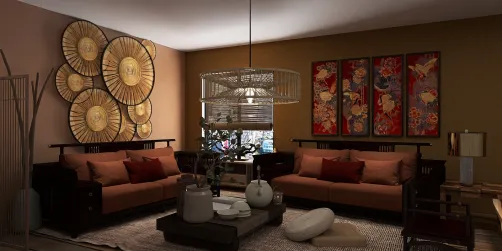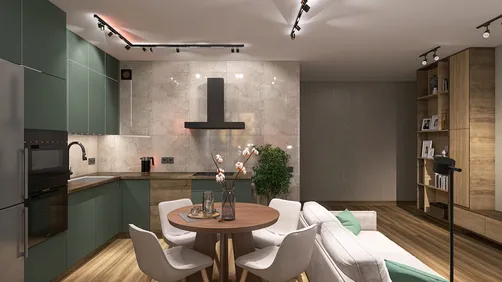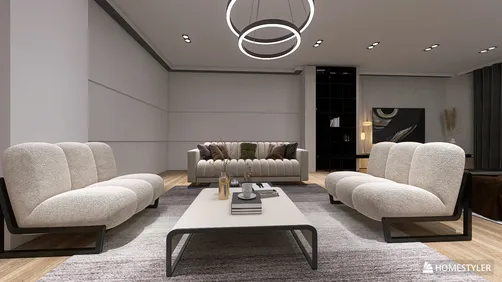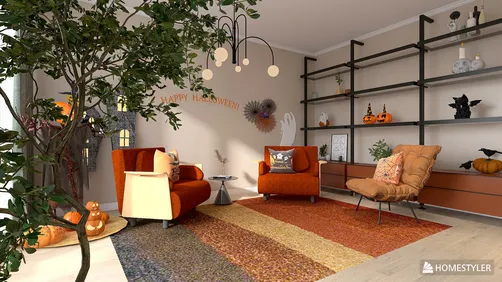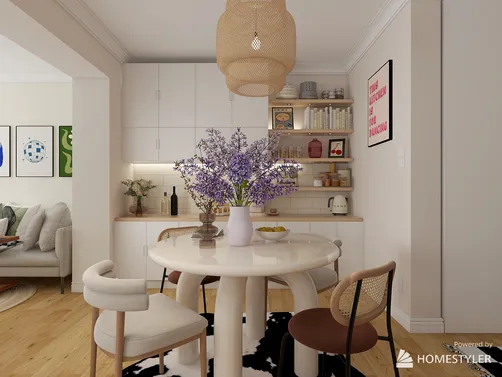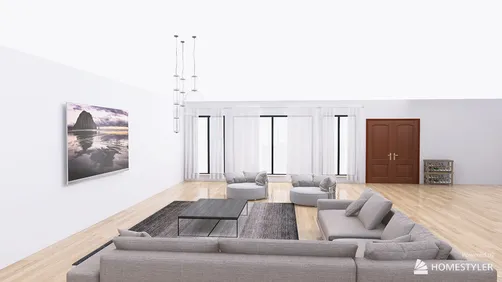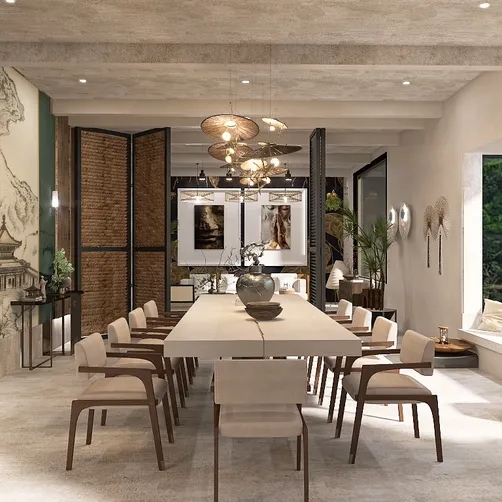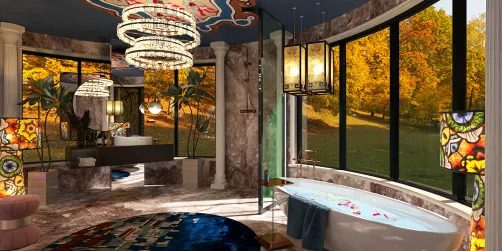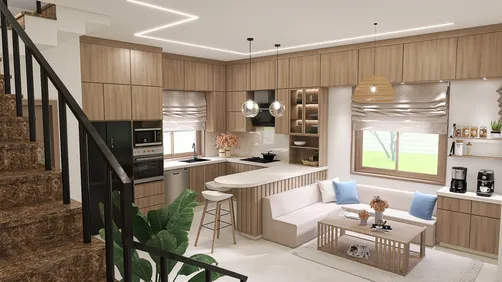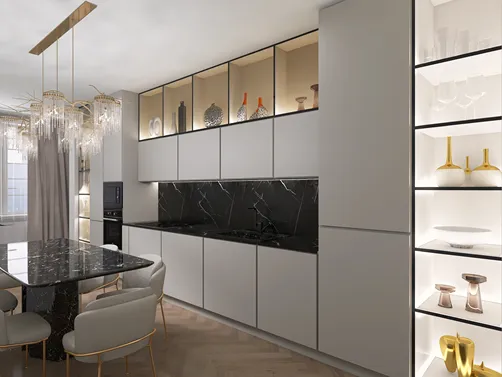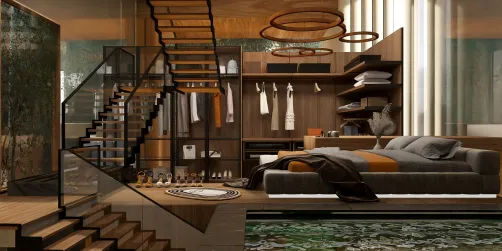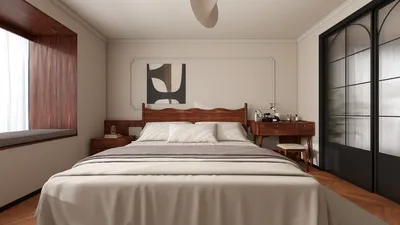
As we look toward the future, it's evident that families are increasingly viewing a three-bedroom layout as a versatile operating system designed for work, rest, and peace, while utilizing sunlight as a crucial energy source. Recent insights from NAHB highlight a growing preference for open yet zoned layouts, indicating a transition from traditional thinking of rooms as mere containers to considering them as dynamic processes. This underscores the importance of a north-facing orientation, with meticulously planned dimensions acting like a coding language for creating stability. In a well-designed three-bedroom floor plan, aspects such as glare control, thermal balance, and efficient workflows merge harmoniously into a livable environment, akin to the capabilities offered by Homestyler, a tool that enhances spatial reasoning.
Gallery Spine + Split Private Wing
Design Logic: The northern edge serves as a cool backbone, featuring a 42' x 36' rectangular layout with the entrance positioned centrally on the north wall. Public spaces are allocated to the east, while a private wing is situated to the west, ensuring that the design is future-proofed for both hybrid work scenarios and tranquil evenings.
Flow: The pathway progresses from the entry to a mud alcove (6' x 5'), continues through a gallery hall (4' wide), leads into the combined living/dining area (18' x 15'), moves into the kitchen (12' x 11'), and finally into a private corridor (3'6" wide) that provides access to the bedrooms.
Sightlines: From the entryway, a layered axis organizes the living space, highlighting window bands; the kitchen sightline strategically pivots, uniting the dining area with an adjacent partially open courtyard that minimizes glare, creating a fluid user interface.
Storage: Cabinets on the northern wall provide a continuous storage solution (18" deep, spanning 24'), complemented by corridor niches every 8' acting as micro-buffer spaces. An attic hatch positioned over the gallery permits seasonal overflow storage.
Furniture Fit: A 96" sofa is positioned with 36" of clearance around it; the dining table measures 78" x 38" with a 42" circulation space. Queen beds fit comfortably in the 12' x 12' rooms, with a 30" margin on each side, adhering to API guidelines.
Verdict: This layout establishes a stable thermal core with clear design threads; five years down the line, the space embodies quiet technology, characterized by low energy fluctuations and predictable routines, devoid of visual distraction.
save pin
Court-Oriented Living, North-Light Workspace
Design Logic: The design incorporates a 10' x 12' east-facing courtyard; the living space is wrapped in an L-shape (16' x 15' plus 10' x 10'), drawing daylight laterally while the north-facing study (9' x 10') becomes an ideal area for undistracted work.
Flow: The layout moves from the entry to the edge of the courtyard, continues into the L-shaped living area, flows into the kitchen peninsula, and leads to the study zone, with the sleep wing tucked discreetly in a way that minimizes backtracking.
Sightlines: The primary view extends laterally towards the courtyard, while a secondary view opens to the north; screens are aligned perpendicularly to the light, functioning like UI elements with thoughtfully controlled contrast levels.
Storage: A pantry featuring a column grid (24" modules), bench drawers situated at the courtyard (12" high), and a study wall system (10' run, 15" deep) serve as convenient storage for devices and documents.
Furniture Fit: An 8' x 3' peninsula with 42" aisles, a 104" sectional sofa with 30" clearance at the rear, and a 60" study desk with 36" passage, ensure dimensions are optimized for a harmonious living experience.
Verdict: The courtyard functions much like a cooling algorithm; in five years, this workspace continues to exude clarity, as the north light offers a seamless experience.
save pin
Primary Suite South, Kids’ Cluster North
Design Logic: The hierarchy is inverted, placing the children’s rooms along the north side (two at 11' x 11', one flexible room at 10' x 11'), while the primary suite expands to the south (13' x 14') to capture warmth for evenings and recovery cycles.
Flow: The entry leads to a central hub (laundry room measuring 7' x 6'), then to a looped kids' hall (3'6" wide), transitions into a bathroom (5' x 9'), continues into the living space, and culminates in the primary suite; the looped layout facilitates daily routines without obstruction, resembling parallel threading.
Sightlines: Parents benefit from sweeping views from the living area to the yard, while the children’s rooms maintain a quiet ambiance with indirect natural light; this interface is designed to prioritize monitoring without intrusive glare.
Storage: The children's area features wall rails with 18" deep wardrobes, a shared linen tower in the hall, and a 6' x 8' walk-in closet for the primary suite, offering a structured approach to storage emphasizing accessibility.
Furniture Fit: The design accommodates twin beds with 30" circulation space, while the primary suite accommodates a king bed with 36" on each side. The living area integrates a 9' rug grid that aligns conveniently with outlets and charging stations—equipment arranged to match lifestyle needs.
Verdict: This layout adapts effortlessly to family dynamics; in five years, the loop remains efficient, with thermal gradients minimizing daily friction.
save pin
## Final Takeaway
A well-orchestrated north-facing three-bedroom floor plan functions like the firmware of modern living—prioritizing stability before adding complexity. Different variations of three-bedroom designs become equipped for the future when aspects like flow, sightlines, and storage converge into a unified interface. Long-term necessities, including glare-free work spaces and consistent thermal conditions, transform from mere enhancements to essential elements. Drawing from experience, it appears that the most innovative homes of the future won’t necessarily be larger, but rather intentionally designed to meet the evolving needs of their inhabitants, something Homestyler effectively facilitates.

Homestyler is the ideal platform for anyone looking to transform their home. With its user-friendly online design tool, stunning 3D renderings, and comprehensive design projects, you can explore your creativity. Plus, the DIY video tutorials make every step easy and enjoyable. Start your design journey today!