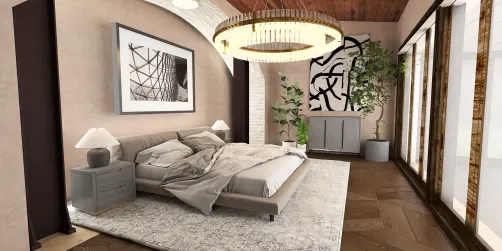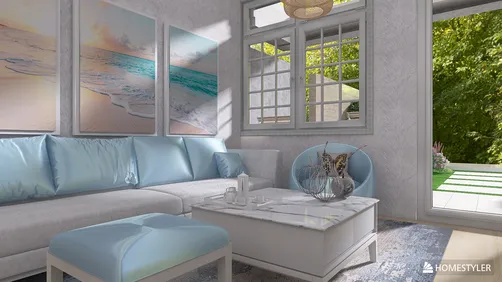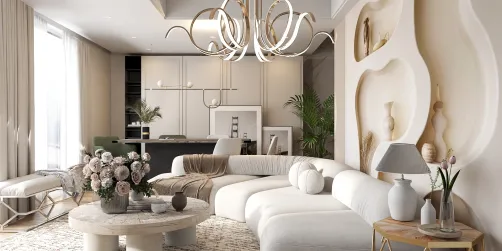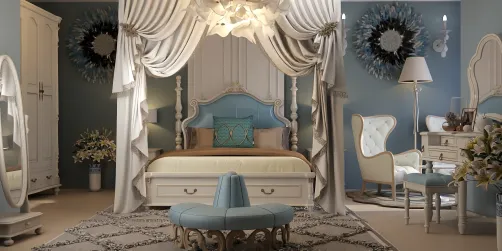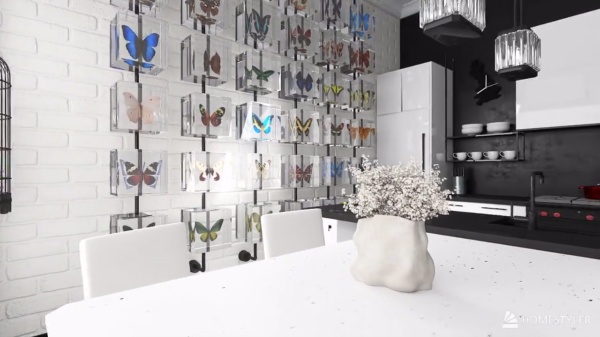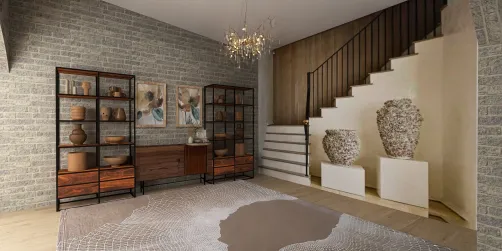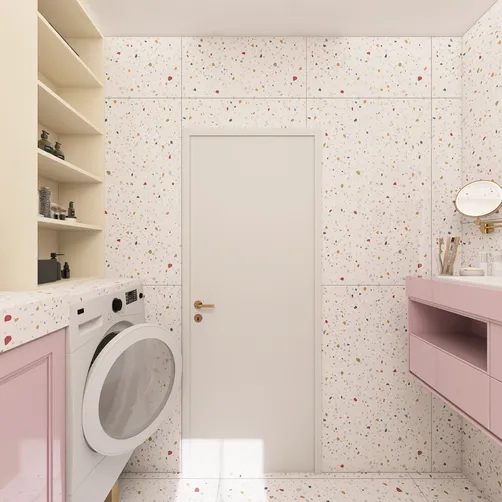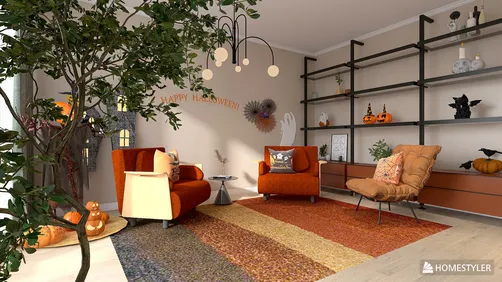
The pressures of future lifestyles—such as hybrid work, caregiving demands, and the need for tranquility—intersect with the contemporary challenges of apartment noise, storage overload, and awkward spatial flows. As noted by Zillow, homes that feature flexible room layouts and efficient designs tend to sell more quickly and attract greater interest. I've found that well-designed 2-bedroom apartments serve as a blueprint for how we might adapt our living spaces as our bandwidth—encompassing time, energy, and focus—becomes increasingly limited. The future is upon us, and I am already beginning to envision its shape through the lens of a spatial reasoning toolkit alongside tools like Homestyler.
Linear Core + Split Bedrooms
Design Logic: A central service core comprising the kitchen and bathroom minimizes plumbing requirements while ensuring clean lines; bedrooms are positioned across the living area to provide privacy and maintain acoustic balance.
Flow: The sequence moves from entry → drop-zone → living area → kitchen → bedroom A → bedroom B; this straightforward layout minimizes the risk of overlap.
Sightlines: A long sightline from the entrance through the living space to the window, complemented by side connections to the rooms; the user interface layers alternate between public and private sections.
Storage: Hall closets serve as caches, bed-wall wardrobes provide lasting memory space, and overhead cabinets near the kitchen function as quick-access buffers.
Furniture Fit: A sofa depth of 36–38", a dining area accommodating four, and queen beds with 30" clearance on both sides; adherence to spacing guidelines helps keep clutter at bay.
Verdict: This design effectively supports remote work and communal living without unwanted noise; five years from now, the central spine will continue to foster quiet efficiency.
save pin
Corner Living + Diagonal Sightline
Design Logic: A corner-oriented living space directs light throughout the layout, transforming a 2D grid into a clearly readable interface that establishes a public-to-private hierarchy.
Flow: From entry → angled entrance → living corner → kitchen bay → primary suite → secondary room; a branching layout that guides choices.
Sightlines: The diagonal view to large windows captures attention, while shorter lines to doors decrease cognitive load, similar to a streamlined user interface.
Storage: Built-in units positioned at the living corner act as shared caches; the primary bedroom benefits from a deep wardrobe, while the secondary has a modular shelving system.
Furniture Fit: An L-shaped sofa ranging from 90–96" paired with a swivel chair, and a 60" oval table that respects the diagonal lines; two desks are strategically placed next to the windows.
Verdict: This layout caters to flexible families by optimizing light and workspaces; in the coming years, the diagonal arrangement will serve as a serene command central.
save pin
Central Kitchen Island as Router
Design Logic: The kitchen island acts as a central hub for activities such as cooking, charging devices, and family briefings; other rooms connect seamlessly, akin to peripherals in a coherent daily system.
Flow: The path progresses from entry → pantry storage → island center → living area → bedroom links → balcony; information flows smoothly without dead ends.
Sightlines: The low-profile island maintains open sightlines; layered task lighting operates as status indicators—ambient, task, and accent—minimizing visual clutter.
Storage: Deep drawers for cookware serve as immediate access points (hot cache), a tall pantry acts as long-term storage (cold archive), and beds equipped with under-drawers function as accessible local storage.
Furniture Fit: The island measures between 72–84" with a 36" clearance on all sides, a sectional can extend up to 96", accommodating either queen beds or a combination of twin beds and daybeds for versatile routines.
Verdict: This centrally-focused design adapts well to hybrid lifestyles; five years down the line, the island will continue to facilitate meals, virtual meetings, and homework without loss of efficiency.
save pin
Final Takeaway
Effective layouts for 2-bedroom apartments excel when their configurations are intuitive: the routing is clear, lines of sight are straightforward, and storage solutions function as intelligent caches. Contemporary 2-bedroom units must manage movement akin to coding principles, where furniture decisions resemble strict API calls to preserve attention bandwidth. The future will favor intentional layouts over mere square footage, as I have witnessed how small spatial adjustments can significantly transform my clients' lives.
Homestyler is your go-to online home design tool, offering stunning 3D renderings and a wealth of design projects. With easy-to-follow video tutorials, you can ignite your creativity and effortlessly turn your interior decorating dreams into reality, regardless of your experience level!