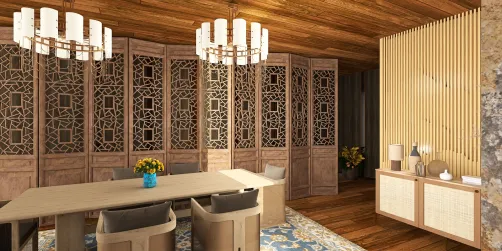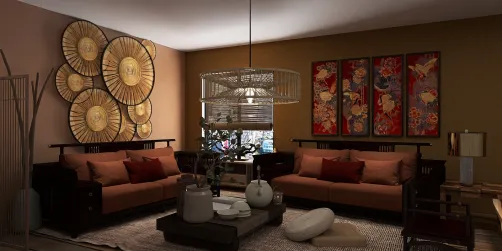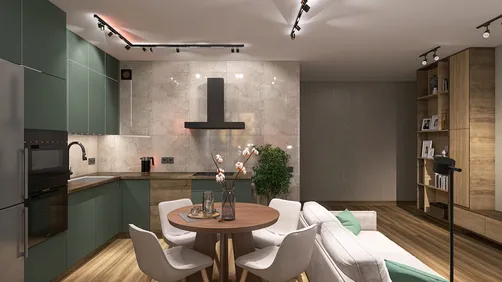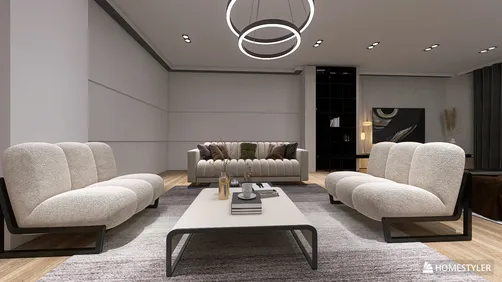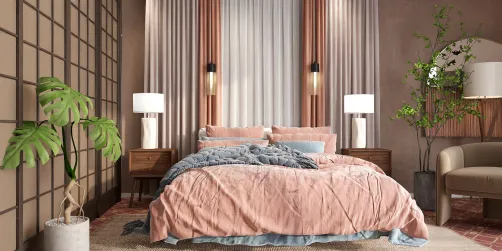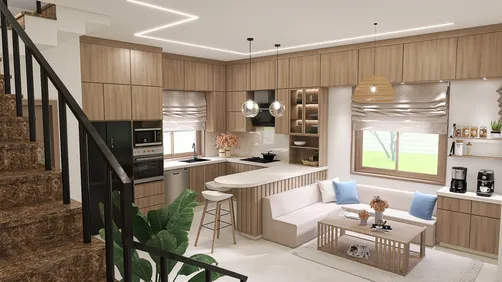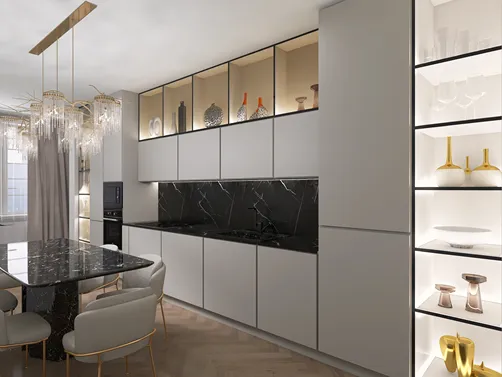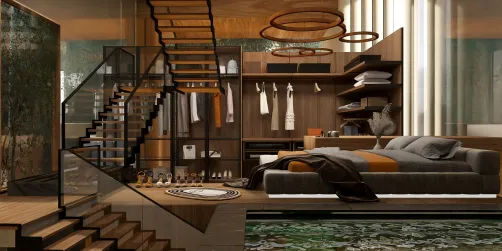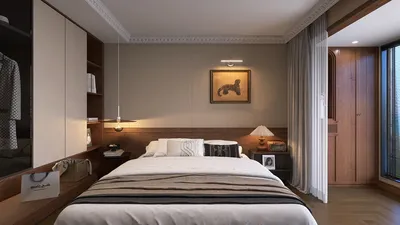
As we look towards the future, challenges such as climate change, rising costs, and the need for community cohesion have emerged. Today's residences often struggle with disorganized spaces, ineffective airflow, and inadequate privacy. Recent AIA surveys indicate that homeowners now value flexible spaces more than mere square footage, leading to a significant shift in our approach to designing boundaries and perspectives within our spatial reasoning toolkit. While creating floor plans for three-bedroom homes in Kenya using tools like Homestyler, I aim to curate a lifestyle ecosystem that accommodates high temperatures, multigenerational dynamics, and various budgets—without sacrificing any detail.
Courtyard Spine with Dual Aspect Living
Design Concept: A slender, shaded courtyard functions as both a thermal reservoir and a social nucleus; the rooms connect to it like modules on a bus system. Anticipating future heat waves and water shortages, this design prioritizes cross-ventilation and shaded spaces.
Flow: Entrance → partially open veranda → living/dining area (dual-sided) → courtyard path → bedrooms; utility spaces operate seamlessly in the background.
Sightlines: Upon entry, a gentle diagonal leads to greenery; private areas are discreetly hidden behind a staggered wall—user interface layers reveal only necessary views.
Storage: Bench-height cabinetry surrounds the perimeter as a storage solution; an attic hatch provides seasonal storage; and wall niches in the courtyard offer quick-access compartments.
Furniture Arrangement: A three-seat sofa measuring 2100mm, dining table dimensions of 1600×900, and bed sizes of 1500/1200mm width; clear pathways of 900mm ensure unobstructed movement.
Conclusion: This design enhances social interaction while passively cooling the environment; it maintains low utility costs and family connections in a discreet manner over the next five years.
save pin
Split-Zone Privacy with Convertible Third Room
Design Concept: The layout separates parental and secondary bedrooms around a central service area; the third room can easily convert into an office, nursery, or rental space—flexible enough to adapt to future needs.
Flow: Entrance → pocket foyer → central wet area (bath and laundry) → left private suite, right dual rooms; the kitchen serves as a gateway to both the garden and the street.
Sightlines: Short, controlled corridors; sight stops are organized like a menu with public areas taking precedence over private spaces.
Storage: Full-height wardrobes (600mm deep) act as vertical storage units; under-stair pull-outs (for duplex layouts) house frequently accessed items; organized sections minimize search times.
Furniture Arrangement: A queen-sized bed at 1600mm with 760mm bedside clearances; a Murphy bed desk combo in the third room for flexible work/sleep options.
Conclusion: This arrangement effectively minimizes noise and fosters micro-entrepreneurial activities; five years later, it adapts to lifestyle changes without requiring structural overhauls.
save pin
Veranda-First Linear Plan for Narrow Plots
Design Concept: Many plots in Kenya are compact; a veranda-first design functions similarly to a CDN edge—providing shade, facilitating social interactions, and controlling dust before reaching the main living areas.
Flow: Street → deep veranda → living area → kitchen/dining space → stack of bedrooms; the back door leads to a utility courtyard for water management and solar maintenance.
Sightlines: A long axis features punctured light wells; glazing is utilized to manage information density—bright near the edges and dim towards the resting areas.
Storage: Toe-kick cabinets, overhead kitchen shelves at a depth of 450mm, and a lockable outdoor store for tools and propane provide smart offsite storage.
Furniture Arrangement: A linear sofa measuring 2400mm, a narrow island at 600×1800mm, and bunk beds in the children's room at 950mm width; every inch effectively negotiates movement.
Conclusion: This plan offers streamlined movement with fewer changes in direction and greater clarity; utility demands remain low while solar intake is well-regulated over five years.
save pin
Final Thoughts
The design of three-bedroom homes in Kenya transcends simply counting rooms; it emphasizes harmonizing climate considerations, family connections, and local economies into a cohesive living experience. Whether through a courtyard, split-zone, or linear design, these homes function like well-compiled code—efficient, straightforward, and ready for updates. My approach to creating three-bedroom layouts is to craft adaptive frameworks rather than fixed solutions, and I believe that the most intelligent homes of the future will prioritize intentionality over mere size, perhaps facilitated by tools like Homestyler.

Homestyler is your go-to online platform for all your home design needs! With an easy-to-use design tool, stunning 3D renderings, and a wealth of DIY video tutorials, you can effortlessly bring your creative visions to life. Start designing today and transform your space!