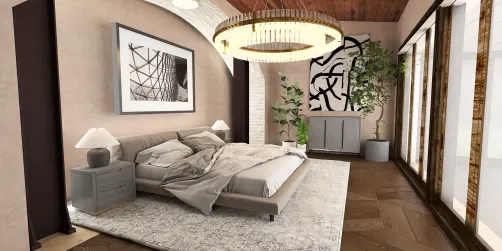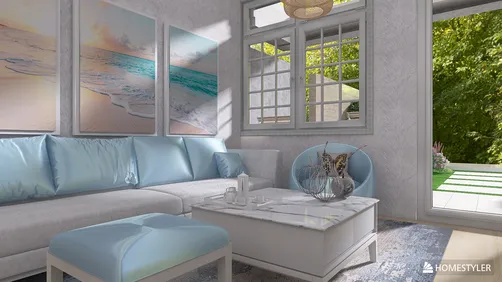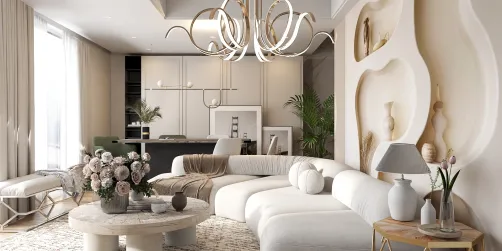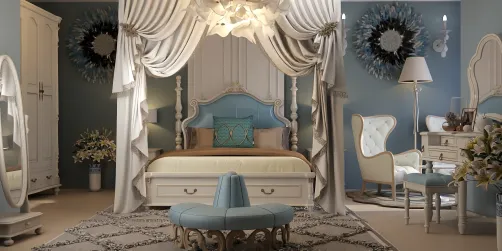
Envisioning the future of living involves distilling choices into clear options, as modern inhabitants grapple with limited storage, noise disturbances, and disjointed daily routines. Research by Zillow indicates that homes featuring adaptable multi-use spaces frequently attract greater interest and faster offers, highlighting that flexibility is indeed invaluable. The Gaur Green City-1 6th Avenue floor plan emerges as a brilliant instance where design intersects with lifestyle, with minor decisions creating significant impacts for the future. Utilizing tools like Homestyler can elevate this exploration further.
spatial reasoning toolkit
Split-Core 2-Bedroom Design
Design Logic: A central corridor functions as a dependable spine, separating private areas from communal spaces, ensuring readiness for hybrid living.
Flow: Entry → drop zone → living/dining area → balcony link → bedroom units, with the kitchen branching off as a complementary pathway.
Sightlines: A long axis sightline from the entrance to the balcony emphasizes daylight as the main user interface while positioning bedrooms off to the side to minimize visual distractions.
Storage: Integrated wardrobes along the corridor serve as storage solutions, complemented by pantry drawers and under-bed storage to enhance capacity without adding clutter.
Furniture Fit: A sofa measuring 84–90" aligns well with a 10' width in the living area; queen-sized beds in 10'×12' rooms maintain adequate flow with a clearance of 30–36".
Verdict: This spine design ensures stability in daily activities—fostering a social front while maintaining a tranquil back—perfectly aligned with five years of flexible work and vibrant family life.
save pin
Diagonal Living & L-Shaped Kitchen Anchor
Design Logic: Arranging seating diagonally draws the eye to the brightest corner, while an L-shaped kitchen serves as the backbone of the space, similar to a responsive server system.
Flow: Prep area → cooking line → serving line, transitioning to dining; the balcony acts as an intermittent escape for fresh air and relaxation.
Sightlines: Triangulated views guide focus from the entrance to an art display, from the sofa to a window, and from the cooktop to the children's area, effectively balancing attention and awareness.
Storage: Overhead kitchen cabinets reaching 96" operate as quick-access storage; hallway alcoves accommodate seasonal items without cluttering the user experience.
Furniture Fit: Round dining tables of 42–48" prevent collision in the corners; maintaining a sectional depth of 36" ensures smooth movement around the coffee table.
Verdict: The diagonal layout enhances perception and minimizes disruption, allowing for cooking, entertaining, and remote work to coexist seamlessly.
save pin
Bedroom Units with Privacy Protocol
Design Logic: Bedrooms transform into adaptable modules—primary offers ensuite privacy, while secondary includes a flexible workspace for study or telecommuting.
Flow: Entry to wardrobe → core sleeping area → desk zone → window relaxation area; bathroom access is designed to be a short and private route.
Sightlines: The bed faces a soft wall while the desk is positioned to capture natural light; mirrors reflect daylight without revealing personal information from the hallway.
Storage: Two-foot-deep wardrobes function as structured storage; overhead lofts are ideal for less frequently used items, while drawers under the bed cater to daily necessities.
Furniture Fit: Primary bedroom features a queen bed while the secondary hosts a full size; desks measuring 48–60" keep ergonomic accessibility, with chair clearance at 30" facilitating easy movement.
Verdict: These bedroom units honor functional bandwidth—sleeping areas remain private while workspaces stay accessible, setting a purposeful tone for the future.
save pin
Final Thoughts
Interpreting the Gaur Green City-1 6th Avenue floor plan as a living interface reinforces the idea that the framework influences behavior. A two-bedroom unit or a similar design flourishes when flow, sightlines, and storage function like impeccably written code. Ultimately, focusing on clarity rather than size and embracing adaptability over mere square footage defines the homes of tomorrow. In my view, the most intelligent living spaces in the future won’t necessarily be larger; they will simply be more intentional, perhaps explored through tools like Homestyler.


Discover the joy of home design with Homestyler! This user-friendly platform offers an intuitive online design tool, stunning 3D renderings, and inspiring DIY video tutorials. Whether you're a beginner or a seasoned decorator, Homestyler makes transforming your space easy and fun!