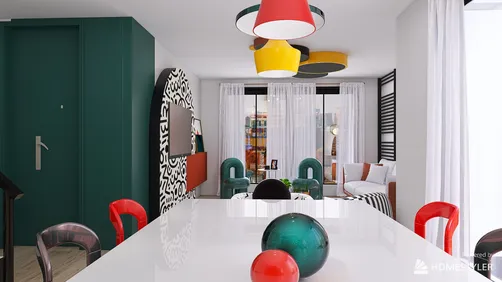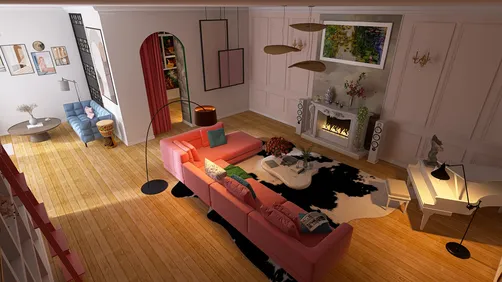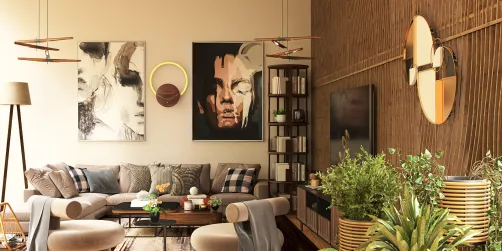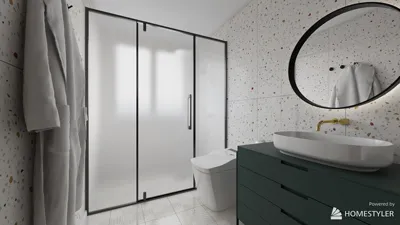
As we move towards the future of living, current apartments often struggle with their storage solutions and convoluted layouts. My observations lead me to interpret design plans as behavioral blueprints. According to market insights, like those from Zillow, there's a growing demand for compact units featuring adaptable divisions. This raises a pivotal consideration for the Millennia 2 design question: how does the layout address bandwidth rather than just the basic square footage? I have a spatial reasoning toolkit at hand as I envision a blueprint that conceptualizes rooms more as interfaces than mere enclosures. Practically applied, the Millennia 2 design prompts the query: how much layout is sufficient to maintain high functionality and minimize disruptions?
Split-Core Two-Bed Loop
Design Logic: The primary suite positioned on one side provides a sense of privacy, while the second bedroom mirrors it on the opposite side, with a shared kitchen and living area serving as a central hub; future adaptability flows from this symmetrical design.
Flow: The pathway follows an entry → drop zone → kitchen node → living hub → branching to bedrooms; there are no dead ends, but rather elegant loops that redirect like a well-written program.
Sightlines: A diagonal sightline leads from the entry to the balcony for better spatial awareness; private access points are subtly placed to prevent interface layers from overlapping.
Storage: Edge closets function as storage caches, alongside a utility nook in the hallway; a spacious pantry serves as a buffer for longer-term supplies.
Furniture Fit: An 84-inch sofa complements the 10–11 foot living area; queen beds are designed with a 30-inch clearance on both sides; dining arrangements accommodate four within a 36"×60" space.
Verdict: This design endures over five years, adapting seamlessly to hybrid work schedules, guests, and evolving daily habits without needing a complete redesign.
save pin
Rail Plan with Convertible Studio Node
Design Logic: A linear framework comprising the entryway, bathroom, kitchen, living area, and terrace—augmented by a flexible studio space that transforms between an office and bedroom.
Flow: The arrangement is streamlined like a systematic function call; privacy is maintained only when necessary, reducing context-switching interruptions.
Sightlines: A continuous view from cooktop to daylight helps anchor your focus; partial-height storage elements introduce distinct layers without creating barriers.
Storage: A fully integrated millwork wall provides structured storage, with overhead compartments for less frequently used items; under-bench drawers ensure quick access to essentials.
Furniture Fit: A wall bed frees up 60 inches during the day for desks; a 30-inch depth work surface adheres to ergonomic standards.
Verdict: This sleek design functions efficiently for the next five years, free from unnecessary frills and designed for scalability.
save pin
Offset L with Pocket Courtyard View
Design Logic: An L-shaped living and kitchen area curving to outline a private visual courtyard; bedrooms sit at the shorter leg to enhance sound insulation.
Flow: The layout consists of an entry → gallery → a pivot at the kitchen island → living area → terrace; bedrooms are accessible through a quiet route off the gallery.
Sightlines: A series of layered frames direct attention from the island to the window and sky; staggered doors help prevent direct visual contact.
Storage: Corner pantry and linen storages create reliable storage; bench seating includes hidden compartments for seasonal items.
Furniture Fit: A sectional fits within a 9–10 foot space, 42-inch clearance from the island, and the primary bedroom accommodates a king-sized bed with 36 inches for circulation—future-proofing every measurement.
Verdict: This spatial design conveys purpose—peaceful, clear, and prepared for diverse daily activities.
save pin
Final Takeaway
When clients inquire about the Millennia 2 design, I help them consider how much spatial organization they require versus how little disruption their layout can handle. The optimal two-bedroom unit is not necessarily larger; instead, it should function as a streamlined interface with innovative storage solutions and flow patterns akin to executable logic. My observations suggest that the homes of the future won't necessitate larger spaces; they simply need to be more purposeful. In my practice, I consistently observe how even minor spatial decisions can significantly transform the way inhabitants experience life, particularly with tools like Homestyler enhancing these design innovations.

Discover the ease of home design with Homestyler! This user-friendly platform offers a powerful online design tool, stunning 3D renderings, an array of inspiring design projects, and helpful DIY video tutorials. Transform your space effortlessly and unleash your creativity today!



















![Design [4]](https://hs-designs.homestyler.com/production/design/images/07c2de3a-88ec-4be8-8910-ff255b795bc2/1731419398293/7841697.jpg?x-oss-process=image/resize,w_502,m_mfit/format,webp)