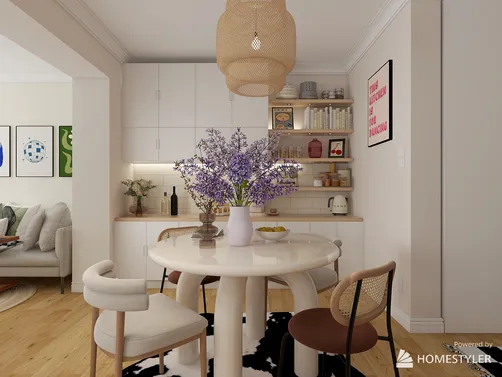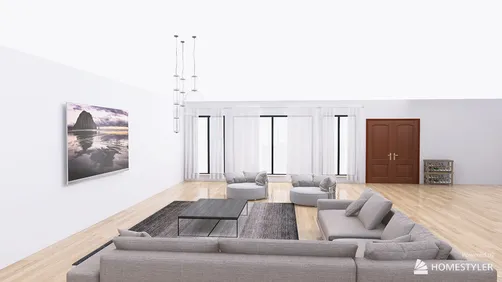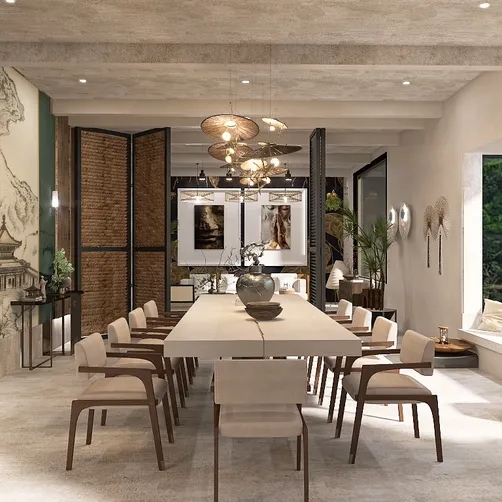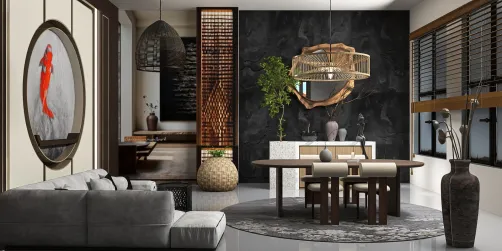
As we move forward into the future, my clients continue to face challenges with issues such as circulation bottlenecks, cluttered storage, and bright living rooms that can be overwhelming. Recent industry surveys indicate that single-level living is increasingly preferred, driven by aging-in-place priorities that create a demand for step-free designs. Therefore, exploring sample floor plans for a one-story house becomes essential for adapting to our evolving lifestyles. The organization of rooms is transforming, indicating shifting behaviors, and I approach my work with the mindset that the future is upon us, assisted by tools like Homestyler.
Courtyard Spine + Split Quiet Zone
Design Principle: A central courtyard serves as a thermal and social haven, effectively dividing serene bedrooms from the busy kitchen-living area. To accommodate future lifestyles, adaptable micro-climates and social zones are necessary.
Flow Blueprint: This design starts from the entry leading to a drop zone, then to a kitchen acting as the command center, flowing into a living area that borders the courtyard, with a corridor branching off to the bedrooms, culminating in a flexible room.
Sightlines Analysis: The layout features layered views; the front entrance unveils a filtered view of greenery, the kitchen connects with both the living area and the patio, while bedrooms are positioned for minimal traffic sightlines, fostering a sense of calm.
Storage Solutions: Perimeter built-ins serve as efficient storage, linen cabinets line the hallway, and a garage wall system manages seasonal items, while the courtyard includes a bench that provides storage for tools.
Furniture Arrangement: Sofas with a range of 84 to 96 inches define optimal boundaries, a dining table sized at 36 by 72 inches fits seamlessly into the traffic flow, and bedroom nightstands maintain a clearance of 24 inches for optimal functionality.
Conclusion: This resilient plan minimizes noise while maximizing natural light; in five years, it provides a stable interface that balances climate challenges with daily routines.
save pin
Linear Bar + Service Backline
Design Principle: Arranging rooms along a linear bar promotes solar energy efficiency, while a rear service area (including the pantry, laundry, and mechanical systems) keeps essential tasks discreet—future energy requirements necessitate clear routing.
Flow Blueprint: The design starts from the carport leading to a mudroom, followed by a kitchen node, then flows into a living area, with a pocket door granting access to a studio, looping back to the laundry and storage before returning to the mudroom.
Sightlines Analysis: A long view stretches from the entry to the garden; service doors are cleverly concealed, and the studio captures indirect daylight suitable for screen-related tasks without glare.
Storage Solutions: A deep pantry is equipped with 30-inch shelves; tall cabinets in the laundry room serve as vertical storage; under-window drawers in the living room provide quick access to frequently used items.
Furniture Arrangement: The layout ensures a minimum of 30 inches of walking space around a 9-foot sectional; the studio desk measures 30 by 60 inches accommodating cable management; the kitchen island maintains a 42-inch clearance on all sides for optimal use.
Conclusion: This meticulously sequenced design transforms chores into unobtrusive processes; it promises energy savings and reduces cognitive load as lifestyles evolve.
save pin
Ring Loop + Central Utility Core
Design Principle: A compact utility core that integrates bathroom, HVAC, and storage reduces the length of piping; a circular corridor fosters fluid family movement—future residences will likely favor fewer mechanical interferences.
Flow Blueprint: The path begins at the entry, moving through the living space to a looped corridor leading to the bedrooms and bath core, before reaching the kitchen and back deck, allowing multiple return routes without congestion.
Sightlines Analysis: Views from the living area focus on garden anchors; the corridor provides subtle openings without dead ends; the kitchen frames the deck, treating it as an extension of the living space.
Storage Solutions: The core accommodates stacked closets similar to a RAID system; niches along the ring corridor are perfect for everyday items; an attic hatch above serves for long-term storage.
Furniture Arrangement: The living area is designed around a 10 by 14-foot module; queen bedrooms ensure 36-inch side aisles; the kitchen layout maintains a 48-inch space between appliances, ensuring ergonomic efficiency.
Conclusion: The loop design functions like a responsive network; if one area is occupied, the room can easily redirect traffic. In five years, the design will create a seamless living experience rather than just an efficient one.
save pin
Final Insights
Sample floor plans for one-story homes transcend mere geometry—they embody systems for managing light, movement, and energy. Single-level configurations, ranch-style designs, and open-concept layouts indicate a shift towards residences that deliver a lifestyle with fewer complications and quicker responses. Based on my observations, the most effective future one-story homes will not necessarily be larger but rather more thoughtfully designed, as I consistently witness how small spatial adjustments can profoundly alter everyday living.


Discover the magic of home design with Homestyler! This user-friendly online platform offers a powerful design tool, stunning 3D renderings, and a wealth of DIY tutorials. Whether you're an aspiring designer or just looking to refresh your space, Homestyler makes it easy and fun to bring your ideas to life!