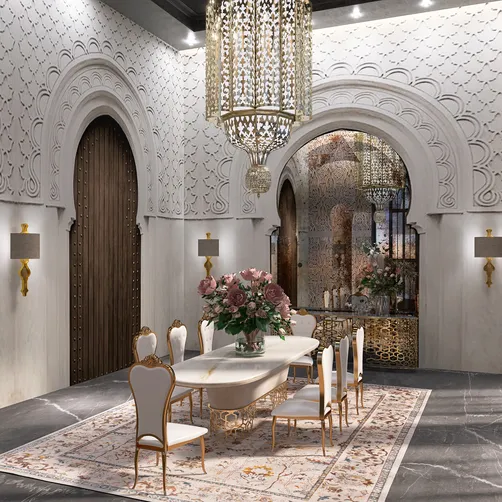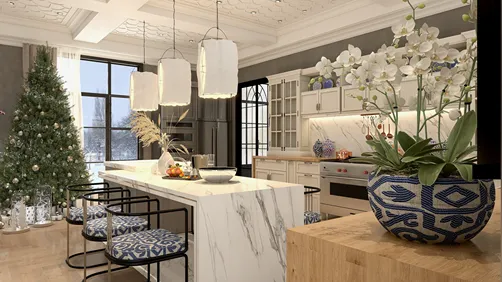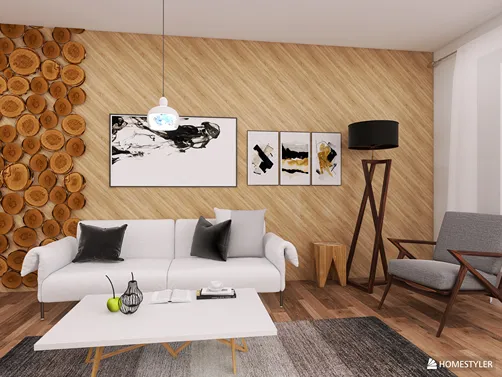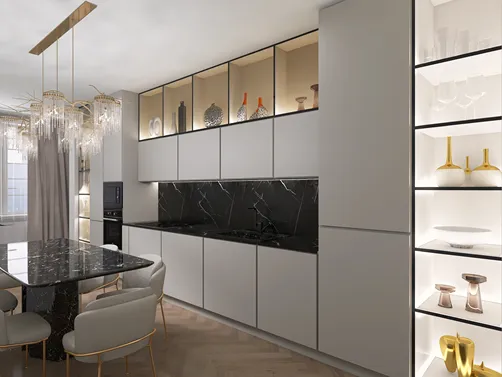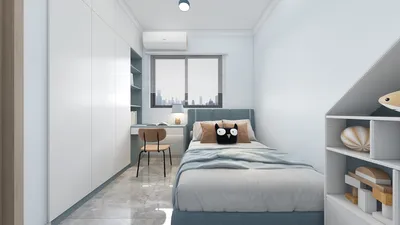
The future of living anticipates homes that function as adaptive systems, whereas many current ground floor designs are often cluttered with storage and disorganized layouts. Data from the National Association of Home Builders highlights the growing preference for single-level homes as families prioritize accessibility and comfort for multiple generations. This is precisely why a three-bedroom configuration in 1600 square feet can be streamlined and efficient. I envision a spatial reasoning toolkit as I design a floor plan that is forward-thinking—this three-bedroom layout in 1600 square feet exemplifies my client's aspirations, manifested in concrete.
Layout 1: Central Spine with Individual Zones
Design Rationale: The open living and dining area serves as the primary hub, while the bedrooms are divided; two are located on one side and the master on the opposite side to minimize noise and accommodate varying schedules.
Flow: Entry leads to a foyer node, which connects to the living area, then to the dining space and kitchen; the layout branches into bedroom clusters, allowing for a smooth, parallel flow with minimal interference.
Sightlines: A clear line of sight runs from the front door to the garden, while a semi-opaque kitchen entry maintains a low level of visual distraction from utility activities.
Storage: Incorporating wall-depth closets along the corridor, pull-out pantries near the kitchen, and under-bench dining storage during peak use.
Furniture Arrangement: Sofas ranging from 88 to 96 inches, a dining set for six within a 9x10 area, queen beds allowing for 30-inch clearances, and a master suite fitted with a spacious 6-foot wardrobe grid.
Conclusion: This spine layout effectively manages daily activities—children and guests can navigate effortlessly, and this plan allows for five years of uninterrupted family dynamics.
save pin
Layout 2: Courtyard-Centered with Surrounding Rooms
Design Rationale: An inviting internal courtyard serves as the thermal and social core, with rooms oriented around it to maximize views and natural light.
Flow: Entry leads to the courtyard, flowing into the living-dining loop and then to the kitchen, with bedrooms anchored at the corners, each providing a view of either the courtyard or garden.
Sightlines: Diagonal perspectives across the courtyard create layered privacy, becoming more intimate near the bedrooms while remaining open towards communal areas.
Storage: Incorporating built-in seating beneath courtyard glazing, perimeter wardrobes, and a utility nook positioned for long-term storage near the service door.
Furniture Arrangement: L-shaped modular sofas, a 42-inch round table promoting collision-free movement, and beds strategically aligned for optimal natural light exposure.
Conclusion: The courtyard acts as a heartbeat of the design—steady, resilient, and adaptable for families across generations and fluctuating schedules.
save pin
Layout 3: Public Front, Quiet Rear with Service Access
Design Rationale: Public spaces are positioned at the street front, while bedrooms are placed towards the garden, complemented by a discreet service alley to prevent disruption to the main living areas.
Flow: The route goes from the portico to the foyer, leading to the living area, dining space, and kitchen; the service alley maintains access to utilities and bathrooms while the private hallway curtails noise intrusion.
Sightlines: A carefully managed view of the living space offers soft boundaries towards the backyard; the kitchen sightlines minimize visual clutter, enhancing functionality like a user interface.
Storage: Features include a deep console for entryway storage, a linen tower in the private hallway, and tall kitchen units designed with 24-inch modules for straightforward organization.
Furniture Arrangement: A cozy reading nook for two, a 6-seat dining arrangement within a 10x11 area, and wardrobes flush-mounted to preserve clearances.
Conclusion: This arrangement separates various activities efficiently—hosting remains vibrant at the front, restfulness is maintained at the back, and necessary maintenance is discreet and unobtrusive.
save pin
## Final Thoughts
The three-bedroom layout in 1600 square feet functions like a well-structured interface, facilitating energy flow, privacy, and storage seamlessly. Throughout my projects, the most effective three-bedroom designs lean on clear, organized spines, daylight-focused elements, and efficient storage systems. In my observation, the future of family living is not about expansion but about intentionality, and I firmly believe that this ground floor design paves the way for that future, seamlessly integrating concepts like Homestyler in the process.
Discover your design potential with Homestyler! This exceptional online platform offers a user-friendly design tool, stunning 3D renderings, and insightful DIY video tutorials. Whether you're a novice or a pro, Homestyler makes transforming your interior spaces simple and inspiring!