The future of living is challenging the realities of care we face today, emphasizing routes that are friendly to memory, enhancing staff efficiency, and ensuring dignified privacy. Observing the conflicts that arise between residents and caregivers in cramped hallways and noisy common areas, I advocate for designs that promote tranquility and logical functionality. Industry insights from the NAHB indicate that homeowners and families are increasingly valuing adaptable and accessible layouts—this trend directly impacts nursing care facilities. In this context, conceptualizing a nursing home floor plan layout of 4000 sq ft becomes vital for crafting a humane and future-ready environment, leveraging tools for spatial reasoning to optimize our designs with solutions like Homestyler.
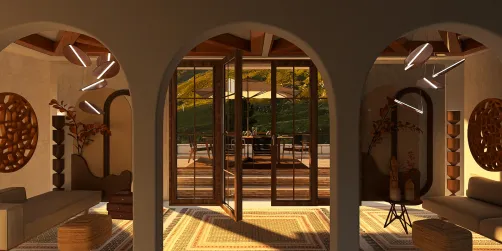
Compact Courtyard Spine
Design Logic: A central daylight corridor organizes resident rooms and shared lounges, reducing anxiety with familiar landmarks—future care models require straightforward and comprehensible mappings.
Flow: Entry → nurse station node → corridor spine → rooms and micro-lounges → courtyard → dining loop; staff can navigate this seamlessly, akin to a well-structured code.
Sightlines: The nurse station provides visibility to corridor thresholds and the courtyard, creating an interface where serenity is always visible and alerts are not concealed.
Storage: Linen and medication storage are decentralized within corridor alcoves; similar to a nearby cache, this reduces unnecessary movement.
Furniture Fit: Clearances of 36–42", adjustable bariatric beds, and low-profile credenzas are designed to accommodate aging bodies and devices, ensuring longevity and flexibility in care.
Verdict: This corridor design maintains low staff steps and high resident orientation over five years—functionality wrapped in soothing daylight.
save pin
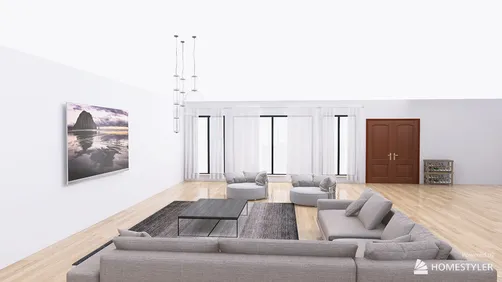
Clustered Neighborhood Rings
Design Logic: Three clusters create micro-neighborhoods because future aging prefers small, social groups over a large centralized hub.
Flow: Arrival → reception buffer → ring A/B/C → shared therapy → dining; loops prevent dead ends, maintaining iterative care routines.
Sightlines: Short sightlines lead to seating areas and exits; visual cues guide memory care with a clear hierarchy from private to communal spaces.
Storage: Each cluster is equipped with its own supply closet and adaptive equipment storage—functionality distributed for smoother operations.
Furniture Fit: Modular lounge components with seat heights of 18–19", rounded edges align with walkers and wheelchairs, ensuring usability for all residents.
Verdict: These clusters enhance connections without excess noise—creating a future-oriented capacity for calm and independent living.
save pin
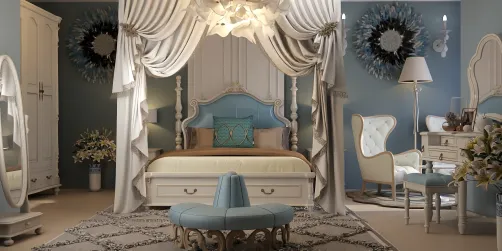
Therapy-Dining Hybrid Axis
Design Logic: The rehabilitation and dining spaces share an acoustically separated axis; future designs favor multifunctional areas that lower spatial overhead costs.
Flow: Morning therapy → hydration bar → dining service → afternoon activities; a cyclical route that flows like a daily schedule.
Sightlines: Transparent partitions allow staff visibility while preserving dignity—information is accessible without invasive surveillance.
Storage: Therapy tools are stored under benches, with pantries featuring pull-out systems and charging stations; all caches are well-organized and easily accessible.
Furniture Fit: Non-tipping tables, aisles of 48–60", and adjustable chairs are crafted to accommodate tremors, transfers, and mobility aids, ensuring a user-friendly experience.
Verdict: This hybrid axis reduces logistical complexity while promoting grace in care—the experience feels more like an intuitive interface than a rigid protocol.
save pin
Final Takeaway
A nursing home floor plan of 4000 sq ft must function like a well-designed operating system: with clear pathways, recognizable nodes, and adequate buffers. Variations—from clustered neighborhoods to courtyard spines—transform future care requirements into accessible two-dimensional frameworks, featuring memory-enhancing corridors and distributed storage options. Long-term needs, such as memory care navigation and bariatric accommodations, should be integral to the design rather than supplementary features. In my opinion, the most effective homes of the future will not necessarily be larger; they will be purposefully designed, a principle effectively realized through tools like Homestyler.


Looking to transform your home? Homestyler is your ultimate online design partner! With its user-friendly design tool, stunning 3D renderings, and inspiring DIY video tutorials, you can effortlessly create and visualize your dream spaces. Dive into endless design possibilities today!



















![Design [4]](https://hs-designs.homestyler.com/production/design/images/07c2de3a-88ec-4be8-8910-ff255b795bc2/1731419398293/7841697.jpg?x-oss-process=image/resize,w_502,m_mfit/format,webp)