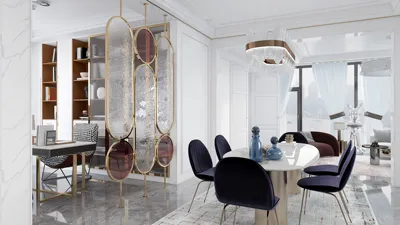


Over the years, I've created multiple kinetic art tables, continually improving their mechanics, sound quality, and lighting to transform them into living artworks instead of mere gadgets. A Sisyphus-style table, for instance, utilizes a steel ball that is guided by hidden motors beneath a glass surface to create intricate patterns in sand—providing a tranquil, mesmerizing, and uniquely personal experience.
Two core principles inform my design strategy: managing noise and optimizing lighting. Research indicates that in open living environments, distractions become pronounced when sound levels exceed 45 dBA; Steelcase highlights that ambient noise above 55 dBA significantly impairs concentration and efficiency, particularly for extended tasks. Regarding lighting, WELL v2 guidelines suggest that general living areas should feature task planes illuminated at approximately 300–500 lux, ensuring that glare is minimized and visual comfort is prioritized, creating a soothing and restful atmosphere. These standards aid in fine-tuning the table's acoustics and lighting, making the kinetic artwork sonorous yet unobtrusive.
The choice of color is equally significant. An overview by Verywell Mind reveals that shades of blue and teal are often linked with calmness and focus, while warmer ambers can be inviting yet energizing. I opt for cool-to-neutral LED lighting in the 3000–4000K range to strike a balance between warmth and clarity, carefully avoiding direct lighting sources that could cast harsh shadows in the sand. For comprehensive ergonomics and human-centered design principles, I frequently consult interaction-design.org for insights into behavioral tendencies that shape interactions with kinetic art and ambient displays.
Core Elements and Design Objectives
Visualize the table as consisting of three interconnected systems: the kinetic drive, the surface assembly, and its enclosure. The drive typically employs a two-axis mechanism (polar or cartesian) that maneuvers a magnet beneath the sand tray to manipulate the steel ball. The surface features a shallow tray filled with ultra-fine sand beneath a tempered glass cover. The enclosure serves as the table's outer shell—designed to be sturdy, quiet, and aesthetically pleasing.
Selecting a Motion Mechanism
Among the common approaches, you can choose either a polar mechanism (which comprises a rotating arm and radial slider) or an XY core using belts. The polar systems facilitate simpler cable management and present a sculptural appearance when partially visible during maintenance. Conversely, XY systems are known for providing uniform precision across the surface and facilitating easier calibration through software. For home constructions, I often prefer an XY belt-driven core featuring NEMA 17 stepper motors, GT2 belts, and a low-friction carriage. Maintaining motor microstepping at 16 or 32 ensures smooth paths without generating harsh vibrations. Aiming for a travel speed between 100–300 mm/s, while capping acceleration, helps to prevent the formation of sand ridges.
Sound, Vibration, and Acoustic Comfort
The quiet operation of the table distinguishes art from annoyance. I mount motors using rubber isolation grommets and decouple the mechanism from its enclosure using neoprene pads. Employing high-quality stepper drivers set to lower currents, when possible, contributes to smoother operation. It is essential to encase the mechanism within a semi-sealed compartment with mass-loaded panels to suppress resonance. Steelcase asserts that persistent exposure to erratic noise detracts from focus; maintaining a constant hum below 45 dBA allows the table to serve as a companion rather than a distraction.
Sand, Ball, and Surface Specifications
The use of ultra-fine, dry, uniform sand is crucial; even slight moisture can hinder the creation of patterns. It’s advisable to sift the sand prior to use and maintain a layer 3–5 mm deep. A 12–15 mm chrome steel ball is recommended for clear lines—while heavier balls produce sharper grooves, they also increase the load on the drive mechanism. The tray needs to be rigid and flat; a slightly matte finish on the glass underside helps reduce reflections and enhance contrast. Additionally, edge gaskets around the tray help minimize dust intrusion and contain motor noise.
Illuminating the Kinetic Display
Incorporate a continuous LED strip along the perimeter, diffusing light through a frosted lens. Aim for a color temperature of 3000–4000K for a neutral warmth and minimize peak light levels to prevent glaring highlights. Following the WELL v2 recommendations for balanced illuminance, a uniform wash of light over the sand allows for soft shadows cast by the ball. It is best to refrain from positioning LEDs directly above the ball's trajectory; instead, utilizing indirect lighting adds depth without glare.
Control Electronics and Software
A microcontroller (such as a 32-bit board) paired with stepper drivers manages path generation. Patterns are stored as vector paths and then translated into G-code or bespoke movement instructions. It’s beneficial to include endstops for homing processes, underlining the importance of using closed-loop checks if planning to undertake long, precise paths. A scheduler should be in place to modulate speed at corners and incorporate pauses, allowing the sand to settle. Establishing a simple Wi-Fi connection for pattern selection, with a local backup via physical buttons for reliability, enhances usability.
Layout, Proportions, and Integration with Furniture
Proportions play a critical role. It's important to maintain a drawing area ratio of between 1:1 to 3:2 compared to the table's footprint to ensure that patterns appear aesthetically balanced. When considering placement in a living room, be sure to chart out circulation pathways and sightlines. I often utilize layout simulation tools like Homestyler to visualize where the table functions best while minimizing reflections into nearby seating areas.
Materials and Sustainability
Opt for responsibly sourced hardwoods or FSC-certified veneers for the enclosure. A powder-coated steel frame offers resistance to warping and provides mass for acoustic damping. Choose low-VOC finishes to safeguard indoor air quality. Using modular panels simplifies maintenance and enhances the table's longevity—leading to less waste and greater adaptability.
Ergonomics and User Interaction
Individuals typically view kinetic art while seated comfortably. It's recommended that the table’s top height ranges between 420–500 mm for a coffee-table setup or 700–750 mm for console use. Ensure there is a subtle ledge to deter direct contact with the sand, and integrate a gentle “park” mode that moves the ball to the edge when not actively drawing. Slow-start motions can prevent abrupt movements that might disrupt the sand's surface.
Avoiding Common Construction Mistakes
It's crucial not to over-tighten belts, as excessive tension can amplify vibrations and increase noise levels. Steer clear of high-contrast lighting that produces harsh specular spots. Never skip homing routines; gradual drifts can compromise symmetry. Ensure service access is provided via the underside or a removable side panel, as top access may introduce dust contamination. Keeping logs of firmware can help identify missed steps early on.
Comprehensive Building Guide
1) Plan the enclosure: sketch dimensions, decide on height, and outline access points. 2) Craft a sturdy tray and affix glass with a rubber gasket. 3) Assemble the motion core: rails, belts, carriages, and motors with isolated mounts. 4) Wire the electronics: microcontroller, drivers, endstops, LED power, and a master kill switch. 5) Calibrate: home axes, set steps-per-mm, adjust acceleration, and perform a simple spiral test. 6) Add sand and evaluate line quality initially at lower speeds. 7) Integrate lighting, adjust brightness, and assess reflections from seating arrangements. 8) Program patterns and establish schedules—mix geometric and organic routes to maintain visual variety.
Maintenance and Long-Term Care Practices
Monthly, vacuum dust from the tray edges, assess belt tension quarterly, and replace felt feet or isolation pads as they wear down. Keep silica gel packets beneath the tray to mitigate moisture accumulation. Updating the control firmware biannually can enhance motion smoothness and introduce new patterns.
Frequently Asked Questions
For coffee tables, an optimal length of 800–1100 mm is comfortable; ensure the active drawing area is at least 600 mm to allow patterns to be clearly visible from a distance of 2–3 meters.
With proper isolation, balanced belts, and high-quality drivers, you can often maintain operation levels near or below 40–45 dBA from a meter away—quiet enough for conversation, in line with comfort levels documented in workplace studies regarding focus and speech clarity.
Ultra-fine, uniform, silica-based sand yields the best results. Ensure it is thoroughly sifted and dried. Avoid using colored sands with binders, as they tend to clump and smear.
Maintain a color temperature between 3000–4000K. Cooler neutral light improves fine line contrast, while warmer light creates a cozy atmosphere. Select dimmable drivers to adapt to your room's ambient light levels.
Certainly. Tempered glass provides safety and dimensional stability. Using a lightly etched or low-reflectance coating can further lessen glare.
XY systems are generally simpler to calibrate and are widely represented in documentation. Meanwhile, polar systems can offer a more aesthetically pleasing design but require more precise radial adjustments.
To maintain optimal performance, minimize acceleration, reduce speed on curves, and keep the sand layer thin (3–5 mm). Allow brief pauses to let sand settle after sharp turns.
Indeed, utilize a scheduling system that alternates between pattern categories and includes rest periods. Incorporating homing checkpoints can help rectify any drift in the system.
To reduce glare and enhance comfort, use diffused lighting around the perimeter, employ matte finishes on the tray’s surroundings, and position the table away from direct sunlight. The WELL v2 guidelines regarding glare management support better comfort in this regard.
For accessing electronics, utilize a side or bottom panel. Avoid opening from the top unless necessary; if you do, ensure to seal the area, vacuum thoroughly nearby, and reseal the gasket afterward.
What’s more, you can partially showcase the motion core through a side window, though dust management remains crucial. If exposed, consider adding a clear dust shield along with a gentle airflow direction to prevent build-up.
Heavier balls yield better groove definition but result in higher load and noise. Experiment with sizes between 12–15 mm, adjusting the motor current as needed for optimal performance.
Homestyler is the ultimate online home design platform for anyone looking to transform their space. With a user-friendly design tool, stunning 3D renderings, and a wealth of DIY video tutorials, you can effortlessly create and visualize your dream home. Start designing today!
Дизайн сейчас бесплатно
































