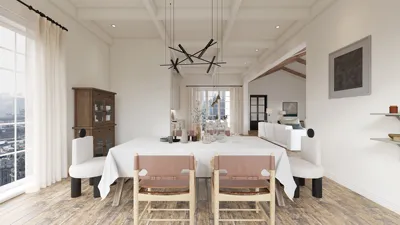


Once, I managed to persuade a client that a single pendant light could serve as a replacement for twelve recessed can lights — she was initially skeptical until she witnessed the transformation. This small triumph stemmed from my analysis of how renowned lighting designers simplify intricate designs, teaching me that even limited spaces can ignite significant creative inspiration.
1. Master the Art of Layered Lighting
Many celebrated designers adopt a layered approach — combining ambient, task, and accent lighting — to create a sense of spaciousness and versatility in small rooms. I typically employ a sleek ceiling fixture for an overall glow, under-cabinet strips for task lighting, and a delicate spotlight to highlight artwork. The main advantage lies in the flexibility this offers; however, managing glare in compact areas can be a challenge, which I successfully address using dimmers and diffusers.
save pin
2. Use Lighting to Define Spaces
Leading lighting experts often treat illumination as an architectural tool: using a pendant above a dining nook, a track light over a workspace, or a floor lamp to enhance a reading area. In a studio I renovated, strategic lighting effectively segmented a 300 sq ft space into three distinct zones. If you plan the wiring from the start, it can be cost-effective, although retrofitting can pose difficulties later on.
save pin
3. Incorporate Sculptural Lighting Fixtures
Expert designers frequently choose fixtures that serve as artistic statements. A sculptural pendant fixture can become the centerpiece of a small entryway or living area, minimizing the need for additional decorations. The only caution is scale — select one standout piece and keep the rest of the decor minimal to prevent visual clutter.
save pin
4. Experiment with Color Temperature
Lighting professionals skillfully adjust warmth to shape the atmosphere: utilizing warm 2700K light for intimate corners and cooler 3000–3500K lighting for productivity areas. I prefer tunable LEDs in multifunctional rooms, enabling a seamless transition from dinner ambiance to focused work mode. The trade-off, however, is the price — adjustable systems may require a larger initial investment but deliver long-term flexibility.
save pin
5. Subtly Integrate Smart Controls
Many top designers now incorporate hidden smart controls to preserve a clean aesthetic while enabling scene setting at the touch of a button. I recently installed a simple app-controlled dimmer in a compact kitchen, and my client loved the convenience of preset scenes for both cooking and entertaining. While privacy and compatibility can be concerns, it's crucial to select reputable ecosystems and ensure a manual override option is available.
save pin
Tips 1:
If you're looking to draft lighting plans for a small apartment, I recommend trying the free room planner that assisted me in determining fixture locations before any installation. For quick trials of different floor plans, utilizing a free floor plan creator can help analyze various furniture-lighting combinations. When I need to visualize a pendant's 3D appearance, an easy kitchen layout planner or 3D floor planner is invaluable for smooth decision-making and client assurance — the process has been greatly simplified with tools like Homestyler.
save pin
FAQ
Q: What are the best fixture options for compact spaces?
A: Choose layered approaches: flush or semi-flush ceiling lights for ambient illumination, task LEDs for work areas, and one distinctive fixture to inject personality.
Q: How can I minimize glare in small rooms?
A: Implement diffusers, indirect sources of light, and dimmers; position the lights to avoid direct beams on seating or reflective surfaces.
Q: Are tunable LEDs worth the investment?
A: Absolutely for multifunctional spaces — they allow you to adjust ambiance and color temperature, providing significant long-term benefits despite the higher upfront costs.
Q: Can I install smart lighting systems without extensive rewiring?
A: Many smart bulbs and plug-in controllers can easily work with existing fixtures, while fully integrated systems may require professional wiring assistance.
Q: How do accomplished lighting designers select color temperatures?
A: They align color temperature choices with room functions: warmer tones are used for relaxation, while cooler ones are beneficial for task-oriented spaces; Richard Kelly's principles remain influential in contemporary practices. (Refer to: Kelly, R. “Light, Vision and the Eye,” authoritative works on lighting theory.)
Q: What budget should I plan for refreshing lighting in a small space?
A: A modest refresh can commence around a few hundred dollars by blending affordable LED options with a singular statement fixture; however, full rewiring and high-end control systems will escalate the costs.
Q: How can I proportion a statement fixture in a small room?
A: Measure carefully — maintain modest dimensions for both the fixture's diameter and drop to ensure it complements the space without dominating it.
Q: Where can I find more design case studies?
A: Browse through reputable design case studies and visual planning tools to explore real-world projects and their workflows.
save pin
Discover your home's potential with Homestyler! This user-friendly online design platform offers a robust design tool, stunning 3D renderings, and a wealth of inspiring design projects and DIY video tutorials. Transform your vision into reality effortlessly and creatively!
Дизайн сейчас бесплатно
































