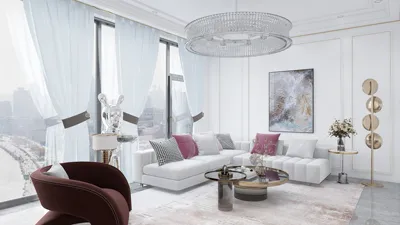


Throughout the past ten years of working on various home improvement projects, both big and small, one undeniable fact has emerged: small spaces can inspire grand ideas. A perfect illustration of this is the living room featuring sectionals — they are adaptable, chic, and can completely transform how one interacts with their environment. In this article, I will introduce ten creative sectional design concepts for living rooms, drawing from my personal experiences as well as data from industry experts, all while integrating insights from Homestyler.
Minimalist Sectional with Hidden Storage
My Experience: I once assisted a young couple in a compact city loft in selecting a low-profile sectional equipped with drawers. It offered a sleek appearance, and the additional space for blankets was a game changer.
Advantages: Ideal for smaller living areas where space is a premium. The concealed storage beneath the seating helps keep the room organized while preserving a clean, minimalist design.
Disadvantages: Storage configurations can be bulkier and more challenging to reposition when rearranging the layout.
A minimalist sectional with built-in storage can truly maximize the function of limited space.
L-Shaped Sectional for Defining Open Spaces
My Experience: In open-concept apartments, I've frequently used an L-shaped sectional to subtly separate the living area from the dining area or kitchen without erecting walls.
Advantages: Promotes a natural flow and defines different zones, offering ample seating without overwhelming the room's overall design.
Disadvantages: It can be challenging to fit into narrow areas; incorrect measurements may obstruct walkways.
Glass-Backed Sectional for Optimal Light Flow
My Experience: I designed a beach home with a sectional that featured a low glass-backed console, allowing sunlight to flow through from the expansive windows at the back.
Advantages: Maintains open sightlines and enhances natural light, a significant benefit highlighted in Architectural Digest's 2023 trend report.
Disadvantages: Glass surfaces require regular cleaning to eliminate fingerprints and smudges.
Curved Sectional for Sociable Seating
My Experience: Integrating a curved sectional in a client's media room fostered a cozy, conversation-friendly atmosphere for movie nights.
Advantages: Perfect for social gatherings as it allows everyone to face each other, enhancing interaction.
Disadvantages: More challenging to source than typical shapes, and custom models can come at a higher cost.
Sectional with Chaise Lounge Feature
My Experience: I personally enjoy unwinding on a chaise sectional at the end of the day — I even designed one for my own living room.
Advantages: Provides a relaxed, lounge-like atmosphere and flexible seating options.
Disadvantages: The chaise lounge can lead to disputes over seating in busy households, so setting sharing guidelines early is essential.
Two-Tone Upholstery for Added Visual Interest
My Experience: For a contemporary condo, we combined light grey cushions with charcoal sides, avoiding a flat aesthetic in the area.
Advantages: They can visually connect various color accents throughout the room and break up the monotony of large furniture pieces.
Disadvantages: Matching fabrics from different suppliers can sometimes prove tricky.
Combining tones works best when paired with contrasting textures in a layout to achieve balance.
Sectional with Built-In Side Tables
My Experience: A modular sectional I recommended for a bachelor pad included side rests that functioned as small tables — ideal for placing coffee mugs and laptops.
Advantages: Minimizes the need for extra furniture, creating a streamlined, practical setting.
Disadvantages: Fixed side tables may limit rearranging options.
Floating Sectional Away from the Wall
My Experience: I have found that creating distance between the sectional and the wall instantly gives a space a more curated and intentional feel.
Advantages: You can position console tables or shelving behind it, enhancing both functionality and style.
Disadvantages: Requires sufficient room depth to avoid a cramped feeling.
Reclining Sectional for Family Comfort
My Experience: Many family clients rave about sectionals with built-in recliners — they are a must-have for movie nights.
Advantages: Combine comfort with ample seating for large gatherings.
Disadvantages: Moving parts may require maintenance as time goes on.
This works well with multi-zone open living-kitchen layouts, creating a cohesive social environment.
Low-Profile Modern Sectional
My Experience: A recent showroom visit amazed me when I discovered a low, deep-seated sectional that made ceilings appear higher in a small studio apartment.
Advantages: Creates an open, airy vibe; ideal for making compact rooms feel larger.
Disadvantages: Lower seating can become uncomfortable for taller individuals over extended periods.
Summary
When exploring living room sectional design options, the crucial message is that these pieces promote more efficient use of space instead of restrictions. Whether you're interested in hidden storage, bold color schemes, or sociable designs, there's a sectional style that can elevate your home. Research by the National Association of Home Builders emphasizes that comfortable and adaptable seating continues to be a top preference for homeowners. Which of these concepts would you be excited to implement in your living room using tools from Homestyler?
FAQ
1. What is the ideal sectional shape for a compact living area? For smaller rooms, choose an L-shaped or chaise-end sectional to maximize seating without overwhelming the space.
2. How do I select upholstery for my sectional? Focus on durability and color — high-performance fabrics are highly recommended for families, according to Good Housekeeping’s fabric guide.
3. Can I incorporate a sectional in an open-plan layout? Absolutely; an L-shaped design is particularly effective in subtly dividing the living space within an open floor plan.
4. What space should I maintain around my sectional? Aim for a clearance of at least 75–90 cm to facilitate easy movement, based on ergonomic recommendations.
5. Are reclining sectionals worth the investment? If relaxation is your primary focus and you have sufficient space, reclining sectionals can be fantastic for comfort.
6. How should I style a sectional with a coffee table? Make sure there’s adequate legroom — ideally, maintain 45 cm between the edge of the sofa and the table.
7. Can I combine a sectional with other sofas? Yes, just ensure they share a consistent color or style theme for seamless harmony.
8. Are sectionals suitable for formal living rooms? Certainly! Opt for a sleek, low-profile design paired with high-quality fabric to match a formal ambiance.
Discover the creativity of home design with Homestyler! This user-friendly platform offers an innovative online design tool, stunning 3D renderings, a vast collection of design projects, and helpful DIY video tutorials. Transform your space effortlessly—perfect for both beginners and seasoned decorators!
Дизайн сейчас бесплатно
































