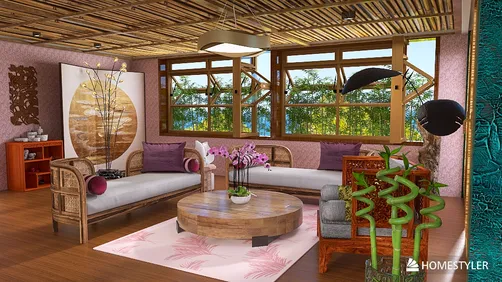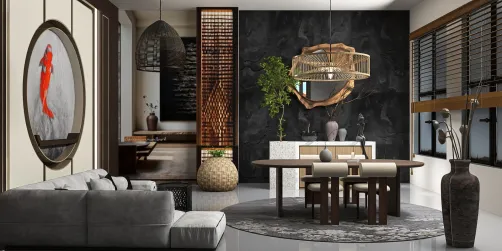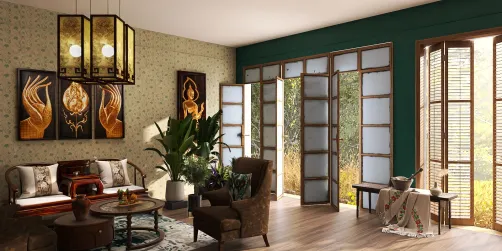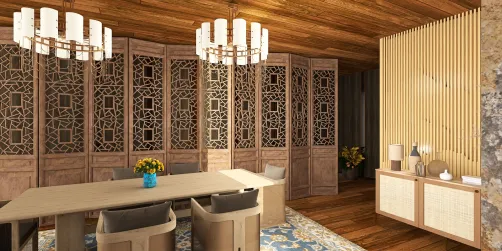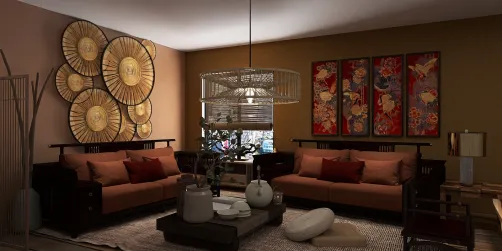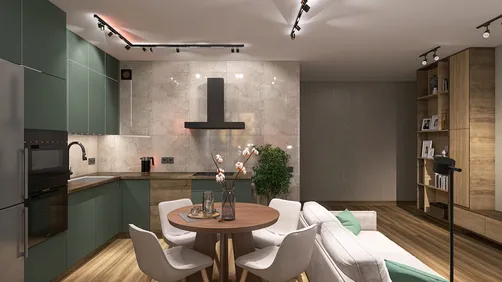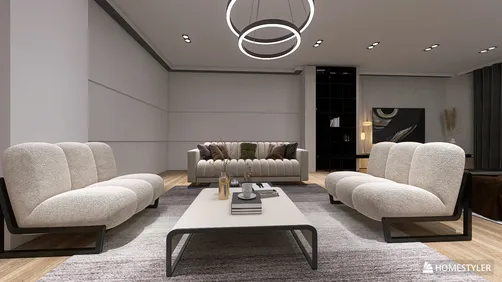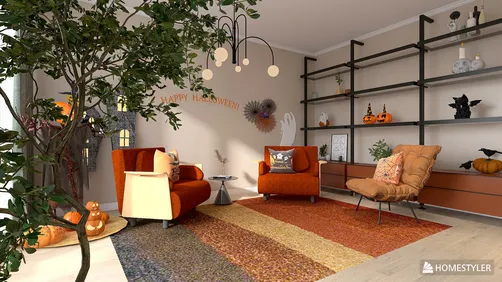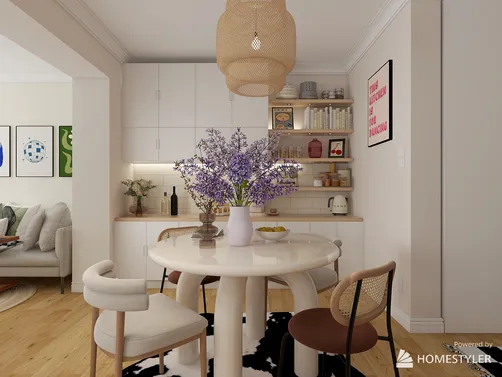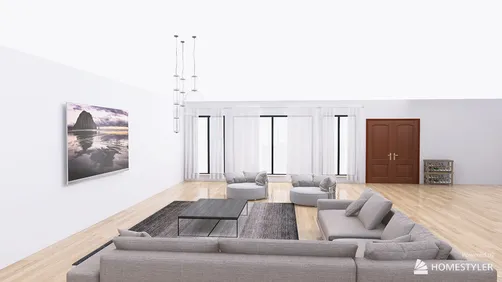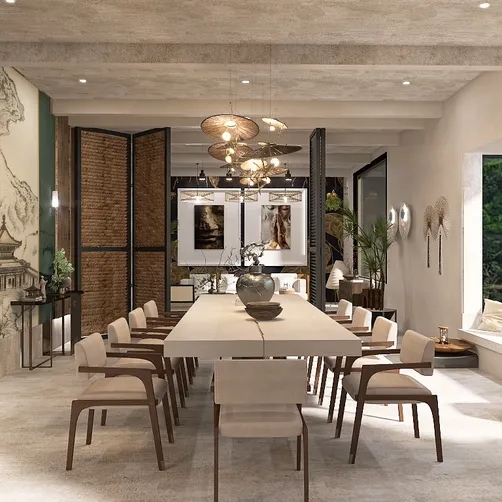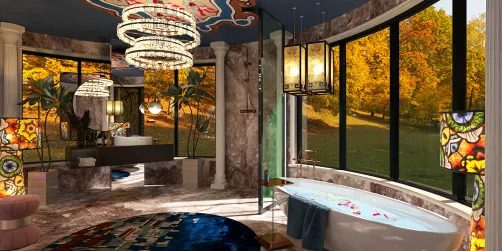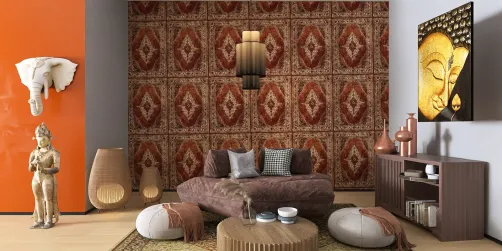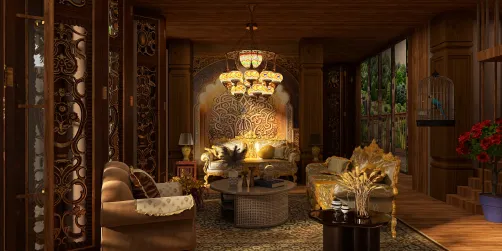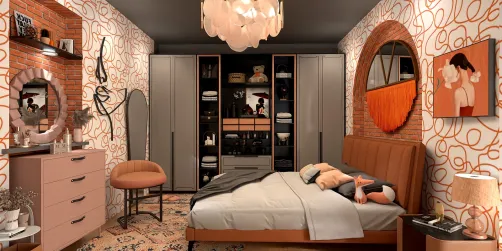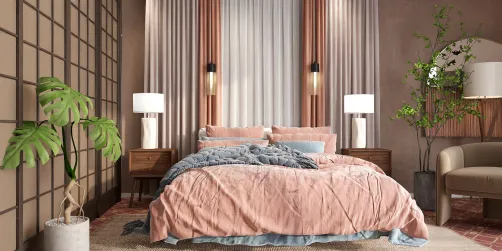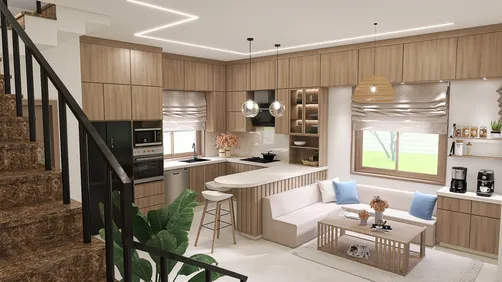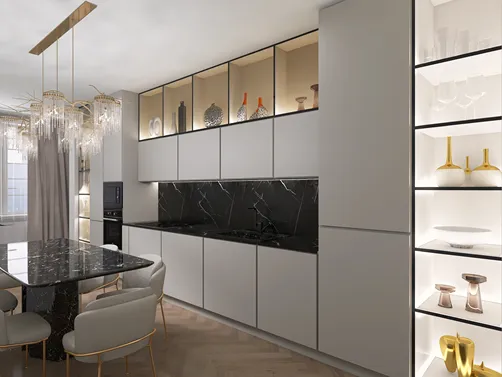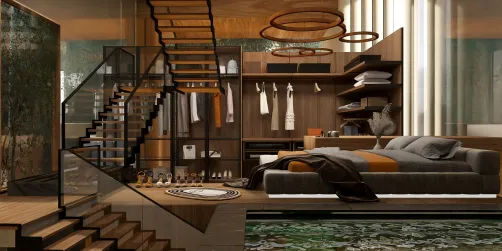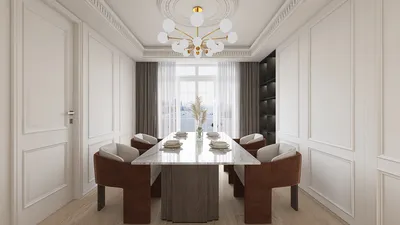
As we move forward into the future, my clients find themselves navigating noisy commutes, hybrid work environments, and limited mental capacity. In this context, homes transform into finely-tuned interfaces designed for modern living. The National Association of Home Builders (NAHB) notes that average new home sizes have decreased over the past ten years, pushing design towards efficiency instead of unnecessary space—akin to the functionality of software in a 2 BHK layout. My approach incorporates a spatial reasoning toolkit that informs how I envision the next five years of everyday life.
Linear Spine Layout
Design Logic: Two bedrooms positioned on either side of a central living-dining area establish a reliable structure: providing privacy at both ends while facilitating social interaction in the middle—an arrangement tailored for hybrid lifestyles.
Flow: Entryway → drop zone → kitchen node → dining area → lounge → split corridor → bedrooms; a straightforward path that minimizes potential conflicts.
Sightlines: The front-to-back layout offers layered visibility: from the kitchen to the dining area, dining area to lounge, and lounge to balcony—creating UI layers that share without overexposing.
Storage: Continuous wall sections function as storage solutions: tall pantries, corridor closets, and under-bench drawers—providing ample space for linens, equipment, and work essentials.
Furniture Fit: Sofas measuring 84–92 inches, dining tables of 72×36 inches, and queen beds with 30–34 inches of clear space allow for seamless interactions—much like API limits ensuring smooth exchanges.
Verdict: This layout accommodates varying schedules and small gatherings, remaining functional under pressure; in five years, it will continue to feel organized and peaceful.
save pin
Courtyard Core Layout
Design Logic: A compact central living core surrounded by bedrooms represents a social center, with tranquil spaces on the periphery that cater to both work and relaxation.
Flow: Entry → pivot to living hub → kitchen peninsula → loop to bedrooms → bathroom nodes; this design promotes circular movement, minimizing dead ends.
Sightlines: Diagonal views lead from the entryway to the balcony, with controlled glimpses into the bedrooms; the UI experience deepens as one approaches the central hub.
Storage: Radial storage includes corner wardrobes, bench seating with concealed storage, and overheads placed near the kitchen—ensuring quick access and high clarity.
Furniture Fit: The peninsula measures 24–30 inches in depth, modular sofa sections are 30–36 inches, and wardrobe runs are at 24 inches—facilitating upgrades without disrupting the overall flow.
Verdict: Ideal for families that balance togetherness and focused productivity, this layout remains harmonious over time; five years later, it will still feel in sync.
save pin
Offset Grid Layout
Design Logic: Rooms staggered on a gentle grid cultivate sound insulation and natural light—preparing for future needs such as remote work and multifunctional spaces.
Flow: Entry → utility storage → living area → offset kitchen → branching to bedrooms; each segment operates as a module that can be reconfigured as required.
Sightlines: Short, manageable corridors offer controlled visual access; the UI is designed to avoid glare and sensory overload while providing clear navigational hints.
Storage: Built-in options fill grid voids with 18–24 inch deep niches, toe-kick drawers, and elevated shelves; storing items close to their use enhances clarity.
Furniture Fit: A king-size bed in the main room with 36 inches of clear space, a compact desk measuring 48×24 inches in the secondary room, and a round dining table with a diameter of 48 inches create a disciplined layout, similar to a well-structured API.
Verdict: The staggered grid represents a flexible design that can incorporate new technologies and adapt to evolving routines, maintaining a coherent arrangement over time.
save pin
Final Takeaway
A well-designed 2 BHK floor plan functions like a living interface: nodes for rest, collaboration, and rejuvenation integrated into everyday life. As we look to the future, homes won't just grow in size—they’ll refine their logic, sightlines, and storage to ensure clarity and efficiency. Essential requirements like hybrid workplaces and soundproofing will become foundational elements of tomorrow's home environment. From my perspective, the most intelligent homes of the future, enhanced by tools like Homestyler, will not necessarily be larger, but rather more thoughtful in design.

Homestyler is the ultimate online home design tool that empowers you to visualize your ideas effortlessly. With stunning 3D renderings, a vast array of design projects, and helpful DIY video tutorials, transforming your space has never been easier or more enjoyable!