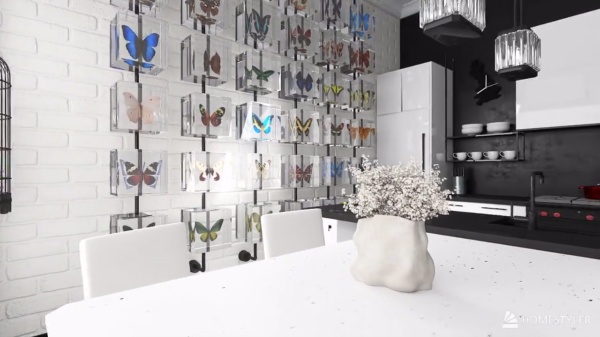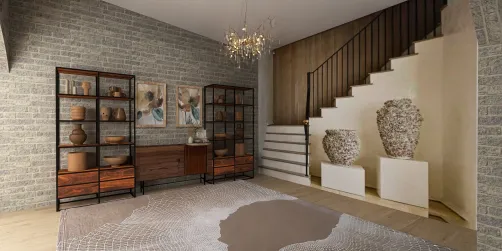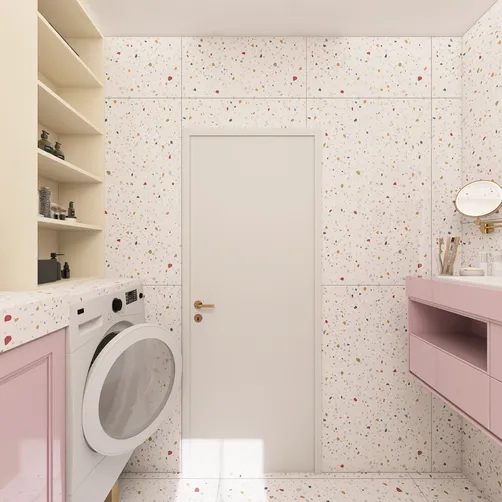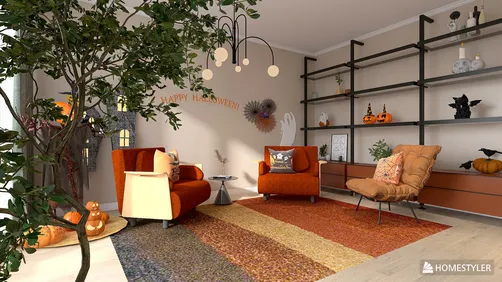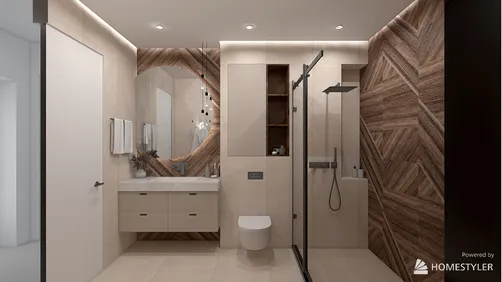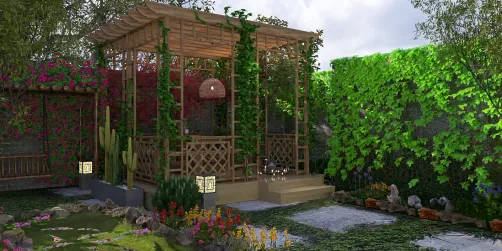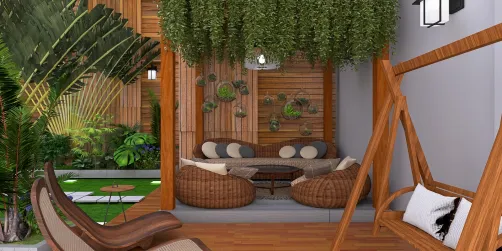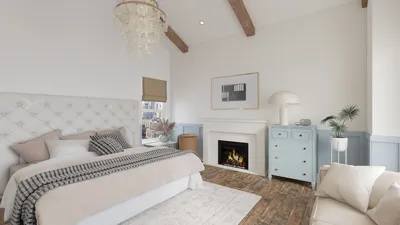
As the future looms, today's households are balancing hybrid workspaces, aging-in-place needs, and excessive storage demands. This is where I focus on designing interfaces that ease these complexities. According to data from AIA and NAHB, there is a noticeable trend towards smaller lots and multi-functional rooms, indicating a transformation in how spaces adapt to time. Consequently, a well-constructed floor plan of 1620 sq ft evolves into an essential facilitator for the routines of tomorrow, transcending mere physical space. I can visualize the emerging living standards taking shape within this spatial framework, a toolkit enhanced by Homestyler.
Open Core Loop: Living–Kitchen–Flex Bay
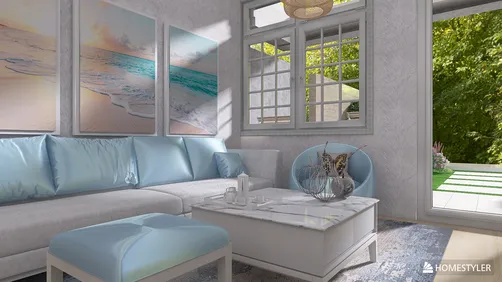
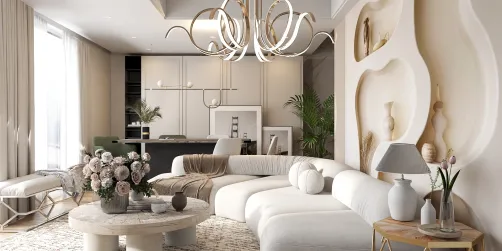
Design Principle: A central open loop forms the foundation for our daily routines—cooking, collaborating, unwinding—considering the increasing trend towards multi-modal living.
Flow: The entryway leads to a drop zone, seamlessly connecting to the kitchen work triangle and subsequently fanning out to the living area and a glass-enclosed flex bay, looping back near the pantry and powder room.
Sightlines: From the kitchen island, one can view the sofa, flex desk, and garden, layering information like a user interface with tasks, social spaces, and broader horizons.
Storage: A pantry wall surrounds the perimeter, with hidden under-stair storage and cubbies for benches, providing multiple levels of memory—quick access at the forefront and more substantial archives behind.
Furniture Configuration: Featuring a 9–10 ft island, 36" circulation lanes, a 7 ft sofa, and two lounge nodes; gaps are purposefully defined to ensure minimal latency during peak times.
Conclusion: This core loop effectively ensures the 1620 sq ft ground floor is future-proof, allowing the rearrangement of roles—family, work, entertaining—without needing extensive alterations to the structure.
save pin
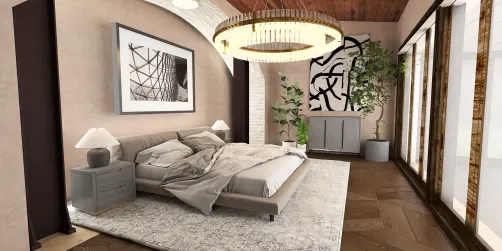
Front Suite: Guest/Parent with Bath
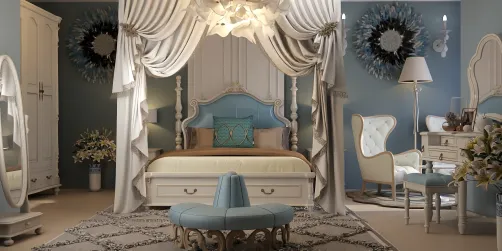
Design Principle: A suite at the front of the house anticipates aging in place and accommodating visitors, transforming proximity into a dignified experience, reducing travel effort.
Flow: Directly accessible from the entryway via a 36" wide door, with easy access to the bathroom and linen closet; nighttime pathways designed to minimize noise from the core loop.
Sightlines: An emphasis on privacy is maintained with frosted side windows and an angled headboard wall, ensuring spatial awareness while fostering a serene environment.
Storage: A reach-in closet with dual rails, a wall niche for medical supplies, and toe-kick drawers—organizing storage to meet both daily and weekly needs.
Furniture Configuration: A queen bed, 24" nightstands, and a compact chair; clearances following ADA guidelines ensure comfort and accessibility.
Conclusion: This suite integrates resilience, transforming the ground floor into a versatile hub for health, guests, and a peaceful work environment when necessary.
save pin
Rear Utility Spine: Mud, Laundry, Garage Link
Design Principle: A utility spine gathers mess and machinery, aligning with current Zillow and Houzz trends for an organized back-of-house workflow.
Flow: The garage connects to a mud bench, followed by the laundry area and storage wall, leading out near the kitchen; an efficient route that minimizes cross-traffic.
Sightlines: Utilizing low-gloss finishes, maintaining short views, while the spine discreetly conceals clutter yet keeps essential tasks within easy reach of the core loop.
Storage: A tall broom cabinet, bulk storage grid, and extra bins—layers of storage managing weekly items separately from seasonal ones.
Furniture Configuration: A 30" bench, 18" cubbies, and side-by-side washer/dryer with a 42" folding area; dimensions tailored for handling wet clothing, grocery access, and quick fixes.
Conclusion: This spine sustains high efficiency in living spaces, allowing the 1620 sq ft ground floor to remain serene even with heavy household flow.
save pin
Final Thoughts
The 1620 sq ft ground floor is an evolving model; it's a dynamic interface designed to manage time, focus, and care. With features like an open core loop and a utility spine, your home transforms into a versatile habitat that accommodates hybrid work and multi-generational lifestyles. My observations suggest that the most effective ground floors don’t necessarily need to be larger—they simply must be more intentional regarding the arrangement of flow, storage, and sightlines in shaping daily life. In my experience, small, thoughtful spatial choices consistently redefine how individuals live, and this is where tools like Homestyler come in handy.
Looking to redesign your space? Homestyler is your go-to online home design platform! With its user-friendly design tool, stunning 3D renderings, diverse design projects, and helpful DIY video tutorials, you can effortlessly create and visualize your dream home. Start your design journey today!