Tropical Outdoor Living Space Design
The 'Tropical Outdoor Living Space' is a versatile, climate-responsive design scenario that blends indoor comfort with outdoor vitality. It transcends literal 'tropical' aesthetics to embody core principles of biophilic integration, seamless indoor-outdoor flow, and relaxed functional zoning — applicable to patios, courtyards, balconies, and backyard extensions across diverse residential typologies (e.g., villa gardens, urban apartments, suburban homes). This scene prioritizes sensory richness — natural light, breezy ventilation, layered greenery, tactile materials, and curated views — making it ideal for relaxation, social dining, and mindful connection with nature.
Design Challenges & Common Pitfalls
Designing tropical outdoor living spaces often faces three recurring challenges: (1) Over-reliance on clichéd motifs (e.g., plastic palms, tiki torches) at the expense of authentic, regionally appropriate plant selection and material durability; (2) Poor spatial definition — failing to create distinct functional zones (dining, lounging, green nook) within open layouts, leading to visual clutter or underutilized areas; and (3) Neglecting microclimate responsiveness — ignoring sun path, prevailing winds, and rain exposure when placing furniture or selecting shade structures, resulting in seasonal discomfort despite aesthetic appeal. These issues undermine both usability and long-term sustainability.
🌿 Prioritize Biophilic Layering & Native Plant Integration
True tropical ambiance stems not from decorative props but from intentional, multi-tiered greenery: canopy trees for dappled shade, mid-height shrubs for privacy and texture, and ground-cover plants or ornamental grasses for softness and movement. Favor native or climate-adapted species for low maintenance, drought resilience, and ecological support. Integrate plants structurally — climbing vines on pergolas, potted specimens on steps or walls, and raised beds to define zones — turning vegetation into active architectural elements rather than passive decoration.

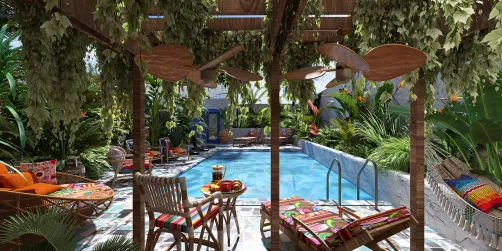
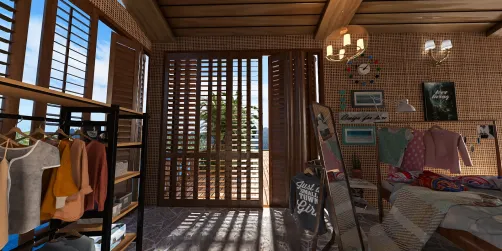
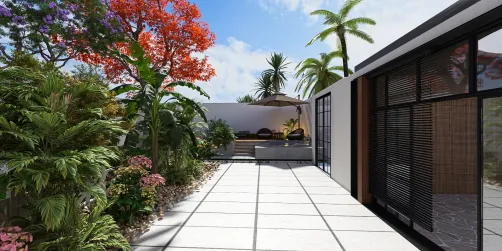
Nory Garcia’s 'Backyard Relaxation' masterfully applies biophilic layering using Homestyler AI design tools: she anchors the space with mature canopy trees visible through large glazed doors, introduces mid-height bougainvillea trained along a lattice screen, and softens hardscapes with low-maintenance ground cover. Her use of the app’s plant library ensures botanical realism and scale accuracy — a key Homestyler design technique for achieving authentic indoor-outdoor spatial planning without guesswork.
Design Your Tropical Haven☀️ Optimize Sun-Wind-Moisture Microclimate Strategy
Effective tropical outdoor design requires data-informed responses to local environmental forces. Map the sun arc across seasons to position shaded lounging zones and sun-drenched dining areas. Orient seating perpendicular to prevailing breezes for natural cooling. Incorporate permeable paving, gravel beds, or rain gardens to manage monsoon runoff — not just for drainage, but as aesthetic features. Use retractable awnings, louvered pergolas, or deciduous vines to offer dynamic, seasonally adaptive control over light and airflow.

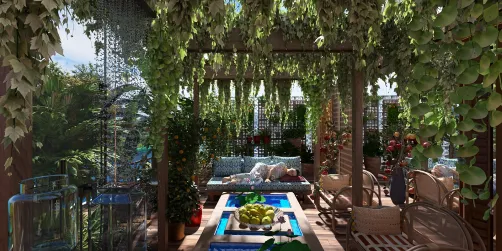
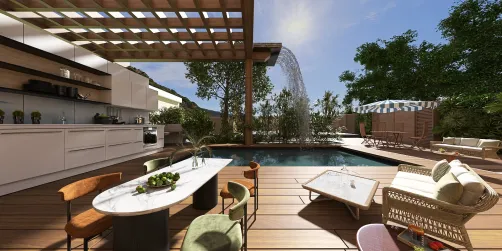
Maria May’s '🐝' demonstrates precise microclimate strategy via Homestyler’s real-time sun simulation tool: her lounge zone sits fully shaded under a west-facing pergola draped with fast-growing passionflower — blocking harsh afternoon sun while allowing morning light. The adjacent dining area uses breathable mesh chairs and a porous stone floor, enhancing evaporative cooling. Her thoughtful indoor-outdoor spatial planning reflects how Homestyler design techniques empower users to test environmental variables before finalizing layouts.
Start Your Fresh Outdoor Design🪑 Define Flexible, Multi-Functional Zones with Material & Elevation Cues
Avoid undefined 'open-air rooms' by using subtle yet powerful spatial cues: changes in flooring material (teak decking vs. textured concrete), level shifts (sunken lounge or raised planter bench), built-in seating, or overhead elements (hanging lights, draped fabric). These cues establish psychological boundaries without walls — enabling fluid transitions between dining, lounging, and green contemplation. Prioritize modular, weather-resistant furniture that supports reconfiguration for different activities — reinforcing adaptability as a core principle of modern outdoor space planning.

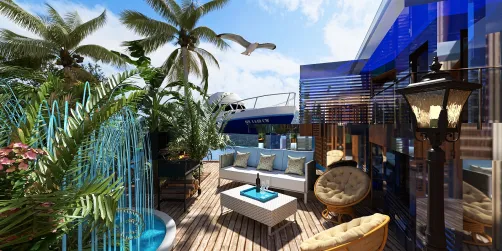
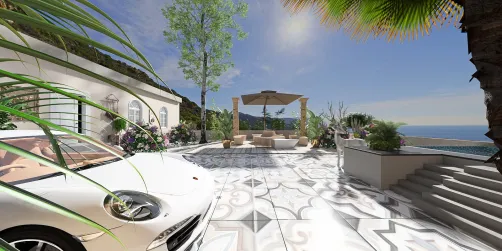
Snezana Brankovic’s 'Tropical state of mind' exemplifies intelligent zone definition in a compact balcony using Homestyler AI tools: she distinguishes a cozy reading nook (with elevated timber platform and pendant light) from an alfresco dining zone (defined by a contrasting porcelain tile floor and linear LED strip under the counter). Her use of the app’s elevation editor and material mapping feature showcases advanced indoor space planning logic applied outdoors — proving that even small-scale tropical outdoor living spaces benefit from deliberate, layered spatial hierarchy.
FAQ
Q: Can I use the 'Tropical Delight' and 'Outdoor patio' templates for non-tropical climates?
Yes — these templates are foundational frameworks for universal outdoor living principles. Their open layouts, flexible zoning, and emphasis on biophilic integration make them highly adaptable. Simply swap palm species for hardy ferns or lavender, replace bamboo shades with canvas awnings, and adjust color palettes to suit local context. Homestyler design techniques like climate-based sun studies and material filtering help you localize the template effectively.
Q: How does Homestyler AI assist with realistic plant selection and placement?
Homestyler’s AI-powered plant library includes geotagged, seasonally accurate species with growth habit data (height, spread, sun/water needs). When you drag-and-drop a plant, the tool auto-scales it, suggests companion species, and flags potential clashes (e.g., invasive roots near foundations). This supports informed indoor space planning decisions — especially critical for sustainable tropical outdoor living space design.
Q: Are there Homestyler-specific shortcuts for creating seamless indoor-outdoor transitions?
Absolutely. Use the 'Glass Wall' or 'Sliding Door System' assets with transparency toggles to preview sightlines; apply matching flooring materials across thresholds using the 'Material Sync' function; and leverage the 'View from Inside' camera mode to refine window framing of garden vignettes. These Homestyler design techniques streamline the technical aspects of indoor-outdoor spatial planning while preserving creative control.



Homestyler is an easy-to-use online home design platform offering powerful 3D rendering, inspiring design projects, and helpful DIY video tutorials. It’s perfect for creating and visualizing beautiful interiors with no hassle. Give your home a fresh look with Homestyler!
Дизайн сейчас бесплатно