


Dining Space Design
The 'Dining Space Design' scenario refers to the intentional, culturally resonant planning and styling of a dedicated or integrated area for communal meals—beyond mere furniture placement. It encompasses spatial flow, lighting hierarchy, material storytelling, and sensory harmony (e.g., acoustics, texture, scent adjacency), reflecting culinary values such as hospitality, ritual, and conviviality. As showcased in the Room Mastery Bootcamp, this scene spans diverse contexts—from compact urban apartments to open-plan living-dining hybrids—and prioritizes human-centered interior space planning that balances aesthetics, ergonomics, and emotional resonance.
Design Challenges & Common Pitfalls
Common challenges include poor traffic circulation around the dining zone (especially in open layouts), inadequate task and ambient lighting layering, mismatched scale between table/chairs and room volume, insufficient storage integration (e.g., hidden bar cabinets or display niches), and neglecting acoustic comfort (hard surfaces causing reverberation). Many designers also underestimate the psychological impact of sightlines—such as uninviting views toward utility zones—or fail to future-proof for flexible use (e.g., hybrid dining-work setups). These issues directly hinder both functional efficiency and the deeper cultural expression of dining as a shared human experience.
✅ Prioritize Human-Centered Spatial Flow
Dining spaces must support intuitive movement: allow ≥90 cm clearance behind chairs, ensure ≥120 cm walkway width between furniture and walls/other zones, and avoid blocking primary circulation paths (e.g., kitchen-to-living transitions). In open-concept interiors, define the dining area subtly using ceiling height variation, rug boundaries, or aligned lighting axes—not just furniture grouping. Homestyler’s real-time 3D rendering helps simulate footfall patterns and test clearances before finalizing layout.

Cecilia Botha’s 'Bootcamp dining room' demonstrates seamless spatial flow in a 92.2 m² urban apartment. She positions the dining table parallel to a large window—preserving cross-ventilation and daylight access—while aligning chairs and pendant light axis to create visual rhythm without obstructing the adjacent hallway. Using Homestyler’s smart furniture placement tool, she validated 95 cm rear-chair clearance and ensured no conflict with door swing zones—a textbook application of human-centered interior space planning.
Start Free Design💡 Layer Lighting for Function & Atmosphere
A successful dining lighting strategy combines three layers: (1) General ambient light (e.g., recessed ceiling LEDs), (2) Focused task light (e.g., adjustable pendants centered over the table, hung 75–90 cm above surface), and (3) Accent lighting (e.g., wall sconces highlighting art or backlighting open shelving). Dimmability and color temperature tuning (2700K–3000K for warmth) are essential for mood adaptability—from casual breakfasts to formal dinners. Homestyler’s HDR environment presets (e.g., 'g_north_euro_city') let designers preview how natural + artificial light interact across times of day.

Nikoles Spaces’ 'Modern Minimalist Dining Nook' uses a single sculptural pendant as both focal task light and sculptural accent—positioned precisely at table center via Homestyler’s alignment grid. The warm-toned fixture contrasts subtly with cool-toned wall panels, while surrounding recessed downlights (simulated using 'd_nooutdoor' HDR) provide even ambient fill without glare. This layered approach—achieved entirely within Homestyler’s lighting editor—exemplifies how strategic Homestyler design techniques elevate atmosphere without compromising function.
Start Free Design🌿 Integrate Nature & Material Storytelling
Biophilic integration—via live greenery, natural materials (wood, stone, linen), and organic forms—strengthens emotional connection and improves air quality and acoustics. Choose low-maintenance plants (e.g., ZZ plant, snake plant) in scaled pots; specify wood grain direction and finish sheen to enhance tactile warmth. Material palettes should reflect culinary culture: warm woods evoke tradition and nourishment; matte ceramics and hand-thrown pottery suggest craft and authenticity. Homestyler’s AI-powered material library enables rapid iteration of textures and real-time photorealistic preview under accurate lighting conditions.

Afrah Alwy’s 'Dining Space ' deploys lush potted greens along a sideboard and hanging pothos near windows—leveraging Homestyler’s plant asset library for realistic foliage density and shadow casting. She pairs a rich walnut dining table with textured oatmeal linen chairs and a brass-accented chandelier, all previewed in real time using the 'g_ljz_day' HDR preset to verify how morning light enhances wood grain warmth. This holistic use of Homestyler design techniques transforms material selection into narrative-driven interior space planning.
FAQ
Q: Do I need to join the Room Mastery Bootcamp separately to submit my dining space design?
Yes. To earn coins, you must enter the challenge exclusively through the official Room Mastery Bootcamp page—not the standalone competition page. Submissions made outside this entry path will not be eligible for rewards.
Q: Is the 'Bootcamp: Dining Space' contest part of the formal evaluation for Room Mastery certification?
No. This challenge serves solely as a submission portal for Bootcamp assignments and is not scored in the certification evaluation process.
Q: What does 'toolLimits: [4]' mean in the contest details?
It indicates participants may use up to four Homestyler AI design tools per submission (e.g., Smart Layout, Style Transfer, Lighting Simulation, and Material Swap)—encouraging strategic application rather than tool overload.
Q: How can Homestyler help me optimize interior space planning for small dining areas?
Homestyler’s real-time 3D rendering, smart furniture scaling, and collision detection enable precise testing of compact configurations—like foldable tables, built-in banquettes, or multi-functional dining islands—before committing to physical changes.
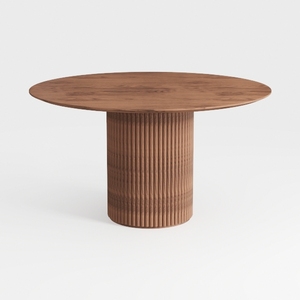
43.3''-59'' Extendable Round Dining Table for 4, M



Solid Wood Hand Shaped Novelty Accent Chair 3D Model
Homestyler offers an easy-to-use online design tool packed with stunning 3D renderings, inspiring interior projects, and helpful DIY video tutorials. It’s perfect for anyone looking to create and visualize beautiful home designs effortlessly. Give your space a fresh new look today!
Дизайн сейчас бесплатно