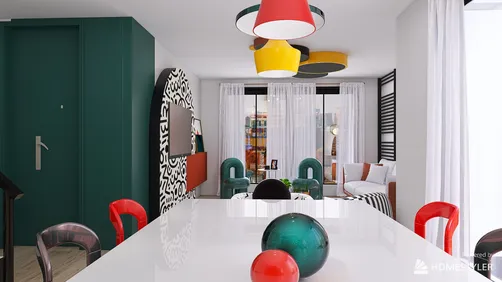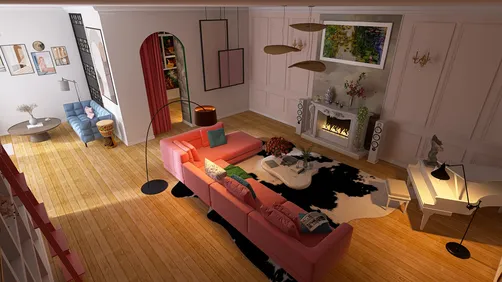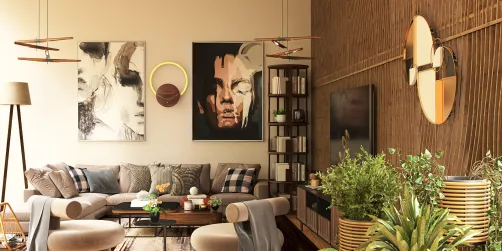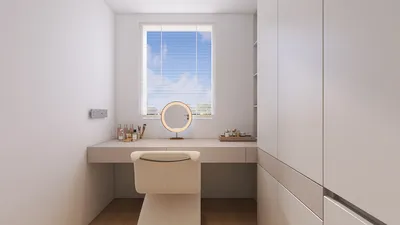
As we look towards the future, we see pressures coming from various directions: increased remote working, a rise in multigenerational living situations, and diminishing living spaces. Studies from the NAHB indicate that average sizes of new homes are shrinking, yet the functions needed are expanding. This is where the design of a 3-bedroom, 1100 square foot layout transforms into a functional living interface. Currently, the challenge lies in having too many roles vying for limited space. My approach to design resembles debugging a future living operating system, utilizing my spatial reasoning skills in every design choice I make.
Core Rail Structure with Versatile Suite
Design Principle: A centralized service core comprising kitchen, laundry, and bathroom efficiently consolidates utilities. This leaves outer rooms flexible enough to serve as spaces for work, sleep, or elder accommodations, adapting to the ever-changing future lifestyle needs.
Flow: The design flows seamlessly from the entrance to a drop zone, then to the kitchen rail, leading to a central living area and branching off towards the bedrooms—similar to an efficient command sequence that minimizes the need for constant context switching.
Sightlines: From the entrance to the balcony through a wall of windows, allowing natural light to guide the way; bedrooms are strategically placed off-axis to maintain privacy and social comfort.
Storage: The core structure accommodates a tall pantry, stacked linen storage, and a concealed utility area—creating a cache close to the central processor of the home.
Furniture Dimensions: For the living area: an 84-inch sofa paired with a 36-inch coffee table; in the bedrooms: a queen bed with 24 inches of clearance on both sides; the flex room can hold a wall bed requiring just 18 inches of depth.
Conclusion: In five years, this design will showcase resilience: essential utilities remain stable while daily living evolves around them.
save pin
Diagonal Layout with Corner Living Space
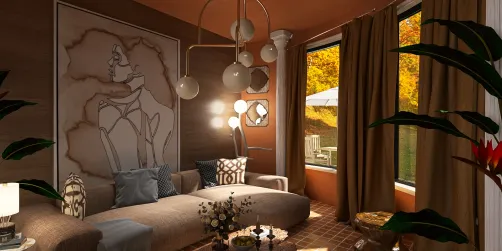
Design Principle: Employing a 45-degree visual angle from the entrance to corner windows enhances the perception of space—future comfort will rely more on visual efficiency rather than just added square footage.
Flow: The layout includes an entry buffer, an oblique living/dining space, a kitchen peninsula serving as a gateway to a private wing accessible via an acoustic door.
Sightlines: A diagonal path maximizes the flow of natural light; for instance, the kitchen can observe the children’s room without directly seeing their beds—providing user interface feedback without overwhelming notifications.
Storage: Features include a corner bench with lift-up storage bins, a wall-mounted credenza, and transom cabinets above the doors—ensuring efficient distribution of storage with low latency.
Furniture Dimensions: A dining table accommodating six (72" x 36") is arranged parallel to the diagonal; a sectional sofa (96" x 64") fits snugly into the corner; bunk beds and a study area of 20 inches depth serve the children’s room.
Conclusion: A smaller footprint can feel expansive; the angled design optimizes daily activities by enhancing bandwidth for life’s moments.
save pin
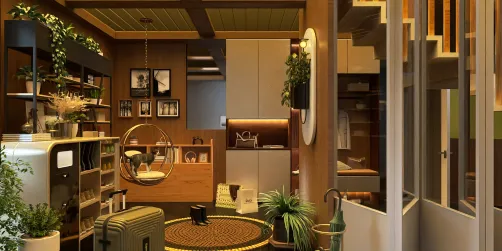
Elevated Courtyard Loop Design
Design Principle: Create a small ‘void’ within the layout—an internal light well or balcony hub—so that rooms revolve around this bright focal point; the future necessitates restorative spaces.
Flow: A circular path connects the living area to the balcony hub, primary bedroom, shared bathroom, children’s room, kitchen, and back to the living area; this loop minimizes retracing steps.
Sightlines: The layout is layered; a transparent public pathway with private doors that swing shut conceals sleeping areas, thus providing status visibility while maintaining privacy.
Storage: Continuous 16-inch deep ring shelving, toe-kick drawers in the kitchen, and a wardrobe niche of 30 inches in each room organize space methodically, establishing order as a protocol.
Furniture Dimensions: The primary bedroom features a queen bed with a 60-inch desk facing natural light; the third room accommodates a daybed along with a 48-inch wardrobe; the balcony is designed for two 22-inch chairs.
Conclusion: This loop design transforms 1100 square feet into a functional circulatory space—creating a healthier, calmer environment ready for future updates.
save pin
Final Thoughts
In a compact layout, the 3-bedroom concept emphasizes orchestration rather than mere accommodation—envisioning the home as a software system capable of evolving seamlessly. Intelligent planning of 3-bedroom units, the dynamics of small family apartments, and multifunctional rooms all represent the interconnected nature of contemporary living within a 1100 square foot space. In the upcoming decade, the focus will be on clarity of movement, precise storage solutions, and the concept of furniture acting as APIs; through my observations, the most future-conscious homes aren’t necessarily larger, but rather more intentional in design—just like utilizing Homestyler for optimal home arrangements.

Homestyler is your go-to online design platform for transforming your home effortlessly. With its intuitive design tool, stunning 3D renderings, and rich library of DIY video tutorials, you can unleash your creativity and bring any interior project to life—regardless of your experience level!



















![Design [4]](https://hs-designs.homestyler.com/production/design/images/07c2de3a-88ec-4be8-8910-ff255b795bc2/1731419398293/7841697.jpg?x-oss-process=image/resize,w_502,m_mfit/format,webp)