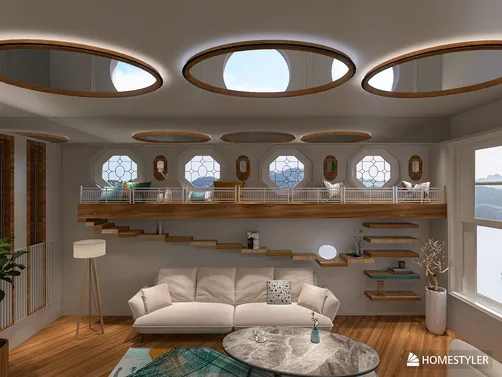
The Illusion Home Design Theme: 6 Distinct Approaches to Spatial Perception
The 'Illusion Home for Web' contest challenged designers to manipulate visual perception—transforming compact spaces (as small as 50㎡) into seemingly expansive environments (up to 100㎡+) using architectural sleight-of-hand. Top entries employed five core illusion strategies: tilted architecture, optical-floor patterning, reflective surfaces and mirrored depth, black-and-white high-contrast geometry, surreal scale distortion (e.g., flipped or suspended volumes), and strategic light-shadow layering. Each approach redefines how users experience volume, orientation, and continuity—proving that perception is not passive, but actively designed.
Minimalist Tile Geometry vs. Bold Black-and-White Hypnosis
One group leverages subtle, repetitive floor tiling to elongate sightlines and imply greater square footage—relying on rhythm and perspective. The other deploys stark monochrome patterning (like zebra stripes or checkerboard ceilings) to trigger visual vibration and spatial disorientation, making walls appear to recede or advance. Both avoid physical expansion—but achieve it through cognitive trickery rooted in Gestalt principles.

Anne Ottosson’s Illusion uses directional tile flooring to stretch the perceived length of a compact 56.3㎡ dining space—demonstrating how simple, repeatable patterns in Homestyler’s material library can recalibrate spatial cognition without structural change.
Design Your Dream Now
ROBERTA GIULIETTI’s Hypnotic black and white applies high-contrast graphic patterning across walls and ceiling to induce perceptual instability—showcasing how Homestyler’s precise texture alignment and HDR lighting controls let designers test optical effects in real time before construction.
Start Free DesignTilted Architecture vs. Surreal Upside-Down Narrative
Both approaches destabilize gravity—but with different emotional tones. Tilting walls and roofs (as in Amy ✨’s winning entry) creates dynamic tension grounded in nature—suggesting organic movement. Flipping the entire structure (as Linda H did, inspired by Oz) leans into playful absurdity, transforming domestic logic into theatrical spectacle. Both rely on precise angle control and contextual lighting—features fully supported in Homestyler’s advanced modeling toolkit.

Amy ✨’s Architectural Balance employs calibrated wall lean and asymmetrical fenestration to generate kinetic energy—proving how Homestyler’s tilt tool and sun-path simulation help architects validate structural illusion against real-world light behavior.
Create Stunning Spaces
Linda H’s Illusion Home - we're not in Kansas anymore 👠👠 literally inverts gravity using Homestyler’s full-scene rotation and upside-down furnishing placement—turning the platform into a sandbox for narrative-driven spatial storytelling.
Design in Real TimeGeometric Layering vs. Reflective Expansion
Rutchevelle Den Ouden’s design builds illusion through stacked planes—angled walls, sloped ceilings, and layered materials that fragment and multiply spatial readings. Andi Padmandi, conversely, uses mirrors, light surfaces, and linear elements to create seamless visual continuity—pushing boundaries outward rather than folding them inward. Both maximize perceived volume, but one multiplies axes, the other extends them.

Rutchevelle Den Ouden, ND’s Reflection constructs dimensional ambiguity using Homestyler’s multi-level floor editor and custom angle tools—allowing designers to simulate how intersecting planes distort depth cues in real time.
Try Free Design Now
Andi Padmandi’s Illusions kf strategically places mirrors and reflective finishes within Homestyler’s photorealistic rendering engine—demonstrating how real-time reflections and light bounce calculations enable precise control over perceived openness.
Begin Your Design JourneyNature-Integrated Tilt vs. Urban Lobby Grandeur
Amy ✨’s ‘Tilted Architecture Concept’ (non-winning but featured) embeds lean and slope into landscape context—using terrain tools and natural HDR skies (g_lilienstein) to soften disorientation with serenity. In contrast, PG Studio’s ‘White Lotus Bureau’ applies dramatic tilt and monumental scale to an urban lobby—leveraging Homestyler’s 4K night rendering (peoples_square_night) and volumetric lighting to amplify drama and arrival presence.

Amy ✨’s Tilted Architecture Concept merges structural illusion with environmental harmony—using Homestyler’s terrain sculpting and sky-HDR library to ensure tilted forms feel intentional, not jarring.
Unlock Design Magic
PG studio’s White Lotus Bureau exploits Homestyler’s large-scale rendering capacity and cinematic lighting presets to transform tilt from novelty into gravitas—ideal for commercial projects demanding both wow factor and functional clarity.
Start Designing TodayTry Creating Your Own Illusion Home
Ready to bend reality? Open Homestyler today and experiment with tilt angles, optical flooring, mirror placements, and contrast patterns—all in real time. Then, enter our weekly design contests: challenge yourself, get inspired by global creators, and earn Coins with every submission. The next illusion is yours to invent.
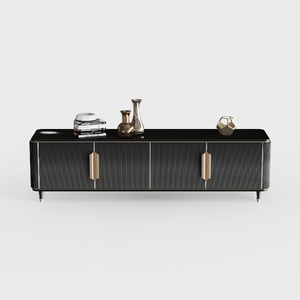
Modern Storage Cabinet, 94.4" Buffet Cabinet with
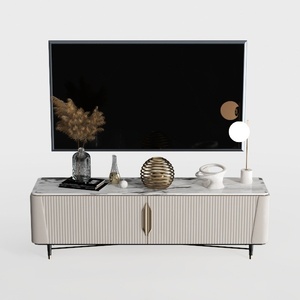
Modern Marble Top Solid Wood TV Stand With Metal Legs 3D Model
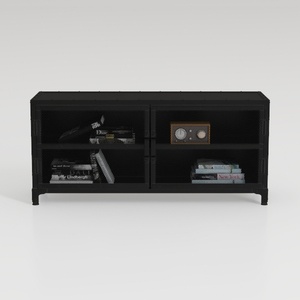

Industrial Black Metal Mesh Storage Cabinet 3D Model
Homestyler offers an easy-to-use online home design tool with stunning 3D renderings, inspiring design projects, and helpful DIY video tutorials. It’s perfect for anyone looking to create and visualize beautiful interior spaces effortlessly. Give your home a fresh look today!
Дизайн сейчас бесплатно