Baroque Style Decoded: Opulence, Drama, and Grandeur
The Baroque style emerged in late 16th-century Italy as a powerful artistic language of the Counter-Reformation—designed to inspire awe, evoke emotion, and assert divine and royal authority. Characterized by theatricality, movement, and rich sensory overload, Baroque interiors reject restraint in favor of sumptuous materiality, dynamic spatial composition, and symbolic abundance. Unlike the balanced symmetry of Renaissance design, Baroque embraces asymmetry, swirling curves, and layered ornamentation to create immersive, emotionally charged environments. Its influence spans palaces, churches, and aristocratic residences across Europe—from Versailles to St. Peter’s Basilica—and continues to resonate in contemporary luxury design through its celebration of craftsmanship, contrast, and narrative depth.

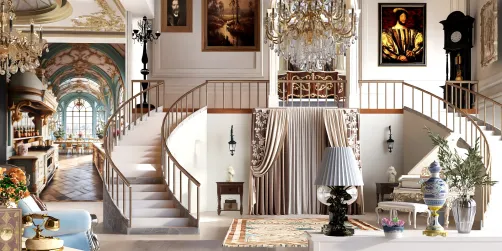
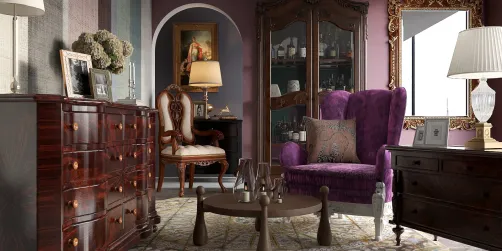
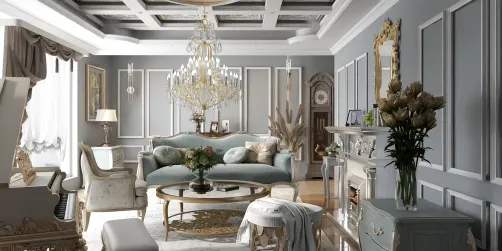
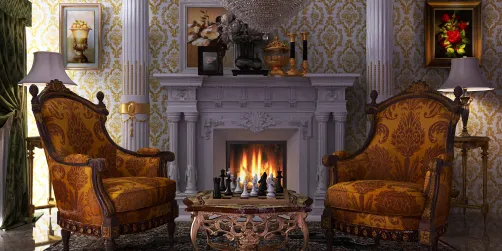
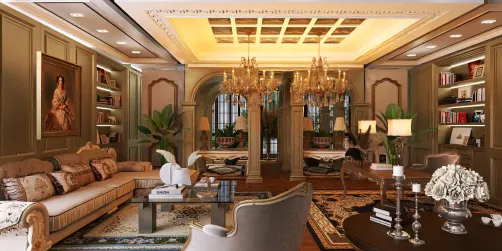
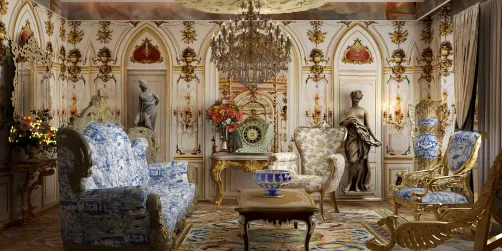
This living room by Beth M exemplifies Baroque’s embrace of layered grandeur: gilded mirror frames echo ornate ceiling medallions, while deep burgundy upholstery and velvet drapery establish chromatic richness. In Homestyler’s 3D rendering engine, users can instantly apply Baroque-specific textures—like damask wall coverings, carved wood finishes, and gold-leafed accents—from the curated Style Library. With one-click lighting presets simulating candlelit warmth and real-time shadow mapping for sculptural moldings, Homestyler transforms conceptual drama into photorealistic execution—making Baroque accessibility a hallmark of modern interior design tools.
Start Free Design NowBaroque Color Palette: Rich, Contrasting, Symbolic 🎨
Baroque color theory is deeply intentional—not merely decorative but theological and political. Deep crimsons, royal blues, emerald greens, and burnt golds dominate, often juxtaposed with stark ivory or black to heighten dramatic tension. These hues reference liturgical vestments, royal regalia, and celestial symbolism; their saturation and interplay generate visual energy and hierarchy. Metallic accents (especially gold leaf) are not embellishment—they’re structural elements that catch light dynamically, reinforcing movement and divine radiance.
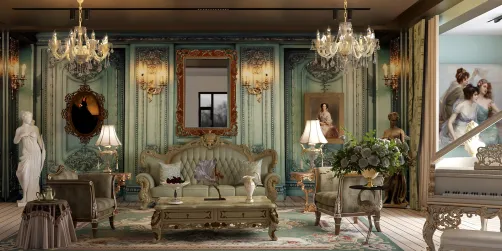
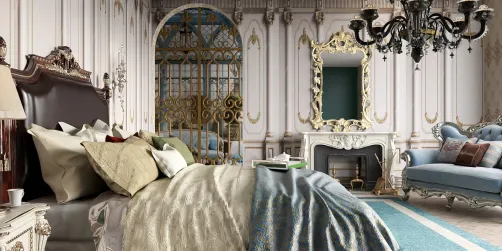
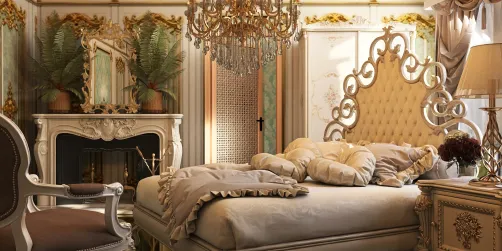
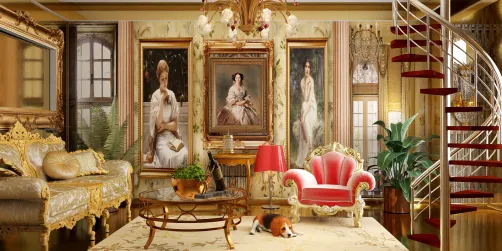
Beth M’s composition masterfully deploys Baroque chromatics: ruby-red velvet sofa anchors the space, countered by ivory damask walls and gilded mirror borders—creating both opulence and luminous contrast. In Homestyler, designers select from pre-calibrated ‘Baroque Palette’ swatches that auto-adjust ambient lighting and material reflectivity. The tool’s AI-powered color harmony assistant ensures historically resonant pairings—no manual RGB tweaking needed—while one-click texture mapping applies period-accurate brocade or marble veining across surfaces in seconds.
Begin Free Baroque DesignBaroque Ornamentation: Sculptural, Symbolic, Layered 🏛️
Ornament in Baroque design is never incidental—it’s narrative architecture. Swirling acanthus leaves, cherubs (putti), cartouches, broken pediments, and shell motifs recur not as decoration but as allegorical devices: fertility, divinity, triumph, and eternity. Carved woodwork, stucco reliefs, and gilded plasterwork blur boundaries between painting, sculpture, and architecture—creating total environments where every surface tells a story. Scale is deliberately exaggerated: oversized moldings, colossal mantelpieces, and towering pilasters amplify human awe.

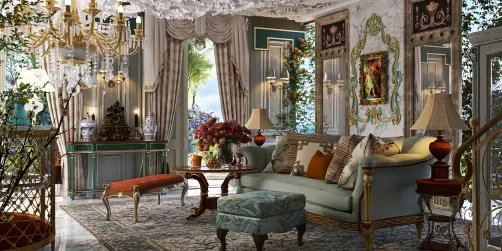
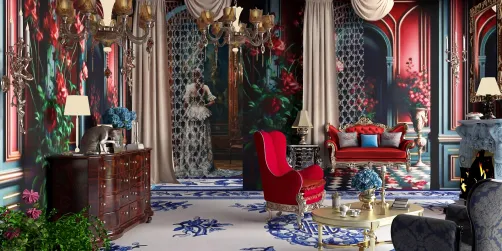
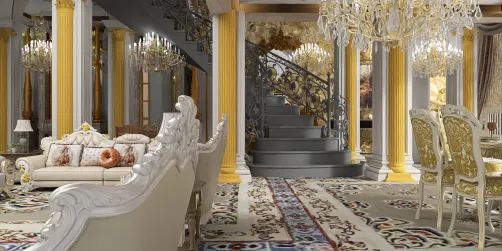
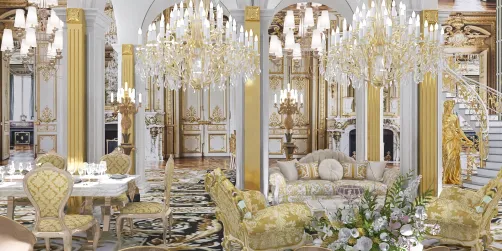
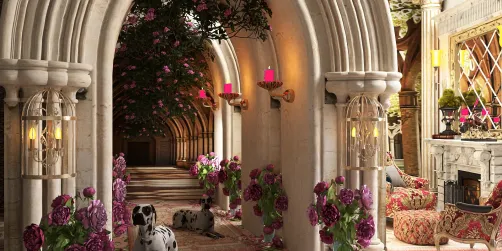
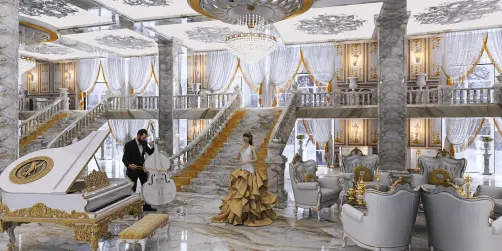
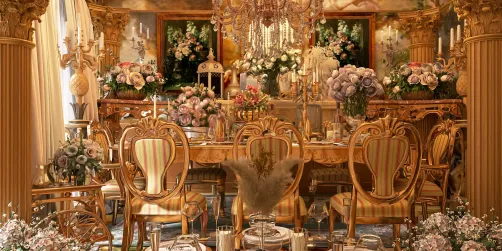
Sylvia Faulkner’s restaurant interior showcases Baroque ornamentation at its most theatrical: a cascading crystal chandelier dominates the ceiling, while curvilinear banquettes and gilded wall panels frame a central fresco-style mural. In Homestyler, users drag-and-drop over 200+ Baroque-specific 3D models—including hand-carved cabriole legs, rocaille-patterned wallpaper, and allegorical statuary—from the integrated Style Catalog. The software’s smart alignment system snaps moldings to wall edges and adjusts relief depth automatically—ensuring historically grounded detail without manual modeling.
Free Baroque Design StartBaroque Spatial Composition: Dynamic, Hierarchical, Illusionistic 🌟
Baroque spaces reject static geometry in favor of kinetic progression. Axial vistas, elliptical floor plans, coffered ceilings with trompe-l’oeil domes, and strategically placed mirrors create optical illusions of infinite depth and divine scale. Furniture arrangement follows theatrical logic—centered around focal points like altars or thrones—with curved seating and radial layouts encouraging movement and engagement. Light is choreographed: directional beams highlight sacred objects or portraits, while shadow gradients deepen spatial ambiguity.

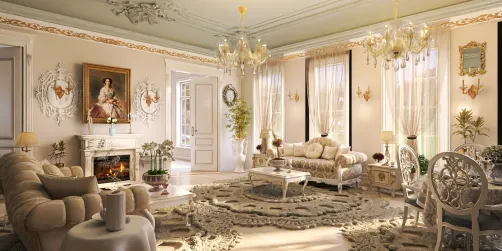
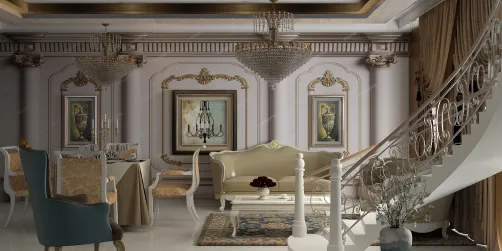
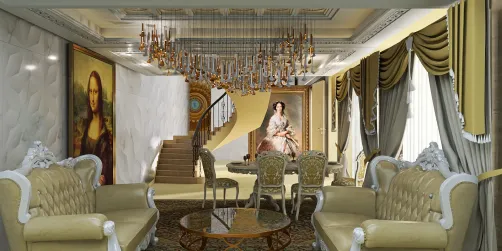
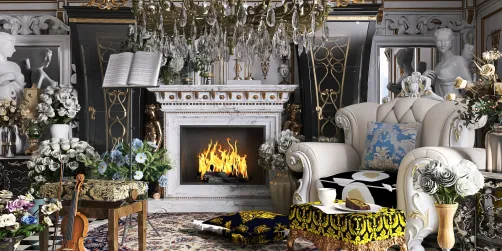
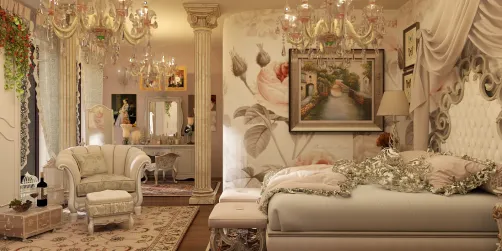
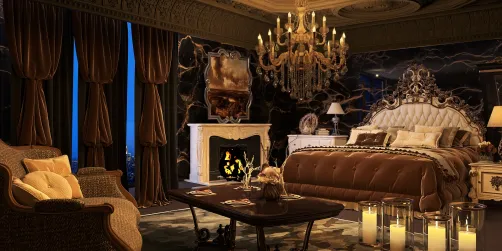
Angela Zarzaca’s evening-lit living room demonstrates Baroque spatial mastery: a mirrored console reflects a towering gilded mirror above the fireplace, doubling vertical height and amplifying light. A curved sofa and asymmetrical cluster of side tables guide the eye along an implied diagonal axis. In Homestyler, the ‘Baroque Layout Assistant’ auto-generates axial sightlines, recommends optimal mirror placements for illusionistic expansion, and simulates candlelight diffusion patterns—transforming abstract principles into actionable, render-ready spatial intelligence.
Launch Free Baroque StyleFAQ
Q: What distinguishes Baroque from Rococo interior design?
A: Baroque (early–mid 17th c.) emphasizes drama, power, and religious grandeur through bold contrasts, heavy ornamentation, and monumental scale. Rococo (early 18th c.) evolved as a lighter, more intimate reaction—favoring pastel palettes, asymmetrical ‘C-scroll’ motifs, and pastoral whimsy. While both celebrate ornament, Baroque asserts authority; Rococo delights in intimacy and playfulness.
Q: Can I apply authentic Baroque elements using Homestyler’s free version?
A: Yes— Homestyler’s free tier includes full access to the Baroque Style Library: 120+ historically accurate 3D models (gilt mirrors, cabriole-leg furniture, damask textures), AI-powered lighting presets, and one-click palette matching. Premium features like ultra-HD rendering and collaborative annotation enhance fidelity—but core Baroque expression is fully enabled at no cost.
Q: How does Homestyler ensure historical accuracy in Baroque design?
A: Homestyler partners with art historians and museum archives (including the Victoria & Albert Museum’s decorative arts collection) to validate model proportions, material finishes, and stylistic conventions. Each Baroque asset carries metadata tagging era, region (e.g., French vs. Spanish Baroque), and functional context—ensuring educational integrity alongside creative flexibility.
Originally incubated at Autodesk, Homestyler has grown into one of the most widely adopted home design platforms in the world, now trusted by over 18 million users. Whether you're a homeowner exploring ideas or a professional designer delivering client-ready renders, Homestyler brings industry-leading 3D technology to your fingertips — no experience required.

Red Velvet Tufted Modern Modular Sofa 3D Model

Modern Houndstooth Fabric Asymmetrical Bench With Accent Pillow 3D Model
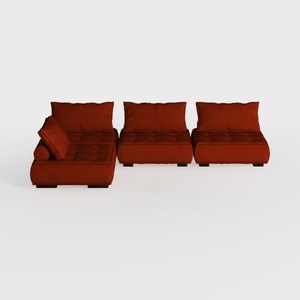
Modern Burgundy Fabric Tufted Modular Sectional Sofa 3D Model
Homestyler offers an easy-to-use online design tool with stunning 3D renderings, inspiring interior projects, and helpful DIY video tutorials. It’s perfect for anyone looking to create and visualize beautiful home designs effortlessly. Give your space a fresh look today!
Дизайн сейчас бесплатно