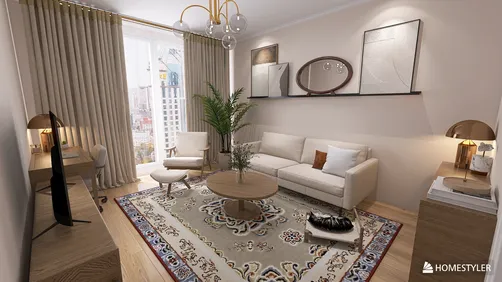
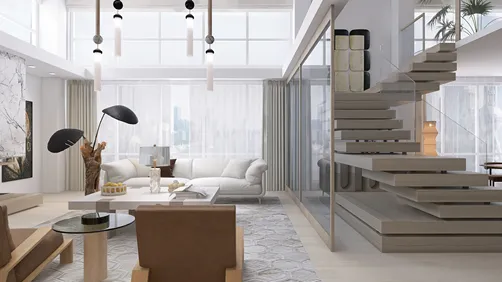
Mid-Century Minimalist Living Space Design
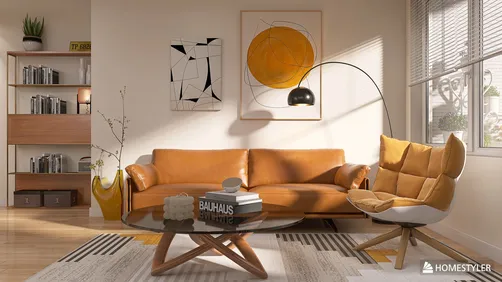
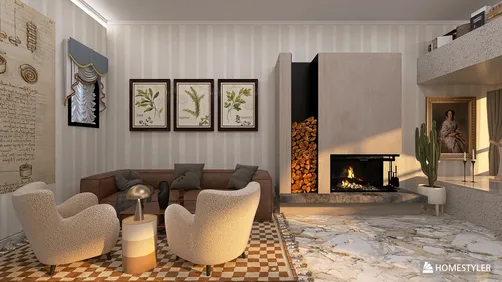
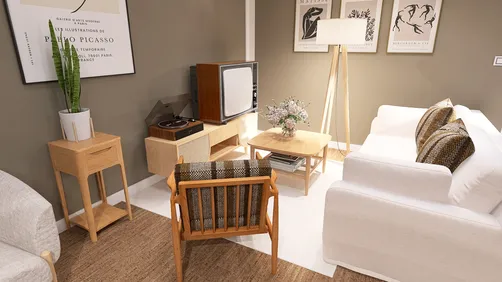
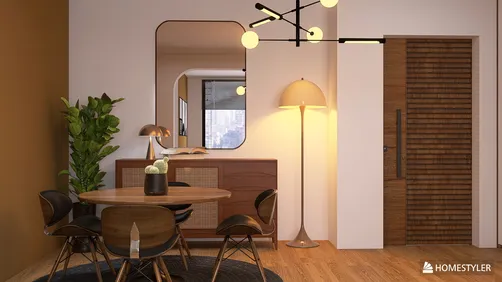
The Mid-Century Minimalist Living Space is a refined fusion of 1950s–60s design heritage and contemporary minimalism. It prioritizes clean spatial flow, functional furniture with organic-yet-geometric silhouettes, and intentional material honesty — think tapered wooden legs, molded plywood, and matte-finish metals. Unlike pure minimalism, it embraces warmth through natural textures (light oak, walnut, wool, leather) and subtle vintage accents (e.g., sunburst mirrors, atomic lamps), while rigorously editing out visual clutter. This scene is not limited to large apartments; it thrives in compact studios, open-plan lofts, and even multi-functional urban dwellings — making thoughtful indoor space planning essential to balance nostalgia, simplicity, and livability.
Design Challenges & Common Pitfalls
Key challenges include avoiding 'sterile minimalism' (losing mid-century soul), misproportioning iconic furniture in small footprints, overusing warm tones that muddy neutrality, and neglecting layered lighting — a hallmark of the style. Many designers also underestimate how critical ceiling height, window placement, and sightlines are for achieving the airy, connected feel central to mid-century minimalism. Effective indoor space planning must reconcile retro aesthetics with modern ergonomics and accessibility needs — especially in real-world renovations where structural constraints exist.
✅ Principle 1: Prioritize Clean Lines & Functional Geometry
Mid-century minimalism rejects ornate curves and excessive ornamentation. Instead, it champions crisp horizontal lines, low-profile silhouettes, and purpose-driven forms — such as a sofa with exposed tapered legs or a credenza with recessed handles. Every element must serve dual roles: aesthetic cohesion *and* spatial efficiency. In compact living spaces, this means selecting modular, scale-appropriate pieces that define zones without physical barriers — supporting smart indoor space planning through visual rhythm rather than walls.

Designer Leticia L applies this principle in her 'Quarto de casal' bedroom by using a low-slung platform bed with clean rectangular framing, paired with streamlined floating nightstands — all aligned horizontally to reinforce visual continuity. She leverages Homestyler AI design tools to test multiple furniture footprints against exact room dimensions, ensuring geometric harmony without crowding. The result is a restful, uncluttered retreat that honors mid-century proportionality while optimizing limited square footage.
Design Your Cozy Bedroom✅ Principle 2: Curate a Neutral-Warm Palette with Strategic Accenting
A restrained base palette — beige, warm white, soft gray, and light oak — sets the serene foundation. Brown (especially rich walnut or teak) adds depth and authenticity, while *one* vibrant accent color (e.g., burnt orange, mustard yellow, or olive green) introduces personality without disrupting calm. This approach avoids chromatic fatigue and supports long-term versatility — crucial for evolving interiors. Homestyler AI design tools help simulate how natural light interacts with these hues across day phases, enabling precise tone selection for balanced warmth and clarity.

Rebecca Laghi’s 'Mid-century minimal studio' demonstrates masterful palette control: pale oak flooring and ivory walls form a luminous canvas, while deep caramel upholstery and brass-toned lighting fixtures provide grounded warmth. Her strategic use of a single burnt-orange throw pillow and terracotta planter adds vibrancy without overwhelming. Using Homestyler AI design tools, she iterated material swatches and lighting presets to verify color fidelity under simulated daylight — proving how disciplined tonal curation elevates both mood and spatial perception in tight studio layouts.
Start Your Warm Studio✅ Principle 3: Integrate Natural Light & Layered Lighting
Natural light is non-negotiable — large windows, unobstructed views, and reflective surfaces (e.g., glossy tabletops, light-reflective wall finishes) maximize brightness and airiness. Artificial lighting must be equally intentional: ambient (recessed or track), task (architectural floor or desk lamps), and accent (wall sconces or directional spots) work in concert. Mid-century minimalism favors sculptural yet simple fixtures — think Sputnik chandeliers or tripod floor lamps — placed to highlight art, texture, or architectural features, reinforcing spatial hierarchy and depth.

Kinga0602’s award-winning 'Midcentury Modern Minimalism' exemplifies this principle in its bathroom zone: expansive window placement floods the space with daylight, while a minimalist linear ceiling light and two wall-mounted sconces create three distinct layers — illuminating the vanity, highlighting mosaic tile texture, and casting gentle ambient glow. She used Homestyler AI design tools to adjust HDR environments ('g_peoples_square') and sunlight sliders, validating optimal fixture positioning and shadow behavior — showcasing how advanced lighting simulation supports authentic mid-century minimalism in constrained wet areas.
Begin Bright BathroomFAQ
Q: How does Homestyler AI support accurate indoor space planning for Mid-Century Minimalist projects?
Homestyler AI enables precise dimension-based layout testing, automatic furniture scaling to room proportions, and real-time lighting simulation — allowing designers to validate sightlines, circulation paths, and furniture footprint compatibility before finalizing. Its style-aware library filters for tapered-leg sofas, walnut veneers, and atomic-era fixtures, accelerating authentic mid-century minimalism execution.
Q: Can Mid-Century Minimalist design work in small apartments under 40 sqm?
Absolutely — in fact, it excels there. By eliminating visual noise, using low-profile furniture, and emphasizing vertical lines and reflective surfaces, the style creates an illusion of spaciousness. Homestyler AI design tools help identify optimal multifunctional pieces (e.g., storage ottomans, wall-mounted desks) and simulate how each choice affects perceived volume and flow.
Q: What’s the biggest mistake when mixing mid-century and minimalist elements?
The most common error is stripping away all warmth and character in pursuit of minimalism — resulting in a cold, generic space. True Mid-Century Minimalism retains tactile richness (wood grain, wool texture, ceramic weight) and subtle vintage cues (e.g., a single sunburst mirror or Eames-inspired lounge). Homestyler AI design tools help preview material combinations and avoid tone-on-tone monotony through instant contrast analysis.
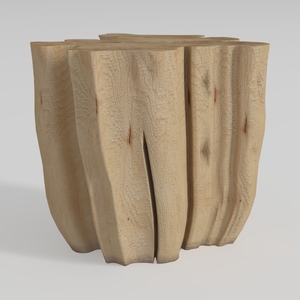
Natural Solid Wood Organic Shape Side Table 3D Model


bed-Powdered Pastels

Minimalist Solid Wood Nightstand With Lower Shelf 3D Model
Homestyler offers an easy-to-use online design tool combined with stunning 3D renderings, countless interior design projects, and helpful DIY video tutorials—perfect for bringing your home design ideas to life effortlessly and creatively.
Дизайн сейчас бесплатно