Imperfect Interior Space Design
This design scenario centers on embracing intentional imperfection within interior spaces — moving beyond sterile, flawless aesthetics to celebrate raw textures, aged materials, and organic irregularities. Inspired by the 'Imperfect Design for App' contest, it redefines beauty through cracked brick walls, oxidized metals, chipped ceramics, and weathered wood. Rather than hiding flaws, this approach integrates them as expressive design elements that add narrative depth, tactile warmth, and authentic character. It applies across living rooms, bedrooms, kitchens, and transitional zones — wherever human touch, time, and nature leave visible, poetic traces. Thoughtful indoor space planning becomes essential to balance chaos and cohesion, ensuring imperfections enhance — not overwhelm — spatial harmony and function.
Design Challenges & Common Pitfalls
Achieving intentional imperfection without descending into visual clutter or perceived neglect is the core challenge. Designers often struggle with: (1) Overloading a space with too many distressed elements, resulting in dissonance rather than charm; (2) Misjudging scale — small chipped ceramics read as charming detail, but large cracked surfaces may evoke structural concern if not contextualized; (3) Neglecting lighting and material contrast, causing texture-rich imperfections to visually flatten; and (4) Forgetting user experience — an oxidized metal shelf must still be safe and functional. Homestyler design tips emphasize using real-time 3D rendering to test how light interacts with rough surfaces before finalizing, ensuring imperfections serve both aesthetic and ergonomic goals.
✅ Prioritize Texture Layering Over Quantity
Select 2–3 complementary imperfect materials per zone (e.g., cracked ceramic + brushed brass + reclaimed wood) and vary their scale and placement — one bold feature wall, one sculptural object, one subtle surface detail. Avoid repeating the same flaw type (e.g., multiple rusted accents), which reads as accidental rather than curated. Layer textures intentionally: matte oxidized metal against glossy ceramic glaze, coarse stonework beside smooth linen upholstery. This creates rhythm and prevents sensory fatigue while honoring the contest’s ethos of ‘overlooked objects becoming stars’.

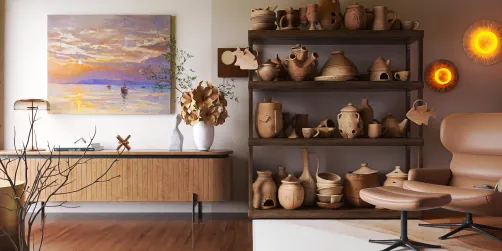
Em Leech’s 'Beachy Calm' masterfully applies texture layering in a compact contemporary interior. Instead of saturating the space with imperfection, she focuses on a single, elevated display: hand-thrown ceramic art pieces — each uniquely chipped or glazed — arranged on a warm, grain-visible wooden shelf. The ceramics’ organic irregularities are amplified by soft ambient lighting (simulated via Homestyler AI design tool), while surrounding surfaces remain calm and neutral. This restraint honors the principle: imperfection shines brightest when framed by simplicity — a key Homestyler design tip for effective indoor space planning.
Start Designing Now🎨 Curate Imperfection With Narrative Intent
Every imperfect element should tell part of a story — heritage, craft, sustainability, or personal memory. A cracked tile isn’t just flawed; it’s a remnant from a historic building. A rusted beam isn’t deteriorated; it’s preserved industrial patina. Use descriptive naming (e.g., 'Reclaimed Barn Beam', 'Hand-Cracked Terracotta Vessel') in your Homestyler project notes to reinforce intentionality. This transforms perceived defects into meaningful design decisions, aligning with the contest’s call to ‘discover unique beauty in imperfections’ and elevating interior space planning from decoration to storytelling.

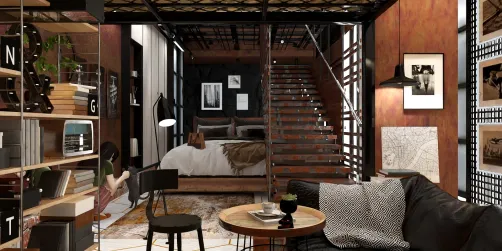
Sonia Interior Decor’s unnamed modern living room (Top 2 winner) exemplifies narrative curation. She integrates rustic, slightly oxidized metal light fixtures above a clean-lined sofa — the metal’s warm, uneven patina evokes artisanal blacksmithing, not decay. Paired with abstract wall art made from salvaged wood fragments, every imperfect element feels purposefully chosen and contextually grounded. Using Homestyler’s real-time 3D rendering, she tested fixture heights and shadow patterns to ensure the metal’s texture remained legible and emotive — proving how Homestyler design tips support intentional, story-driven indoor space planning.
Begin Your Free Design⚖️ Balance Contrast to Elevate Authenticity
Imperfection gains resonance only when juxtaposed with moments of refinement, clarity, or stillness. Pair a chipped ceramic vase with a perfectly smooth marble tabletop. Place a cracked-brick accent wall beside floor-to-ceiling glass. Introduce a single oxidized iron stool into a minimalist kitchen. This contrast prevents visual noise and highlights the emotional weight of the imperfect piece. In Homestyler, use the ‘Material Swap’ and ‘Light Preview’ tools to experiment rapidly — testing how polished vs. raw finishes coexist under different lighting conditions ensures authenticity never sacrifices legibility or comfort.

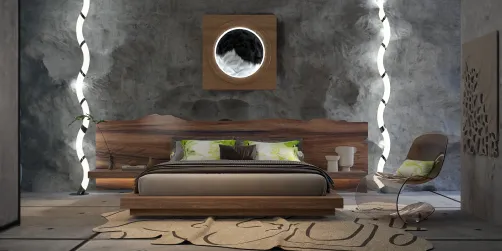
S R L’s 'Light in the darkness 🌟' demonstrates contrast mastery in a modern bedroom. The central wooden bed frame features visible grain and subtle surface wear — a quiet nod to natural imperfection — yet it’s anchored by crisp white linens and flanked by sleek, minimalist nightstands. Above, an artistic wall installation incorporates fragmented, hand-chipped ceramic shards set against a matte black backdrop, creating dramatic visual tension. Using Homestyler’s AI design tool, the designer iterated lighting angles to cast gentle shadows that accentuate the ceramic’s fractures without obscuring form — a textbook application of contrast-based indoor space planning.
Create Your Dream SpaceFAQ
Q: How do I avoid making an 'imperfect' space look unintentionally messy or low-budget?
Focus on consistency of intent, not uniformity of finish. Use Homestyler’s style-matching tools to ensure all imperfect elements share a common origin story (e.g., all artisan-made, all reclaimed, all coastal-weathered). Limit the number of dominant textures, and always pair them with at least one strong, clean element — like a monolithic stone surface or precise linear lighting. Indoor space planning begins with hierarchy: decide what imperfection should *lead*, and what should *support*.
Q: Can I apply imperfect design principles in small apartments or rental units?
Absolutely. Imperfection thrives at human scale. In compact spaces, prioritize portable, non-permanent expressions: hand-thrown ceramic trays, woven rugs with irregular dye lots, vintage mirrors with foxed glass, or peel-and-stick oxidized-metal wall panels. Homestyler design tips include using the ‘Rental-Friendly Filter’ to preview removable textures — ensuring beauty doesn’t compromise lease terms.
Q: Does Homestyler support realistic rendering of imperfect materials like rust or cracked glaze?
Yes — Homestyler v4’s advanced PBR (Physically Based Rendering) engine accurately simulates micro-surface variations, oxidation gradients, and ceramic crazing. Upload custom texture maps or select from curated ‘Imperfect Material Packs’ (e.g., ‘Weathered Steel’, ‘Crackle Glaze’, ‘Dry-Stack Stone’) in the Materials Library. Real-time previews let you adjust lighting direction and intensity to control how dramatically flaws appear — turning technical limitation into creative leverage.
Q: How does ‘imperfect design’ relate to sustainable interior practices?
It’s inherently sustainable. Celebrating imperfection encourages reuse, upcycling, and appreciation of aged or second-life materials — directly reducing demand for virgin resources. The contest’s emphasis on ‘overlooked and flawed objects’ aligns with circular design principles. When planning indoor space, use Homestyler’s ‘Material Origin Tag’ feature to label reclaimed items, helping clients understand the environmental narrative behind each beautiful flaw.


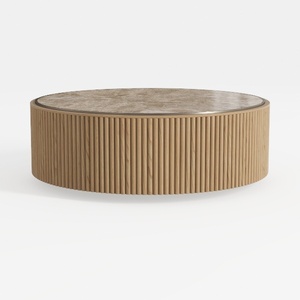
Modern Fluted Solid Wood Marble Top Round Coffee Table 3D Model
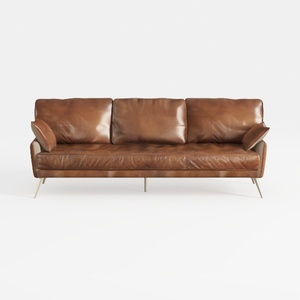
Modern Vintage Leather 3 Seater Sofa With Metal Legs 3D Model
Homestyler is a fantastic online home design platform that makes it easy to create stunning interiors. With powerful 3D rendering, a vast collection of design projects, and helpful DIY video tutorials, it’s perfect for bringing your home design ideas to life effortlessly.
Дизайн сейчас бесплатно